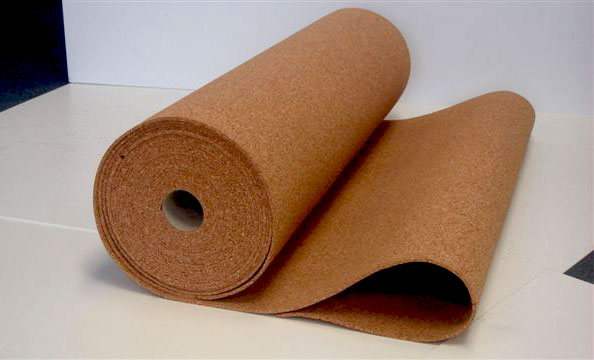
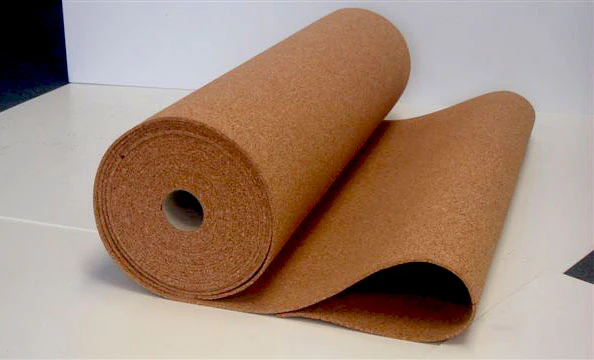
We’ve provided several answers to questions related to US Floors, Natural Cork Underlayment Roll , see some other helpful Q&A related to this product.
-
Question: Does your cork underlayment contain any glues or binding agents?
Answer: Yes. An adhesive is used to bind the granules of cork together. It contains no formaldehyde, rubber, wax, polyurethane, isocyanates, styrene and because it is naturally hypoallergenic, it requires no antimicrobials, biocides, or fungicides.
-
Question: In 2021 you wrote in a response "Kahrs does not warranty cork underlayment usage under their floors." Is it still the case?
Answer: Yes, that is still the case.
-
Question: I really like the cork underlayment. Our subfloor is plywood over a crawl space so I likely need a vapor barrier. Perhaps I should just stick with Quietwalk? We plan to install floating bamboo on top.
Answer: Floating bamboo can be installed on top of cork or QuietWalk Plus. Both are non-toxic and have no VOCs. Both will provide additional cush underfoot as well as thermal and acoustical insulation. As long as your crawl space has a vapor barrier on the ground as well as on the face of the floor joists, either underlayment will work fine. However, if there is no vapor barrier installed, then we'd recommend the QuietWalk Plus as it has a vapor barrier built into it but it won't trap moisture. It wicks moisture out into the ambient air unlike other vapor barriers that trap moisture underneath them and rot the subfloor and/or create mold.
-
Question: How is the cork bonded?
Answer: US Floors, Natural Cork Underlayment uses a resin of polyurethane as a binder. These are the LEED qualifications for this underlayment: Indoor Environmental Quality/4.1 Low-Emitting Materials/Adhesives and Sealants: 1 point, Materials & Resources/4 Recycled Content: 1 to 2 points, Materials & Resources/6 Rapidly Renewable Materials: 1 point
-
Question: Can this be used under sheet vinyl, which will be installed on plywood subfloor?
Answer: We do not sell vinyl, so you'd need to ask the vinyl manufacturer if cork is approved.
-
Question: Can I get a pdf with the specifications for this product?
Answer: Here is the only spec sheet that is available:https://www.greenbuildingsupply.com/c...If you have specific questions outside of these specs, please call us for more information. 800-405-0222
-
Question: Can the 1/8" be stapled to floor joists and used as a basement ceiling?
Answer: That is way outside the recommended use, this is designed to be laid under flooring. It would not work as a ceiling or wall covering.
-
Question: Can the cork underlayment be used as shelf liner for kitchen. Are the glued safe for food contact?
Answer: No. It cannot be used for that purpose. This is meant to go beneath floors.
-
Question: Do you have this available in 1/2" thick?
Answer: 1/2" thick cork underlayment is too thick for rolls and typically comes in sheets. We don't offer sheets, but we do offer 1/4" and 1/8" thick rolls, 200 SF/roll.
-
Question: Is this suitable for a basement floor?
Answer: Per the Specs section on the product page, it states, "Location All Rooms: Dry, Interior ". But it needs to be installed under something as it's solely underlayment. It is not to be used as a floor. If you continue to walk on it bare, it will break down.
-
Question: Is there benefit to adding this under cork floor tiles in a second floor room on wood subfloor? Is it overkill?
Answer: Ultimately, you should always follow manufacturer instructions on the flooring you are installing. They will spell out what types of underlayment, and how thick you can go, for particular floors and subfloor combinations.
-
Question: Do you need an underpayment for a click floor?
Answer: Refer to the manufacturer of the product you are using for what they allow/require (it should be included in their installation instructions and or the warranty of the floor).
-
Question: Can individual rolls be shipped? Is freight, which costs more than the product,the only option?
Answer: Yes individual rolls can be shipped. You would have to call in to place the order, the default on the website is for freight shipping on items of a certain size and or weight.
-
Question: I am installing Mannington Audra Max Apex 18" x 36" 8mm click floors in my kitchen and hallways. Do you recommend 1/8 or 1/4" underpayment? I would like to use 1/4" if possible. Thank you.
Answer: You need to ask the manufacturer of the floor what they allow to be used under their flooring. We do not sell that product nor work with that manufacturer.
-
Question: Can this product be sealed and finished used as a floor surface?
Answer: No, it cannot. That is absolutely not what it was made for.
-
Question: I am installing click loc Marmoleum flooring in a shed on slab construction. I have already installed 6 mil vapor barrier and an OSB subfloor to provide more cushion/insulation. I want an underlayment that doesn't have a vapor barrier that could trap any potential moisture between layers as the 6 mil is underneath. Is this the right product?
Answer: First of all, Cinch Loc is an interior product for temperature controlled areas. So we hope this shed is heated and temperature controlled as any dwelling space would be. The MP Global, QuietWalk Plus - without Antimicrobials is a unique patented system designed to allow moisture to wick its way out from beneath a floor and into the ambient air. So that would be better.
-
Question: Can you paint this cork? I want to use it as a ceiling
Answer: This is not a rigid material that is only meant to be used as an underlayment under flooring. It is also not meant to be painted.
-
Question: Can i use this as a basement ceiling to cover up some insulation?
Answer: It is only meant to be used as an underlayment under flooring. It's not rigid, and you couldn't nail or staple this to the ceiling.
-
Question: What are the IIC / STC / ^IIC ratings for cork underlayment. Considering for a condo and must meet their requirements?
Answer: Here's a link to our website with the technical specs:https://www.greenbuildingsupply.com/c...
-
Question: I have a solid plywood subfloor down, I have glue down vinyl flooring to lay on top. Can I use this to give me the smooth surface they say I need for the glue?
Answer: You need to ask the manufacturer of the vinyl your using and they will let you know if this is approved for use with their flooring. As we do not sell vinyl, we can't say.
-
Question: I would like to use cork underlayment under a large oriental rug. The current OSB floor is very cold and I'd like to line the entire floor with cork. Some areas around the perimeter of the room will not be covered by the rug. Will this roll product be appropriate?
Answer: Cork naturally does provide thermal assistance and may help underneath the rug. We would not suggest using cork underlayment as a product to directly walk on top of due to its lack of finish or durability. This underlayment product was only intended to go beneath your hardwood, bamboo or cork flooring.
-
Question: Can i use this with Coretec Plus floating vinyl planks?
Answer: Refer to the Coretec Plus manufacturer's instructions or call them to ask what underlayment may be used under their product.
-
Question: Where was this flooring manufactured?
Answer: US Floors states it is made in Portugal.
-
Question: I have a concrete slab and want to use the cork as an underlayment for a glue down 3/8 wood laminate floor. So I want to glue the cork down and then glue the flooring on top of the cork. Is that a recommended use for the cork?
Answer: According to US Floors, you may glue down the cork underlayment. However, they do not recommend gluing the laminate floor to it without first reaching out to the laminate floor manufacturer to see if this is an approved application for the said floor.
-
Question: Can the 6mm be used with Kahrs Wood Flooring? Will they honor the warranty? Would this our the quiet walk plus offer more cushion?
Answer: Kahrs does not warranty cork underlayment usage under their floors. However, if you decide you are going to use cork underlayment, we would not recommend doing more than 1/8 inch thick (which is about 3 mm). Also, do not use cork underlayment in conjunction with QuiteWalk Plus. You should choose one or the other, never both. You need a degree of stability under your floor. Too much give/squish will create a strain on where the boards come together, and your floor will fail, and probably squeak a lot on the way out.
-
Question: Is the 3mm okay to use under the Amorim Wise waterproof cork flooring installed over wooden subfloor? How about in a bathroom?
Answer: Yes. You can go up to 1/8" or 3.175mm if using an optional underlayment in your Amorim Wise Waterproof Cork Flooring. Please review the installation guidelines (link below) for more details.https://www.greenbuildingsupply.com/c...
-
Question: I'm interested in cork waterproof flooring. Is there an advantage to using both cork underlay and quiet walk on wood subfloor? Old house. Drafty from crawl space though no moisture problems to speak of.Or am I just being silly? If one, which is preferred method for winter warmth assistance? Thank you!! I've read all of these. You're awesome.
Answer: You could use one or the other of the underlayments, but not both as it would make it too thick. The underlayment is not to exceed 1/8". Either one would be comparable in their performance of warmth. Here is the full install manual for your review: https://www.greenbuildingsupply.com/c...
-
Question: Does this need to be glued or nailed down before putting down new planking?
Answer: If this is being used as an underlayment beneath a floating floor, the cork will flatten out by itself over time. If your in a rush, staple down the corners and every 4' or so to keep it in place. You can also glue it if you wish with our DriTac 7700 or 5500.
-
Question: I bought USFloors cork underlayment in a roll from Lowe's - it came in a 100 square ft roll. Is that product the same as this one? Just asking since it's sold as USFloors on Lowe's but the branding on the roll has a black spiral and the label says Premium Cork Underlayment.
Answer: Frankly, we have no idea what you bought at Lowe's, we can only speak to what we sell. Our rolls come in 200 SF, so I would guess just based on that not exactly the same.
-
Question: Can I use this as a finish flooring? I'm looking for the softest flooring possible for an area used only for floor sleeping. Can I double it up like I double up my cork yoga mats?
Answer: Absolutely not. It has no binding or finish to be able to stand up to that kind of use (it would degrade and crumble). We carry carpet and cork flooring if you are looking for soft floor options.
-
Question: Should we use a vapor barrier along with the cork underlayment when installing Wood Wise over concrete? For our current basement remodel, we are seriously considering the Wood Wise flooring option by Amorim. This will be going over a concrete floor (still need to conduct a moisture test). The manufacturer states only a 6 or 8 mil vapor barrier is required as an underlayment, but we won't void the warranty with a 2 mm cork underlayment. Since this project is over concrete, should we install a vapor barrier in addition to the cork underlayment.
Answer: Yes, the vapor barrier is required when installing over cement. Adding cork underlayment over the top of that vapor barrier is optional.
-
Question: Is the 12mm version of their natural cork on permanent backorder? We are looking for an underlayment with excellent resistance to compression to avoid telegraphing the grout lines of the ceramic tiles beneath the laminate planks we are installing, and so would prefer the thickest cork possible.
Answer: Correct, we are unable to sell and ship the 12mm (1/2") cork underlayment at this time, with no projected estimate as to when it will be available (if it will be available) to our customers.
-
Question: Do you have any underlayment products for wood floors that is 9mm or 3/8" thick?
Answer: No. The thickest we have is 1/4" (6mm) thick.
-
Question: You state that the cork is mildew and moisture resistant. Are there chemicals/biocides like Microban or others added to make it so? The biocides do not have any smell and continue emitting the life of the product.
Answer: They used to have Microban about 8-10 years ago, but they have since removed it. The manufacturer makes no mention of it and we have no reason to believe there are any such chemicals.
-
Question: Will cork underlayment interfere with our heated concrete floors ?
Answer: Yes, a little. Cork has an R-value but 1/8 or 1/4" thick is not very much. Also radiant heat is infrared which goes through almost anything. It will just take a little longer if there is a thermal barrier, but the heat will get through and warm your home.
-
Question: Can I put this on ceiling to stop noise from transferring to second floor ?
Answer: You can, but we recommend that you don't. Google "acoustic ceiling tiles" and you'll find products that will do the job better and be much more attractive. Also, they will cost less.
-
Question: I will be installing waterproof click cork flooring over vinyl. The waterproof cork is much thinner than regular click cork flooring. This seems to be the right product to make the floor seem "softer." Will it work well over vinyl?
Answer: Provided your vinyl resilient floor is glued down, completely level, and has no loose areas and you use dense cork underlayment that is NO thicker than 1/8" you should be fine. Please follow the installation instructions for the waterproof cork for more details (link below). https://www.greenbuildingsupply.com/c...
-
Question: Is this good for soundproofing a bedroom wall in my apartment?
Answer: This product is made just to be an underlayment under a floor. We do not sell anything for soundproofing walls.
-
Question: Getting a 12??20 she shed. Just want the cork as my flooring. Does it dent or tear when placing or moving furniture?
Answer: This is absolutely not the intended usage, the underlayment has no finish to withstand any amount of abrasion or usage as a floor. it will definitely dent or tear and disintegrate if used in this way. This underlayment is only meant to go under flooring.
-
Question: Can cork underlayment be used under nail-down hardwood flooring? I have read that over time movement will cause the fasteners to degrade/ disintegrate the cork.
Answer: You can use cork underlayment under nail down flooring, but it means for more complicated installation, as if you mechanically fasten through a sound underlayment barrier, such as cork, it severely diminishes the performance of the cork (all those nail holes will compromise the underlayment) - so yes, fasteners through the cork is bad. To properly use cork underlayment with a nail down floor, loose lay or glue down the cork underlayment to your subfloor, then place a double layer of 3/8" plywood, glued and screwed together at right angles over the cork underlayment, and then nail the wood floor to the plywood. This will keep the acoustic and insulating properties of the cork intact. This is speaking in general terms - please see the installation instructions for your flooring to see what they recommend for underlayment.If you are seeking something that can be used with nail down floor without these extra steps and layers, check out Quietwalk Plus
-
Question: Plan to install travertine flooring. Per industry recommendations, will use two layers of 3/4" subfloor (not glued together) to get a stiff floor section. However, we are concerned such a stiff floor will be 'hard' to walk on, day in, day out. Would cork add some 'give' back to this floor if applied on top of the two layers of 3/4 subflooring?
Answer: You can not add anything that would make a stone floor soft. Stone floors are made to be hard, cold and durable. We would not recommend cork underlayment for this application.
-
Question: Will this product serve as a protection from ridges and rough areas as an underlay for a linoleum flooring in a basement ??
Answer: Cork underlayment will help smooth out the surface but only to a point. It's not a miracle cure for bumpy floors.If your linoleum floor is a sheet, then this should not be used. If, however, you are installing the Marmoleum Click Cinch Loc, then this can be used to deaden sound and provide additional warmth and comfort underfoot. 1/8" thick is not much, so if the deflection is 3/16" then this can help, but if you have dips or bumps larger than that, you will need to use a patching compound for the dips and a grinder for the bumps.
-
Question: Can this be used on top of a vehicles metal flooring? I am considering using it for underlayment/insulation for a van build out. My plan is to level the floor (which has embossed grooves in it currently ) with strips of cork directly on the metal then lay 2 sheets of 1/4" cork then lay the the finish flooring which will either be Marmoleum or waterproof cork boards. Does this application seem feasible? should I use anything between the metal and the first layer of cork strips? Is 3/4" - 1/2" of cork underlayment over metal a suitable subfloor to lay down a finish material?
Answer: Your application of cork underlayment may work if everything is properly secured, ie. glued down. I doubt the manufacturer of the flooring will approve or warrant this, but it might work.Each flooring product has unique underlayment requirements. You will need to contact the manufacturer of the flooring to confirm what is acceptable and warrantable.
-
Question: What is the ICC level? Can I get manufacturer proof of the ICC level for my HOA request?
Answer: Sound ratings are available on our website here: https://www.greenbuildingsupply.com/W...Look at the right hand margin and you will see several downloadable pdf files. One is called Sound Ratings.
-
Question: Can I use cork between layers of drywall to make a room soundproof?
Answer: Cork underlayment is a great sound deadener and 1/4" is better than 1/8". However, "SoundProof" cannot be guaranteed as there are many type of sound and several factors that affect the reduction of sound.
-
Question: Do you sell 100 sq ft rolls of 1/4" thick CORK UNDERLAYMENT?
Answer: Sorry, they only come in 200 SF rolls.
-
Question: Does the cork underlayment need to be stapled down ? I will use bamboo over it
Answer: You can staple it down if you want; loose lay and glue down are other options. Gravity, as well as the weight of the flooring on top of it will keep it from moving around.
-
Question: Is cork recommended to use over subfloor and what underlayment is required?
Answer: Cork is an excellent underlayment over concrete or wooden subfloors. It comes in rolls of 1/8 or 1/4" or sheets of 1/2". This is a standard specification for most condos and apartments in the USA. Cork underlayment is a natural thermal and acoustic insulator that minimizes sound transmission from floor to ceiling on second floor applications and from heat and cold transfer on ground floor applications. It's an excellent underlayment choice for a variety of floor coverings including, hardwood, marble, natural stone, ceramic or floating wood or bamboo floors. We offer two brands: US Floors 1/8 and 1/4" rolls and WE cork rolls 1/8, 1/4 and sheets 1/2".
-
Question: Is it possible to glue this down and apply away finish like flooring or is it not durable enough?
Answer: Our DriTac 5500 was made for gluing cork underlayment. However, this was not meant to be a finished or sealed. While it certainly could be finished with several coats of our AFM Polyureseal BP (non-toxic polyurethane), there would be no guarantees or warranty that this would hold up.
-
Question: We are thinking of purchasing strand bamboo flooring (USFloors Ming) and using this underneath. Do we still need a vapor barrier between the concrete and the cork underlayment or can you forgo the plastic underlayment (just cork and flooring)? We live in Florida, a very humid climate if that is relevant.
Answer: US Floors Ming Bamboo Installation Instructions say "A moisture test must be performed to ensure that the concrete slab is dry. Remember, a concrete slab on/below grade that measures dry today may become moist in the future due to rising groundwater. Installing a moisture barrier now may be viewed as an insurance policy against concrete becoming wet in the future..." -- so to be on the safe side, we would highly recommend having a moisture barrier as a minimum between the concrete and the underlayment to protect your investment.
-
Question: Is cork underlayment recommended for use with free floating interlocking vinyl planks? Do you sell vinyl flooring?
Answer: We have never sold vinyl flooring, and we go into detail as to why in this article: https://www.greenbuildingsupply.com/L... - and as we do not sell vinyl.Our 1/8, 1/4" or 1/2" cork underlayment should work for any free floating interlocking vinyl, bamboo, or hardwood planks. Always double check with the manufacturer of your flooring to be sure.
-
Question: I'm thinking about covering a wall in my basement with this material and using it as a whole wall cork board. I'm also thinking about staining it for color. Any advice for me?
Answer: USFloors Natural Cork underlayment was designed specifically to be applied beneath flooring. It is too thin and porous for a cork board. It is not bound together structurally to withstand people picking at it wish sharp objects and will most likely lose pieces of cork, bit by bit, rendering it ugly and useless over time.A much better solution would be our Bulletin Board PinBoard Linoleum which is 1/4" thick x 4" wide, very dense and comes in beautiful colors.It was designed to be a cork board but delivers so much more.?�While it is more expensive, it's aesthetic appeal combined with its extreme durability as well as higher thermal and acoustical value is well worth the price, in our opinion.
-
Question: Is it ok to install this product under radiant heated floors?
Answer: Yes, this is okay for use with electronic or hydronic radiant heat. Radiant heat is infrared which means it goes through almost everything including cork. While the cork may slow it down, eventually it will get through and warm your floor.
-
Question: Can you tell me what binds the cork together and/or if there any chemical treatments of the cork (rubber, wax, polyurethane, styrene, fungicides, mildewcide setc) ? Also where is this product made & where are the materials sourced from? Tia!
Answer: All of our cork products are made in Portugal to the highest European standards of safety. An adhesive is used to bind the granules of cork together. It contains no formaldehyde, rubber, wax, polyurethane, isocyanates, styrene and because it is naturally hypoallergenic, it requires no antimicrobials, biocides or fungicides.