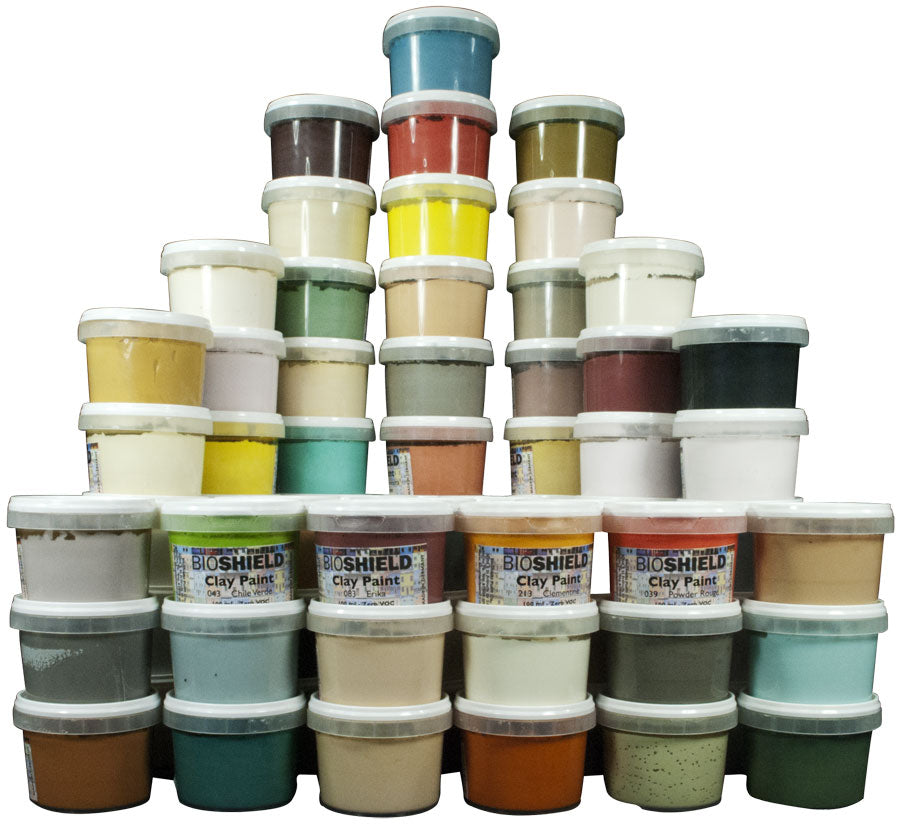
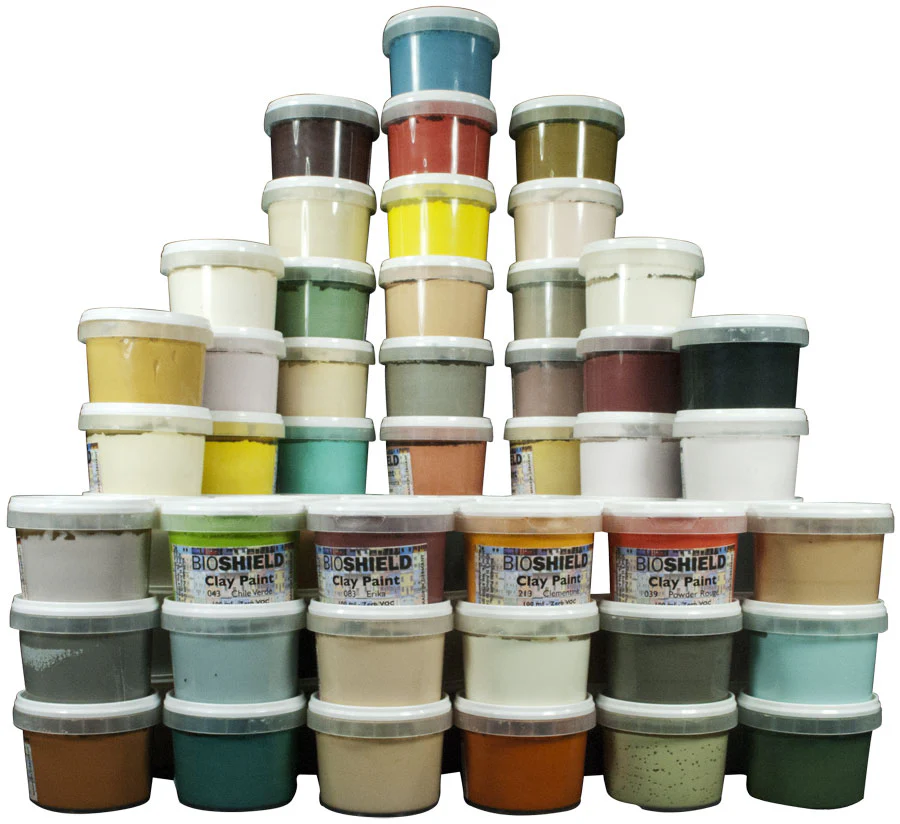
We’ve provided several answers to questions related to Paints & Primers , see some other helpful Q&A related to this product.
-
Question: How do you open can?
Answer: The sample size is just a xxxx top lid, so you can xxxx it right off.
-
Question: how do I to calculate how much paint to buy?
Answer: You measure each wall, (height x width), then add up all the walls you are painting, and that will give you the total number of square feet you need to cover. The Bioshield Clay Paint will cover between 300-400 SF per gallon for 1 coat of paint. Bioshield recommends that you use 2 coats of paint.
-
Question: Can you apply this clay paint on top of American Clay?
Answer: No. Other paint can't be applied on top of American Clay.
-
Question: Hi! I am searching for a non toxic paint to apply for a decorative graphic motif on 100 yo ceramic hearth tiles that get no foot traffic. Might you have any recommendations for which of your products to use? I was considering the clay paint. Thanks so much for your expertise and feedback!
Answer: Clay paint is great for walls but not for a hearth. Use our Silacoat mineral-based paint that is durable, fire-resistant, mold and mildew resistant and, of course, completely non-toxic and zero VOC.
-
Question: Are NCS color codes available? Asking because the manufacturer is in Germany and many European companies use this system to communicate color. For example, the Forbo site has NCS codes for all their lino products. Very helpful when trying to color match to existing surfaces or fabrics.
Answer: You will need to reach out to Bioshield directly for those. We do not have them .
-
Question: Do you ship to overseas?
Answer: We do not.
-
Question: Can I clean a painted wall with a wet rag without marring the painted surface?
Answer: If your asking if you can paint with the Bioshield Clay Paint and then wipe the wall (once the wall is fully dry), then yes. You can treat it as you do "standard" paint for wiping it down. You'll just want to wait a good amount of time before you do that. Just because a painted wall may feel dry, you still want it to have curing time.
-
Question: Does claypaint stick to canvas?
Answer: It is meant to be used on drywall, plaster, etc. It is not recommended for canvas as it has not been tested for that use, at all. So we cannot recommend it for that use.
-
Question: Can this be used on a plastic ceiling tile?
Answer: Clay paint cannot stick to plastic.
-
Question: I want a light linen paint which color would I purchase?
Answer: The only way to know what color is going to look like for sure is to order small samples and test.
-
Question: I need a mahogany brown to mimic mahogany wood. What color would I purchase?
Answer: None of them will have the appearance of wood. They just look like regular paint. The only way to know what color is going to look like for sure is to order small samples and test.
-
Question: Can i use bioshield paint on plywood? do i have to do anything prior to painting?
Answer: It's not intended for wood surfaces. Designed for interior walls and ceilings (plaster/drywall).
-
Question: Hi, do you have a color chart for clay paints? I see they offer one on the bioshield website, any chance you have available here too?
Answer: Yes indeed. Go to the Bioshield, Venetian Collection Swatch Book. You may order it there !
-
Question: Which clay paint would be best for bathroom?
Answer: We only offer one type of clay paint made by Bioshield. It can be used in most bathrooms unless you have excessive use of showers, splashing etc. In that case use our ECOS or AFM acrylic paints.
-
Question: Hi, is your clay venetian paint the same as lime paint?
Answer: No. The clay paint looks just like standard paint but has some clay in it. Lime paint tends to be more of a wash/not solid, and has other ingredients.
-
Question: I am looking for an eco friendly paint that I can use in my rented room. Can you repaint over clay paint with latex? I am worried about making the room hard to repaint for the landlord/next tenant.
Answer: Yes it can be painted over in the future. The only thing to keep in mind is that this will have a texture and the texture will come through the paint that is put on top of it, also being a clay product when repainting it will need to be primed well as the clay is going to absorb a decent amount of the first coat of primer being very porous.
-
Question: How's the longevity of bioshield paint? Will it flake or dust off in time?
Answer: It applies and behaves the same way a "standard" paint does.
-
Question: How about coverage of drywall joints? We will tape and mud the joints, will this be thick enough to get good results hiding stuff?
Answer: Bioshield Clay Paint is slightly thicker than normal acrylic latex type paints. However, it cannot replace joint compound. Once the seams have been taped, mudded and sanded, this can go directly over it.
-
Question: I see that application with a brush or roller is recommended; any experience applying this with a paint sprayer? Is the paint similar enough in it's viscosity to other paints (latex or oil) to use a paint sprayer? Thank you.
Answer: It cannot be sprayed because the clay in it won't go well through a sprayer. Henceforth Bioshield says to brush or roll for best results.
-
Question: Is this okay to use on a fireplace mantle?
Answer: Yes you could use this on a fireplace mantle.
-
Question: Hello - have these clay paints been tested for lead, cadmium, and other heavy metals?
Answer: Ingredients: Water, Clay, Porcelain Clay, Chalk, Alcohol Ester (as a binder) , Cellulose, Pigments, Preservative. All the colorants they use are, as all architectural coatings colorants have been for several decades, free of heavy metals per EU and US EPA regulation.
-
Question: Hello, can I use clay paint over orange peel textured walls?
Answer: You can use clay paint anywhere you would apply standard interior paint.
-
Question: Hi! We have new drywall and are going to use the clay paint on the walls. The construction manager said we need to use a primer and sealer before painting. Since the clay paint is self priming, can they use this as the primer and sealer? If not what do you guys recommend that is breathable. The house was treated and gutted for mold and we want to make sure there is not condensation behind the walls from using a non-breathable paint or primer/sealer.We heard clay paint has natural anti-fungal properties. We finished the basement and have a commercial grade dehumidifier set to 50% humidity. Can we use this paint on the drywall on the basement as well?
Answer: Bioshield claims that their product is self-priming over Drywall and that has been our experience as well. It's thick, bonds and hides well. If your contractor wants to seal the Drywall first, that is not a problem for this product as it will bond well to the primer. However, most primers are designed to seal, so it would prevent/block moisture vapor and make the wall less breathable. No problem in the basement if humidity levels are kept at 50% or below.
-
Question: Which paint do we use on trim and doors?
Answer: A lot depends on what the trim and doors are currently covered with (if anything), what sheen they are (gloss will need different prep than a matte finish), and what they are made of (plastic, vinyl, wood, metal). Beyond that ... it's a question of personal aesthetics and style. As there are so many factors here, this would probably best be covered with a phone call so we can get more details. Give us a call at 1-800-405-0222 and let us know where we are starting from, and we can give you some recommendations for your project.
-
Question: Is this paint good for interior basement concrete block walls?
Answer: The answer depends upon how damp or dry your basement is. Bioshield clay paint is a non-toxic very porous paint and contains no biocides or fungicides. It produces a matt finish and is fine for most walls that are dry and properly primed. If, however, your basement is musty, damp and prone to moisture intrusion, we would suggest our Caliwel Home and Office paint. This is a non-toxic zero VOC paint that kills mold and mildew and prevents its growth for 6-7 years or more. It contains calcium hydroxide (ground up limestone) which has a high pH of 12.4. Mold will not grow on this type of surface. First prime the concrete block with our ECOS Universal Primer and then apply two coats of Caliwel Home and Office paint.
-
Question: Would you be willing to share the ingredients list for the color you would consider to be the most reliably safe and nontoxic? I would like to do my own research before purchasing. Thank you.
Answer: Per the Features and Benefits section of the product page, "All-natural ingredients - water, clay, porcelain clay, chalk, alcohol ester, cellulose, pigments and preservative ".
-
Question: Do you apply it with a putty knife, or how would you apply this clay?
Answer: Bioshield recommends you use a brush or roller.Excerpt from the application instructions: "Stir before use. Apply the paint with a roller or brush in a thin, even coat. Spread the paint evenly in all directions. Standard procedure is to apply two coats, the first one being the priming coat...."Please see the application directions in its entirety, located in the downloads section on the product detail page, direct link included below for your convenience.https://www.greenbuildingsupply.com/c...
-
Question: Can I use your clay based paint for my roof? Or is it only good for interior painting beer painting? really want to lighten my roof to reduce heat impact on the earth.
Answer: Sorry, Bioshield Clay paint is for indoor applications only, generally over existing paint or sheetrock.
-
Question: Does this paint go on smooth if painted on a smooth surface? I saw other comments mentioning it has a texture, so I'm confused.
Answer: It has the ultra matte look and feel of adobe plaster. This is not the same as normal wall paint, order a sample and see for yourself if it's a look you like.
-
Question: What is the shelf life of this paint? If I buy a gallon and only use part of it, will the rest stay good in the can? And for how long? How should it be stored?
Answer: Store in cool dry place out of sunlight, do not allow to freeze. Once opened, it should be used within 6-8 months.
-
Question: Can I use your clay paint on basement block walls of 1917 built home over existing paint or primer? What if there is condensation through wall?
Answer: Make sure to remove any cracking/chipping paint. Then, once all is washed and clean, prime with the ECOS Universal Primer (Int/Ext). Once dried, follow with the Bioshield Clay Paint. (Note: if the current paint is oil based, you'll need to instead prime with the AFM SafeCoat, Transitional Primer (Int/Ext) as that is the only primer we sell that will work over oil based finishes. Then follow with the Clay Paint) . If there is condensation causing any issues, you will first need to have that tended to as this will not paint well over that. If it's a persistent issue you may need to do foundation/drainage upkeep and seal the interior of the wall.
-
Question: Hello,I have troweled gypsum over cedar and primed with BIN shellac. Can I paint this over the BIN without a reaction?
Answer: That depends upon how shiny the shellac coat(s) is/are. If it is just one or two coats over what must be something like drywall mud, it probably won't be too glossy. If it is the BIN pigmented shellac primer, that should be fine. It is always best to order small samples online to test first.
-
Question: Can clay paint be used in laminate surfaces?
Answer: It is not recommended to paint laminate surfaces, period. Laminate is too smooth and too thin to sand (in order to make for a not-smooth paintable surface that paint can grip onto).
-
Question: Do clay paints create a similar effect to Limewash paints?
Answer: The clay paints apply and look just like standard paint. Order small samples online to test the colors to find your perfect fit.
-
Question: Can you send paint swatches to us in the mail?
Answer: We carry the Bioshield swatchbooks here: https://www.greenbuildingsupply.com/A.... We also carry swatch books for Ecos & AFM:https://www.greenbuildingsupply.com/A...https://www.greenbuildingsupply.com/A...
-
Question: Hi,How much is shipping?I plan to order 2 Bioshield Clay Paint - Salvia & Taupe.
Answer: Enter the products you are interested in into the shopping cart and it will give you a shipping cost for standard ground or freight shipping within the continental United States. If you are ordering from Hawaii, Alaska, or Canada we will need to create a custom shipping quote for you, please call in your order at 1-800-405-0222.
-
Question: Will clay paint scuff easily like regular flat latex paint?
Answer: The clay paint behaves just like "regular paint".
-
Question: I have a rammed Earth house. I want to paint it as it's never been painted. it's dark and I want to lighten it up. Will this paint work?
Answer: Bioshield's Clay Paint would be a great option for your Earth House. It is porous and allows the walls to breathe. You may need extra coats to reach your desired color when switching over from dark.
-
Question: Is your clay paint suitable to go over lime based plaster that has been rubbed down with "Sopex," a tinted wax finish for Marmarino Plaster? The original surface was done 14 years ago.
Answer: None of the paints we sell would be able to go over that wax surface. They wouldn't stick properly.
-
Question: Can you ship clay paint in below freezing weather? Would freezing change the quality of the paint after it's defrosted?
Answer: You do not want it to freeze as that will alter its ability to function properly. It's always tricky to order during the winter. When shipped in winter, we try to ship it, for instance, on a Monday, so it keeps moving and doesn't sit in a warehouse over the weekend to potentially freeze.
-
Question: Can this clay paint be used on kitchen wall tiles? I thought it can be because it can be used on masonry... Or could you please recommend any paint I can use for tiles?
Answer: Clay paint is more porous than normal acrylic-based paint. If it is sealed with a clear sealer, then it could be used. It is unlikely that it would bond to wall tiles.Depending upon the surface texture of the tile, a good sealing primer is generally required such as our AFM Transitional Primer. We recommend a semi-gloss paint for kitchens and bathrooms as they are much easier to clean.
-
Question: Can you paint over it with oil paints for artwork? I want to use your paint in a mixed media piece. Do I have to seal it first?
Answer: No, Clay paint will not be able to be used with Oil paint as they won't adhere well together.
-
Question: Hello, can I use this clay paint on wood paneling walls? Also, do I need to primer the walls first or am I able to just apply 2 coats? Thank you! :)
Answer: Treat it like you would a "standard" paint. Prime the walls first with water based primer (such as AFM SafeCoat Transitional Primer) and then apply two coats of the Clay Paint. Order small samples online first to see the true colors of the paints.
-
Question: Can I use this to paint a chicken coop??
Answer: This is an interior grade paint, so we would not recommend it be used on an exterior structure.
-
Question: Hello can your clay paint be used in furniture?
Answer: This clay paint is intended for indoor walls and ceilings. We would not recommend it over furniture.
-
Question: Comparing this product to American Clay. I love the look of American Clay but this seems a lot more affordable and simple to work with as as a DIYer. Is there a method to apply this that would look more like natural plaster?
Answer: This clay paint looks and applies just like "regular" paint. And no. This kind will not look like plaster. It will look just like paint on a wall.
-
Question: I have a fireplace that is decorated with coarse stone surface. It costs a lot to remove the stones. Can I simply layer this clay paint over it to cover it up? Because the surface is not flat, the clay paint will be as thick as a quarter of an inch in some spots. Will it work? Thank you.
Answer: Bioshield Clay Paint is a thick paint but nothing like the thickness of plaster and will not build up 1/4". You might want to consider using some patching compounds made of portland cement to smooth out the surface. Then it can be painted with our AFM Concrete Floor Paint or ECOS Porch Paint.
-
Question: Are your Bioshield Clay Paints available in white?
Answer: Yes, but they are off-whites.
-
Question: Hello! Does your paint blocks chemicals from old painted walls? Painted possible 7-10 years ago
Answer: No. The only chemically encapsulating paint/sealers we sell are from AFM SafeCoat. You could prime your walls with AFM Safecoat Transitional Primer and then go over the primed surface with the Bioshield Clay Paints.
-
Question: What is the flame spread and smoke developed index for this paint?
Answer: We reached out to Bioshield for your special request. Unfortunately, this information is not available.
-
Question: What is the preservative used in this product?
Answer: We have a preservative information document for bioshield water-based products located in the downloads section, link below for your convenience. https://www.greenbuildingsupply.com/c...
-
Question: Is there a booklet of samples for all the paints available?
Answer: You may order the swatch book here: https://www.greenbuildingsupply.com/B...
-
Question: Is this paint (Bioshield Clay Paint) suitable over interior stone foundations with lime mortar? Does it maintain the breathability of the lime mortar?
Answer: One of the features of Bioshield Clay Paint is it's breathability as a surface coating. As long as the Lime Mortar is well cured (neutral Ph) the product should work in this proposed application.We always recommend testing with samples of the product for your particular project if you have concerns. Samples of this line of paints are available if you would like to test for adhesion/breathability.
-
Question: Hello, are these paints safe for wooden baby toys that they put in their mouth?
Answer: While Bioshield Clay paint is a non-toxic paint, it is not well suited for this type of application. Our ECOS interior Wall and Ceiling paint in semi-gloss would be a better solution. Having said that, in our opinion, there is no paint that is truly edible for babies to chew on. We prefer our AFM Naturals Penetrating Oil which is an organic oil that will not peel off.
-
Question: Hi, do you supply paints to India? I would like to be a reseller of bioshield in India, is there a possibility?
Answer: Sorry, we don't sell internationally unless you have a contact in the states where we can ship to.
-
Question: Can it be applied to fresh lime plaster ?
Answer: Non-hydraulic lime plaster sets slowly and is quite caustic while wet, with a pH of 12. The pH needs to be neutral before application. You will need to test the pH to know for sure. Once fully dried, the pH will come down to normal but we have no idea how long that will take.
-
Question: What about bathrooms? is this okay for bathrooms? and how is it for wiping off stains ? will the paint come off with the wipe or will it be good like satin?
Answer: Bioshield Clay paint can be used in bathrooms that don't have good ventilation. Excessive moisture can be a challenge as this paint is very porous. It also would not be our first choice for a bathroom as it does not wipe down like a traditional semi-gloss paint.
-
Question: I have read that plaster has a small dehumidifying and anti mildew effect. Does clay paint, or is it too thin?
Answer: Clay paint has similar properties to earth plaster but is not as thick and will not provide the same effects. It's a wonderful product to be around because it is alkaline and natural. It's also much easier to apply and is much less expensive.
-
Question: Is there any concern when hanging art/pictures on a wall painted with this product?
Answer: Bioshield Clay Paint behaves the same as "regular" paint.
-
Question: Could this be applied to cinder block walls in a damp basement? I am not trying to seal the walls or stop the dampness.
Answer: If you are going over previously painted or primed cinder blocks, then yes, provided the walls are clean and the previously applied paint is not flaking and the surfaces you are covering are not actively wet to the touch, you can go over with clay paint. If your cinder blocks are raw and uncovered, we would advise priming first with AFM Safecoat Transitional Primer, and then doing the Bioshield Clay Paint over that.If there is potential mold issues, then our Caliwel mold inhibiting paint would be better. You should also consider getting a dehumidifiers to remove the humidity.
-
Question: Will this work on previously sealed bricks?
Answer: BioShield Clay Paint is good for covering dry, absorbent, grease-free surfaces such as firmly hung wallpaper, wood, clay plaster and most common mineral and Drywall and over previously painted surfaces. Provided you follow the preparations and application instructions it should work fine. If your bricks have been coated with a topical/smooth sealer you may need to scuff it up a bit with sandpaper to give the paint an appropriate surface to bond to. Application Instructions and further information is here : https://www.greenbuildingsupply.com/c...
-
Question: Can this paint be use for my hand made pottery?
Answer: Clay Paint applies and acts just like a regular "interior wall paint". If that is the type of paint you use on your hand made pottery, then yes.
-
Question: Could I use clay paint outside? Under a Porch?
Answer: We would not recommend Bioshield Clay Paint in an exterior application as it is very much an interior grade paint. We would recommend the Exterior grade AFM (All Purpose Exterior Satin) or ECOS (Exterior Satin Wall Paint) products instead.
-
Question: Does clay paint crack in very hot dry climates?
Answer: Bioshield Clay Paint reacts like "regular" interior wall paint. I have not heard of it cracking in different climates.
-
Question: How much space does a sample cover?
Answer: A sample size of Bioshield Clay Paint is 3oz. One Gallon will cover 300 at an average and up to a maximum of 400 square feet on new wallboard. Textured and highly absorbent surfaces may need considerably more paint material. 3oz is 2.34% of a gallon, so at an average that is 7 square feet with the caveat of how thirsty the surface you are covering is.
-
Question: Can we use this paint on terracotta clay pots?
Answer: Yes.
-
Question: Could this paint be used to paint paneling that has a light coating?
Answer: It is always recommended to prime before painting. If the light coating you have is primer, yes. You may paint the Clay Paint right over it as it goes on just like standard paint!
-
Question: What primer should be used before applying the bioshield clay paint?
Answer: Bioshield Clay paint is self priming, however, professional paints always recommend priming a surface prior to application especially if the surface is new drywall, porous, or in need of repair. Primers also help hide dark colors well. Two coats of clay paint are always recommended with a normal 3/8" nap roller. There is ultra low odor, zero VOCs and the finish is a beautiful matte finish. Not recommended for bathrooms or kitchens with high moisture. Use AFM WaterShield to seal those areas if desired.
-
Question: If a wall painted with this paint is later painted with latex paint, will the latex adhere to it? Does this paint have a noticeable texture (as images suggest), and would there be a noticeable texture to subsequently applied paint?
Answer: Yes, normal water-based latex paints will all adhere to Bioshield Clay paint. Texture depends upon application. If a normal 3/8" nap roller is used, the texture will be just like normal paint. However, greater texture can be achieved with different types of rollers and yes, if paint was applied over that texture, it would be noticeable. Clay paint is very thick, non-toxic, zero VOC and produces a beautiful matte finish. It is completely different in look and feel from normal acrylic type paints.
-
Question: Is this paint suitable to apply to unfinished maple ladder back dining chairs? (Bioshield clay paint Venetian collection)
Answer: The Bioshield Clay Paint really isn't intended for furniture as it doesn't have abrasion resistance that is needed for furniture application. BioShield Clay Paint is for indoor walls and ceilings. The ECOS brand would be a great choice for painting furniture. If your surface is raw wood, use 1 coat of the ECOS Wood Primer and then 2 coats of ECOS SemiGloss Paint. If it is a previously painted surface you can use the Universal Primer instead of the wood primer.
-
Question: Will Bioshield clay paint cover wood surfaces?
Answer: Bioshield Clay paint was designed for either new drywall or over existing paint. Two coats are recommended. Clay paint can be applied over wood provided that the wood is clean, dry and not not oily like teak. We recommend priming the wood first with either AFM Transitional Primer or ECOS Wood Primer.Clay Paint is not suited for frequent cleaning. Grease and other contaminants may remain embedded in the paint. For extra protection in high-impact areas such as hallways and kitchens, we recommend using BioShield Wall Glaze #15: sprayed, sponged, or otherwise applied (not rolled!) over a Clay Paint surface. For bathrooms Clay Paint can only be used in low-impact areas and areas that do not receive regular water exposure (such as around showers and sinks.) In normal living environments, Clay Paints have moisture regulating and odor reducing properties and they provide optimum breathability.Clay Paints are low-odor, non-toxic, no-VOC.Coverage: 300-400 square feet per gallon, depending upon surface texture, porosity and method of application.
-
Question: How do we apply this product?
Answer: Hello Gillian. The lovely thing about Bioshield Clay paint is that it applies just like "regular" paint with a brush or roller! I've used it and feel the coverage is lovely, as well. Enjoy!
-
Question: Can this be used on floors?
Answer: No, we do not recommend using Bioshield Clay Paints on floors because it does not hold up to foot traffic. For other options, feel free to give us a call at 888-727-2101.