We’ve provided several answers to questions related to Concrete & Masonry Sealers , see some other helpful Q&A related to this product.
-
Question: Where could I find a list of ingredients for this product?
Answer: As mentioned on the Safety Data Sheet, available on our website, Specific chemical identity and/or percentages of composition has been withheld as a trade secret.
-
Question: I have a cinder block basement wall that has some wear, tear and crumbly joints. Which is the best sealant to use? Can the AFM Penetrating WaterStop be painted over?
Answer: This product isn't really designed to handle the crumbly joints, it would work on the bricks themselves however. It would be a good idea to give one of our eco-advisors a call to discuss the issue in a bit more detail to really determine if/what product we have that would be best suited for your situation.
-
Question: Someone else asked if this sealer is food safe, is it possible to use this first over stained wood and then apply a food safe finish on top?
Answer: You would need to talk to the manufacturer of the food-safe finish, as we don't sell it and have not tested it to confirm whether it would work (or not) with this product.
-
Question: Would this Waterstop or the watershield be better to use on slate veneer shower walls? The veneer has a waterproof resin backing, but I'm still wanting something to help the stone repel water
Answer: We sell nothing that will work for that situation.Waterproof resin means that no water-based products will stick to that surface. Penetrating WaterStop is water-based. And on top of that this penetrating sealer will not penetrate a waterproofed surface.
-
Question: To add to my last question...can this sealer be used to seal Mapei Ultracolor Plus Max high performance, rapid setting grout? The grout says it has bio block technology but I don't know what that means. I want to make sure it can be used over the grout I used. Thank you!!
Answer: If it is a standard sanded or unsanded grout and not a urethane or epoxy grout, then yes. The real test is whether the mortar is porous enough to accept the sealer. Test first with some droplets of water and if it penetrates, then this will work well.
-
Question: I have an underground storage tank (kerosene) that had 2 copper pipes which were terminated and covered with cement and some type of epoxy patch. The patch failed after 13+ years (we bought home not knowing about the tank) - had the cement removed enough to see only one of the two copper pipes was crimped - the other one had a sliw frp - that has been crimped and epoxy applied but basement still smells of kerosene. Does your dynaseal product seal cement so we won't smell kerosene?
Answer: Maybe. We've not tested it for that type of odor, but it has worked for similar odors. It might require 3-4 coats to fully block the smells. However, make sure the surface is dry as this will not bond well if applied directly over solvents such as kerosene.
-
Question: Would any of your products work to seal a cmu foundation wall in a basement from the interior?
Answer: Yes, that's what it was intended for. As long as it has not been previously sealed or painted and is porous, clean and dry. YOu can test the porosity by spritzing some water droplets on the surface to see if they penetrate and turn the surface darker. If so, you are good go. Otherwise, if the droplets sit on the surface for 5 minutes, then the surface may have been sealed or is too dense for this product to penetrate. TEST first.
-
Question: What primer can be used for painting plastic playground equipment?
Answer: We sell nothing that can be used on plastic.
-
Question: Is this an adequate sealer for cement board on a tub surround? It will be tiled over.
Answer: We do not have a sealer for that use.
-
Question: Can I use this on matte tiles and limestone? I don't want to use the mexeseal because it will add a sheen to it which defeats the purpose.
Answer: AFM Safecoat, Penetrating WaterStop requires a porous, absorbent surface in order to work. We suggest you first test your tiles and stone for porosity. Sprinkle some water onto the surface. If the water is absorbed quickly, then your stone is porous enough to absorb the AFM Safecoat Waterseal. If the water droplets bead up on top of your stone, then this product will not work.
-
Question: In my upcoming home re-roofing job, my roofer is going to be sealing any soffits or vents that are up on my roof while it is re-tiled.I am looking to use a ceramic lightweight S tile which will have an underlayment below the tile. My roof job will entail sealing the installation of these vents onto the roof, and then I would have the underlayment abut or overlap slightly. Because of my sensitivities so many adhesives and coatings, and concerned about off-gassing of these materials into my air circulation system through these openings , what do you think may be best sealing product for my job ? I would like to use AFM Safecoat Dynoflex textured natural ?
Answer: Dynoflex would be perfect for that job.
-
Question: I plan on using microcement to cover my bathroom sinks, bathtub, and shower. Do I need different sealers for all three? I want a non toxic sealer especially for the bathtub, since your whole body soaks in it. I also need one for my kitchen counters and outdoors by surrounding my pool. I would like to minimize the number of products I need. Which ones do you recommend?
Answer: Sorry, we do not offer any sealer for your sinks, bathtub or shower that can be submerged under water. Also most microcements have sealants in them that prevent our products from penetrating. Unfortunately, we don't have any recommendation for this type of application.
-
Question: I have a terra cotta kitchen floor that hasn't been impregnated or sealed for more than 18 years. What do you suggest especially with a household with cats?
Answer: Even though it has been 18 years, there may still be residues of oils, waxes or other sealers. If you can remove whatever was used previously 100%, and the tiles are completely porous, then and only then would we recommend Mexeseal. You recommend that you test first with a small sample that is available on our website.
-
Question: Will this work over concrete painted with acrylic concrete paint?
Answer: No, it will not. It has to be used directly on raw concrete. Follow application instructions : https://www.greenbuildingsupply.com/c...
-
Question: Can it be used on ceramic floor tiles?
Answer: It is only meant to be used on grout. We do not have anything to seal ceramic/porcelain tile.
-
Question: Can I use this product on a honed marble shower floor?
Answer: AFM WaterShield will resist moisture on honed marble, however, a shower floor gets too much moisture and the WaterShield will not last very long. Unfortunately, we have not found any sealer that will work for this purpose. Most penetrating or topical sealers on the market have biocides, fungicides or antimicrobials that can leach into your feet. It is very difficult to seal marble and we have not been able to find a product that is completely safe and long lasting. If you find one, please let us know.
-
Question: Can this be applied over previously painted masonry where the paint has been partially removed (removed to the extent possible)? I understand it won't penetrate where there is still paint, but will it penetrate where the paint has been removed and it is down to raw brick?
Answer: As long as the surface is porous, and completely and fully dry, the GBS Penetrating Concrete Sealer will soak deeply into the masonry. We recommend multiple applications in order to saturate all the way through. Even if there is still some little bits of paint on the surface, the sealer will soak in around it and then get sucked in all different directions underneath the surface.
-
Question: Is this product considered a breathable sealer? And is it safe for lime mortar (historic brick)?
Answer: GBS Penetrating Concrete Sealer is considered "breathable." This product can be used on lime mortar and historic brick provided it meets the following criteria - Porous, Clean and Dry, Free of any other sealers, coatings, or stamped concrete release agents, and Neutral pH (between 7 and 9). GBS Penetrating Concrete Sealer requires multiple applications and Application Instructions can be found on our website by Expanding Specs for this product.
-
Question: Can this sealer be used on grout/tile on a heated floor?
Answer: Yes. Two or three coats are recommended.
-
Question: Can it be reapplied to basement cinder blocks 10+ years after first treatment (due to reemergence of moisture)?
Answer: Test with water to see if it will absorb. If it does, then the sealer will also absorb. The goal is to saturate the cinder blocks and if applications were not thorough enough, water could continue to seep through. Generally it takes 3-5 applications because cinder blocks are super porous much like a sponge.
-
Question: Can Penetrating Sealer be used on encaustic cement tiles intended for bathroom floor?
Answer: The requirements are clean, dry, neutral pH and porous. Encaustic tiles are compressed with a hydraulic press and therefore may not be porous enough. You need to test. If droplets of water will soak in immediately and turn the cement dark, you are good to go. If it beads up, then our sealer will not work. The only sealers that will work have solvents which we don't sell.
-
Question: Our acid stain floor got messed up and we had to paint over it. Can we still use this sealant over the painted concrete? it's a water based paint. Thanks!
Answer: No, this product requires a porous surface to bond properly to the concrete.
-
Question: We have indoor brick stairs that are starting to chip apart. What is best product to use to halt this process?
Answer: Please call and speak with Joel at 641-323-6108 about this. This sounds like more of a question for a mason.
-
Question: Can this product be used on a shower wall? I see it's not meant for shower floors but what about walls?
Answer: This product is made for porous concrete, stucco or brick. It is not a sealer for ceramic or porcelain tile. If you shower walls comply then this product can be used. It is primarily designed to block moisture intrusion from behind a wall or below a floor. What would be better for a shower wall would be a topical sealer, not a penetrating sealer. For that, use our AFM Mexeseal.
-
Question: Is there a datasheet available for this product? Trying to see if it claims reduction in vapor transmission.If not, is there a different waterproofing agent available to spray/apply to concrete that is compatible with Sustain 1195?
Answer: This product stops water intrusion 100% if applied correctly. It will certainly block some water vapor emissions but there is no data on how much it will reduce. This is a penetrating sealer for concrete and masonry. Once it is completely dried (say two weeks) you could apply an adhesive such as Sustain 1195 on top. The addition of either of these would certainly add additional protection.
-
Question: I am looking for a low to no VOC sealant for natural stone counters...do you have recommendations?
Answer: We do not sell anything for that type of countertop use.
-
Question: Can this be used on a concrete floor that will have a wood stove on it?
Answer: Yes, if the stove sits on a stone hearth but no if it sits right on the concrete. It can certainly be used all around the wood stove but just not right beneath it.
-
Question: Can this concrete sealant be used to stop erosion of garden sculptures?
Answer: Yes, as long as they are porous enough to absorb this product. Test by spritzing some water droplets on the surface. It they absorb quickly and darken the concrete, then it will also absorb this product.
-
Question: Can this sealer be used over a concrete dye that has been applied topically to the concrete?
Answer: No, it cannot. We sell nothing for that use.
-
Question: Is safecoat grout sealer PFAS free?
Answer: All AFM products are PFAS free. There are none.
-
Question: Will this product leave a deeper tone or "wet look? Does it change the slip resistance? I'm using it on an exterior flat fieldstone patio with very rough surface.
Answer: No it will not have a wet look once it is dried. Yes the gloss sealer will make the surface smoother and potentially cause it to be more slippery.
-
Question: Can this be used on tile and grout?
Answer: It can be used on porous tile and porous grout that is dry, clean and free of sealers, wax, dirt etc.Most ceramic tile is glazed and is only porous on the edges. Porcelain tile does not need to be sealed. Polished Granite, Marble, Slate are often too dense to absorb this product, too. Unfortunately, we do not offer any non-toxic solutions for non-porous surfaces as our products will not bond well and will not hold up to strong acids or alkaline solutions.Another option for sealing sanded or unsanded grout is our AFM Grout Seal.
-
Question: How many AFM SafeCoat, Grout Sealer, 1-Quart do we need for 500 sq ft area with 18" x 18" tiles?
Answer: Per the Specs section on the product page, "Coverage 100 linear feet, OR 50 Square feet with 1/4" grout lines and 12" x 12" tiles".Doing the math, 18" tile in 500 SF is approx 244 tiles, (244x(18x4))/144=122 linear feet. Some variance depends on the grout line width. If your lines are more than 1/4" you'll need a little more, if lines are less than 1/4" you'll need a little less.As 1 quart does 100 linear feet, 2-Quarts should be just fine for your project.
-
Question: Our basement had mold in it, we have since corrected the problem and had the mold cleaned up. It was recommended that we seal the basement floor and walls to prevent excess water from entering the basement (exterior underground walls are already sealed). We have a home gym in the basement so are very concerned with respiratory health. What indoor concrete sealer would you recommend? and also plan on adding rubber flooring panels in the gym area.
Answer: GBS Sealer won't reduce the vapor pressure that much coming from the ground since the sealer is breathable. There's also concern about the rubber floor panels and how they are going to be bonded. Since our sealer may not completely stop the vapor, if you put the rubber down, then mold might accumulate under it. There isn't really an easy solution for this application without knowing how much vapor is entering the basement etc. And we don't have another product to suggest.
-
Question: Do you sell an elastomeric paint that will go over dynoseal?
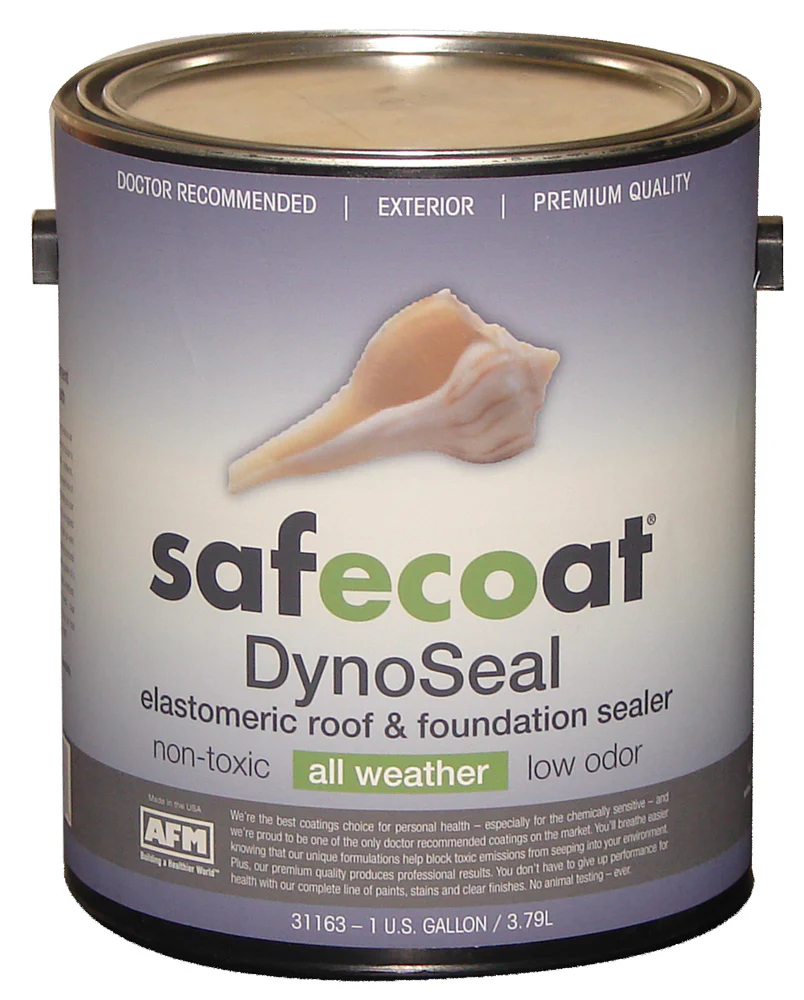
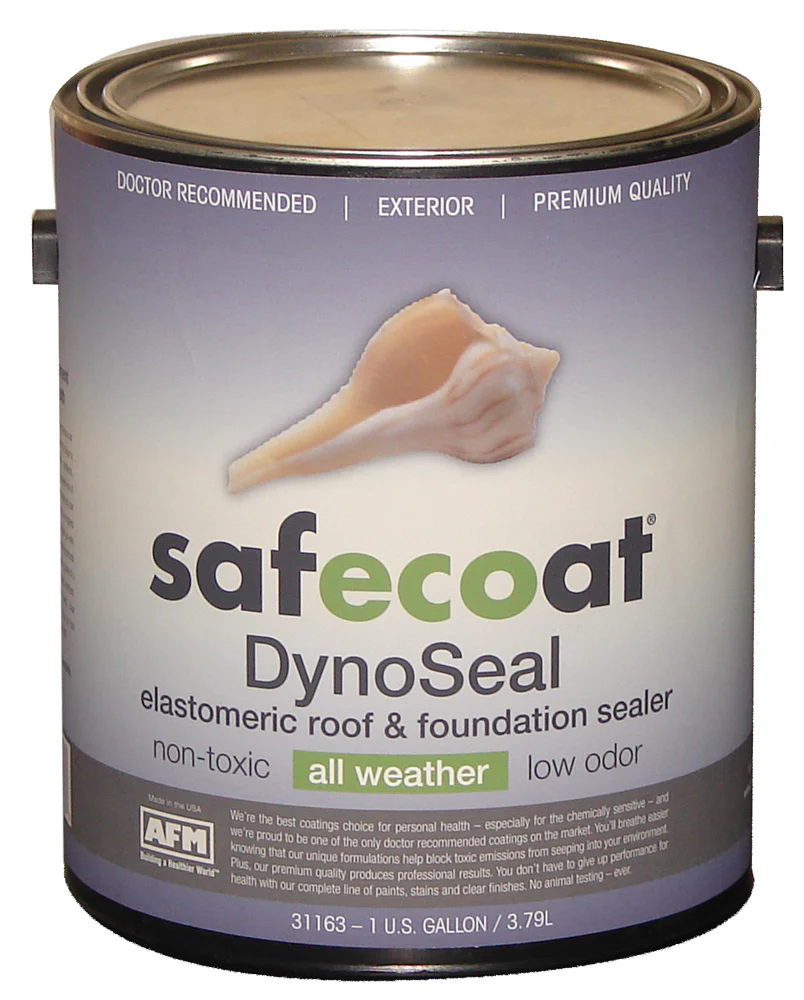
Answer: Dynoseal is a behind-the-scenes product that is meant to be covered up and not exposed directly to the sun or elements. It should be top-coated with Safecoat Roof Guard (formerly Dynoflex All Weather).
-
Question: I just ordered 2 gallons for my workshop floor. I need to make some small concrete repairs with Sakrete QuickSet before I spray it on. How long do I need to wait after make the repairs? Directions say it dries in 20 minutes but takes a month to fully cure. Grateful for any guidance.
Answer: Please call 641-323-6108 for assistance.
-
Question: Is this safe to use on marble. I'll be using it on my grout but my shower is all marble?
Answer: We do not sell a product to seal marble. In order to apply the Grout Sealer, make sure to use a small brush to apply it just to the grout.
-
Question: I need this for a new garage floor, will this peel up from parking a car on it?I know hit tire will peel up painted floors.
Answer: GBS Penetrating Sealer is fine for driveways and garages. Yet be sure that new concrete garage floor is at least 45 days old. A minimum of 2 months if the region is high humidity/hot. You need to let the concrete cure out the water before allowing the sealer to absorb. It's best to order small samples to test first.
-
Question: Is this grout sealer at all vapor permeable? I'm installing tile on a slab and trying to stick with a vapor permeable tile assembly so I don't trap any vapor coming up from under the slab.
Answer: Yes, it is vapor permeable.
-
Question: Hi - Im looking for a clear seal for wood cabinet doors that will make them non- porous so they can be easily disinfected between litters of foster kittens. To disinfect, everything is thoroughly wiped with Rescue formula. Which product would best accomplish this?
Answer: We don't sell anything that we feel will hold up to that abuse.
-
Question: Does this work on concrete basement floors to make them less friable? Concerned about potential silica dust so want to seal the floors. Also the basement floor tends to get wet when it rains.
Answer: Concerning reducing silica dust, yes, the GBS sealer will help solidify dusting concrete. Although you may need multiple applications depending on how dusty that concrete is. Eventually the sealer should begin to solidify the concrete. Assuming you don't have cracks but more like just dusting.The sealer will not appreciably reduce the moisture. The sealer is breathable and therefore cannot act as a vapor barrier.
-
Question: 1980s construction, poured concrete below grade (heavy clay), block walls mostly below grade to first floor, AFAIK no sealers applied. Semi-conditioned space but +60% humidity often a problem. Is there a recommended moisture percentage (per material)? Also, saw the dewpoint/temp note-does that mean a high RH can be ignored prior or during application? Thanks
Answer: We do not sell a product that will help with that situation. The penetrating concrete sealer is breathable, so will not block your humidity.
-
Question: I need a non-toxic grout sealant. Three questions about this product: 1) Can I use this grout sealer for a tile shower and bathtub? i.e. the tile will routinely be submerged in water 2) Does this grout sealant contain PFAS? Is it LEED compliant?
Answer: Yes you can use this for a tiled shower/bath. This product does not contain any PFAS. they have a SCS Gold certification, does not say anything about Leed Certified.
-
Question: Can this be used to seal cement tile for a wet-room (bathroom floor) not in the shower or tub area but likely to get wet sometimes. Also, I see that it is comprised of a silicone mixture. Are there any PFAS in this sealant? Thanks!
Answer: You may use the Penetrating WaterStop for this application. Make sure to follow application instructions: https://www.greenbuildingsupply.com/c....There are no PFAS in this product.
-
Question: Before I sealed I used a 50/50 mix of bleach and water to clean dirt bird droppings etc. Can I still use this to clean the concrete after the sealer has cured completely?
Answer: Be sure to power wash the 50/50 bleach out thoroughly before applying the sealer. Otherwise, any remaining sodium hydroxide may react with the sealer when applying. Then allow plenty time for that to dry as you've forced all kinds of liquid into the concrete and it takes time to all leave. Concerning cleaning maintenance, the 50/50 bleach/water mix should be fine once the sealer has adequately cured. Assuming you aren't cleaning the concrete on a weekly basis. If so, then reduce the bleach % dramatically.
-
Question: Can this be used to waterproof Hempcrete?
Answer: Yes, but not in a submersible situation like a pond or tub.
-
Question: What are the ingredients?
Answer: It is a water-based polyester polymer penetrating sealer. Acrylic provides the gloss. The rest of the ingredients are proprietary.
-
Question: Hi - I created a new birdbath out of concrete that has imprints of leaves on the inside. I want to seal the birdbath including the inside that will hold the water. Is there a sealer that I can use that will be non-toxic to birds? I understand that the PH will be high on fresh concrete and that there are products that can reduce the PH of the concrete before sealing it. Will that be necessary before using the sealer? Although the birdbath is large (~ 2 x 2.5 ft.) I believe that I don't need a full gallon of the product. Can I get it in smaller sizes? Thanks, Steve
Answer: We do not sell any products that may be used in a bird bath.
-
Question: Can this be power washed after it is applied? If so how long after the application can it be power washed?
Answer: Let the sealer cure for a few weeks at least before power washing. Heat/humidity slows down the curing process.
-
Question: Do you have marble tile sealer?
Answer: We do not currently have a marble tile sealer.
-
Question: can i use this on a tongue and groove wood ceiling in a bathroom that has already been coated with a tinted (water-based) varnish?
Answer: Probably not as WaterShield is a penetrating sealer and any varnish must be sanded off first. A better choice would be our AFM Acrylacq.
-
Question: Why is it not recommended to apply on shower floor? I'm looking for a non-toxic product to seal a honed marble floor in a bathroom (shower floor and general bathroom floor).
Answer: Mexeseal is a topical clear sealer that will work for a while on Marble if applied to a clean and dry that has no soap scum, oil, wax or previous sealers on the surface. It cannot tolerate standing water.
-
Question: I purchased an old bird bath. Mold and muck appear on bottom. Would your sealer stop that growth and still be safe for wildlife to use the water?
Answer: None of the products we sell can be used inside a bird bath where the water and birds will be. Being water-based means the product will break down when submerged or used on a surface that contains water.
-
Question: Can this be rolled on? My tiler is planning to use a roller.
Answer: Per the AFM Application Instructions, https://www.greenbuildingsupply.com/c... , "APPLICATION:Topical: Allow 48-72 hours post grout installation before applying sealer. Apply 2-3 coats liberally in an even manner, using a sponge, small brush, orany other tool which can be used comfortably.Flood coating is acceptable, but avoid puddling being careful not to leave sealer on tile surfaces.Allow 2-4 hours between coats. Remove any sealer from tile surfaces promptly. "
-
Question: I'd like to use this on untreated 4x4 pine posts that will have ground contact (maybe a few inches into the ground). The upper parts will be painted with white linseed oil paint. Can I use Safeguard Roof Coat to cover the black color of the Dynoseal at the bottom to help it match the white paint?
Answer: You'll want to use the Dynoseal only where it is under/touches the soil and it's not exposed to the sun. So you won't need to worry about covering it.
-
Question: Will this work to seal a wood colored grout?
Answer: As long as you are using any grout that requires a sealant, this will work. Order a small sample to test first.
-
Question: Can I use this product on a concrete block exterior wall ? My wall is starting to deteriorate due to neighbors watering
Answer: Green Building Supply, Penetrating Concrete Sealer can be used on porous concrete block exterior walls. Please read and follow the directions carefully for best results.If the concrete wall is not porous or already sealed, this product would NOT work. Give us a call if that is the case and we can see what we would recommend instead 1-888-727-2101.
-
Question: Does the tile sealer seal the grout as well?
Answer: Yes.
-
Question: I bought the product to apply to the interior of a raised garden bed. But in reading the surface prep notes on the can, it says to apply a transitional primer on new wood before the Dynoseal. I haven't seen any mention of this anywhere online. Is the primer really necessary?
Answer: Dynoseal may be applied directly on new wood without a primer. It only needs to be clean and dry. The installation guidelines provided by the manufacturer on our website has no mention of using Transitional Primer. The only time that might be required is if the surface was treated with an oil-based paint or sealer.
-
Question: Can this be used on the outside of concrete water troughs being used to grow aquatic plants? All sides of troughs are 3 inches thick. The concrete is fiber reinforced, unsealed and porous. The objective of sealing from the outside would be to reduce permeability/slow down water loss through the concrete. The sealer failing over time is not an issue for me. Or, is there another product better suited for this goal that will not change the look of the cured concrete? Thank you!
Answer: Yes, this will work fine. It will not change the look or feel of the concrete. Just make sure you saturate the concrete. This could take 3-4 coats or more depending on porosity. Make sure the surface is dry. Drier the better. One gallon will cover 200 SF with 3-4 coats.
-
Question: Hi!! I wanted to use this as sealer for our cement bathtub but I see it's not for pool use, which of your safe coats could I use to seal our cement bathtub?
Answer: We sell no product that can be used in a bathtub.
-
Question: do you ship to the uk?
Answer: We do not ship outside of the US.
-
Question: Hi, I just put new tile on my home, and I'm about to add the grout and I'm looking for a sealer. I have 5 dogs and want something that is waterproof for when they have accidents and also they come in with dirty soil paws and would like for my grouts not to stain. I clean everyday so I will make sure it always clean but staining has happened to me before ina previous tile, and I didn't know sealers existed. What could be the best products for this. And also do I apply it at the same time as grout of after the grout has fully dried?
Answer: This is the right project for sealing grout. It will prevent mold and mildew and make the grout easier to clean. Allow grout to dry for 24-48 hours and then apply 2-3 coats. Use a toothbrush or small paintbrush. Wipe off excess that gets on the tile as it will create a different sheen. It won't hurt anything and will eventually wear off but it might look a little different if not cleaned off the tile.
-
Question: Good morning, will this work on lime plaster? Such as tadelakt?
Answer: To be able to answer your question properly, I suggest that you give us a call so we can discuss the type of lime plaster being used because that is going to be a factor in weather or not this product will work. Joel our owner would be the best person to talk to about this situation. 641-323-6108
-
Question: We had our metal ductwork sealed a month ago and smells like smoke. Is there sealer to get rid of the smell or VOC in ductwork?
Answer: None of the products we sell can combat smoke smell. Shellac can be used to combat smoke smell, but I don't know how it works on/around ductwork. You'll have to speak to someone at a box store who sells shellac and see if it will work for that use.
-
Question: What would the best sealer be for painted glazed ceramic tiles?
Answer: Sorry, we have no sealer for glazed ceramic as nothing will bond to the surface. Our AFM Mexeseal will work on the unglazed portions of the tile, but glazed surfaces typically need not be sealed.
-
Question: We have an old house with an outdoor patio with both terracotta and limestone tiles. Is there any single product you have that could be used to seal both? And if not, which for each?
Answer: That's a tough one. Terracotta and limestone tiles vary so much as manufacturers often use binding agents to add to tiles. So there isn't an "across the board" answer. Green Building Supply, Penetrating Concrete Sealer would be the one to use, if it works. Are the tiles absorbent? e.g. do they both take in water uniformly? Was there ever a waterproofing agent/other sealer applied in the past? If there is anything currently on the tiles "in the way" of the new sealer, it may not work. This sealer needs open, clear pores to soak into. The way to know is to order a small sample of it online first to test and see if it fully soaks in and doesn't pool on top. If it fully soaks in to the clean tiles and no pooling, then it should work.
-
Question: What is the best product for a new concrete floor for the whole house need something very durable having two boys one a teenager and one a few years younger, low voc and easy application?
Answer: This product is meant for porous concrete and will provide a clear topical protection from moisture. It is not meant to replace using Epoxy, as that is highly durable yet we do not have a similar option.
-
Question: Hello, we're looking to have our floors redone. Our contractor said they add an additive to the grout to seal it in one shot. I believe they use miracle sealant. I want something more eco-friendly. Is this considered an additive that they could add to the grout or do you carry something like that?
Answer: We do not sell a product that can be added to the grout for sealing. This would be topical afterward.
-
Question: Is there a fire rating for this product?
Answer: They do not have fire ratings for their products.
-
Question: Can this, or any AFM sealer, be used on vinyl or laminate flooring?
Answer: No sealers we sell are formulated to stick to vinyl floor or laminate flooring. Those types of flooring are manufactured to keep things from sticking to them. Therefore, it's hard for any of the sealers we sell to stick to them.
-
Question: can this be used on honed travertine tile?
Answer: It's possible as long as water will absorb into it, this product will also absorb. Please test first with water.Another option is our AFM Mexeseal which is a satin or medium gloss topical sealer.
-
Question: Can this be used on limestone floor tiles above hydronic radiant heated floor?
Answer: AFM tech department feels that should be fine. Let us know how it goes. We do sell sample sizes if you would like to do your own testing first.
-
Question: How would you apply this to the full length of existing ductwork?
Answer: You would not apply AFM Safecoat DynoFlex to the length of ductwork. You would seal each seam of the ductwork by wrapping the seams with metal tape. Then, you can apply DynoFlex over the metal tape.
-
Question: Can you add anti slip additive to this product? Or what recommendation would you have to prevent slipping when the concrete gets wet?
Answer: Anti slip additive cannot be added to this product. It is a penetrating product that does not leave a film on the surface.If you wish an anti-slip texture on your concrete, you may use a topical coat like ECOS Interior Anti-Slip Floor Paint.
-
Question: We are acid staining our year old interior concrete. 1) can this be applied after neutralizing the acid stain? 2) does it NEED to be waxed after this product is applied? Thanks!
Answer: None of the products we sell will work over acid staining. It's too "particular" and really needs a sealer that is specifically made for it.
-
Question: What is the best way to clean tiled/grouted shower walls before applying? Also, how many coats are recommended for a shower? Thanks!
Answer: You can use HydrOxi Pro Grout Smart Cleaner to clean the grout. Here is a link:https://www.greenbuildingsupply.com/A...AFM Safecoat Grout Sealer is designed specifically for unsealed tile grout. You would apply 2-3 coats, as needed. Grout Sealer is compatible with all standard sanded or unsanded grouts. It is not compatible with urethane grout or grouts fortified with polymer additives. For previously-sealed grout, conduct several small test patches for absorption and compatibility. AFM Safecoat Grout Sealer should be applied to the grout lines only. It is not meant to be applied to the tiles. Please read the Installation Guidelines prior to application.https://www.greenbuildingsupply.com/c...
-
Question: Does this product contain PFAs or PFOAs? Also, would this work on limestone?
Answer: No PFA or PFOA. Yes, as long as it was porous. Some polished limestones will not absorb well. Watershield is not intended for shower floors as it will make it slippery.
-
Question: building a new structure which will be used as storage and workshop , walls will be cinder blocks and concrete roof , once roof has become ph neutral and the sealant applied , is it TOTALITY nontoxic and will not leach anything ?? ; what i am aiming at is to use the roof to collect rainwater , is this feasible with your product ??
Answer: Unfortunately, the answer is no on rainwater as well as roofing concerning applying the sealer. We do not recommend, nor warranty, application of the GBS Sealer on any roofing structures. There are way too many variables with roof systems. And we don't have another product to recommend for that use.
-
Question: Can this sealant be used for concrete candle holder and be safe to be heated and still be non-toxic?
Answer: It cannot. We don't sell anything that can be of use on a candle holder with the heat.
-
Question: Is this a penetrating or non-penetrating sealer?
Answer: Penetrating.Per the product application sheet under the Downloads section on the right , https://www.greenbuildingsupply.com/c... , "IMPORTANT: Wipe off any sealer which has not penetrated into the grout within 5 minutes; do not allow sealer which has not soaked in to dry on the surface (simply wipe off with a slightly damp cloth or sponge). ".
-
Question: I'm trying to slow moisture transfer, effervescence and dusting on brick basement interior walls. I've done what I can to regrade and drain outside but get moisture in the corners where there's old mortar/dirt between layers I think that don't dry well and show darker on the brick where it's been lime mortar repaired. (Like a sponged on german schmear.) Would this product be good for this application?
Answer: No, a better product would be our GBS Penetrating Concrete Sealer. This will stop dusting, efflorescence, spawling and other issues because it seeps deep into the concrete and chemically bonds. This fills the microscopic pores and prevents moisture intrusion. However, this can only be applied to dry concrete. If there is moisture present it will prevent this sealer from soaking in deeply. You may have to wait or increase the heat, use fans or other means to dry it out. Drier the better. This product requires multiple applications, one after the other; usually 3-5. The surface must be clean, free of other sealers or paint and it must not have been polished or power-troweled which inhibits penetration. Please refer to the installation guidelines for more details. One gallon will cover about 200-250 SF including multiple coats.
-
Question: Can it work on bathroom tiled?
Answer: No. Dynoseal is a behind-the-scenes product that is meant to be covered up and not exposed directly to the sun or elements. Ideally below a floor or beneath the soil line in a foundation.Safecoat DynoSeal is a high-performance sealer above or below grade that stops moisture, moisture vapor and radon gas. It's highly resistant to flame spread and temperature change and, when cured, it also resists gasoline, oil, grease, fungi, acids and alkalines. It is elastomeric which means it remains flexible for a long time and is ideal for repairing roofs, flashing, shingles, and metal seams. It is also ideal for underground applications such as: foundation walls, fence posts, and raised garden beds. It will not leach into the soil.
-
Question: We bought bathroom vanities which have carrera marble countertops. Will Safecoat Grout Sealer work on these countertops?
Answer: We sell nothing that will work for those countertops.
-
Question: Can I use this to seal my concrete before laying a moisture barrier and waterproof cork flooring? Is this necessary? I'm trying to avoid mold growth under the moisture barrier.
Answer: That could be a common application for Caliwel Industrial, which will adhere quite well to a concrete surface and it will keep protecting the concrete under the floating floor from mold growth. Two or three coats will need to be applied by brush, roller or airless sprayer over bare concrete without use of any primer - only vacuuming the surface prior to the Caliwel application.
-
Question: Can this be used the same way as mastic to seal HVAC flex ducts?
Answer: No this product won't work on flex ducts.
-
Question: Can this concrete sealer be used to seal wood?
Answer: No, this is for porous concrete and masonry only.We do carry wood sealers as separate products.
-
Question: Applied AFM Safecoat Grout Sealer to brand new floor tile grout. Let it cure and when it got wet it was dark. Reading reviews I am thinking this sealer won't block the grout from getting dirty or wet.... Is this true? Or do I need to apply more? Thanks In advance
Answer: Per AFM tech, the grout lines do darken a bit from sealing. The sealer is water resistant and dirt should wash off easily.
-
Question: Do you sell a non-toxic product that can seal a grouted vinyl tile floor and make it less slippery? Any suggestions? Thanks!
Answer: We offer AFM Grout Seal by AFM Safecoat but it is made to prevent moisture and mold and mildew from getting into the grout. It is not made for the surface of the tile. Perhaps the manufacturer of the tile has some suggestions.
-
Question: Sealer for bathroom tiles - Hi I'm looking for a non toxic sealer for limestone that we are installing on a bathroom floor as well as ceramic tiles we are installing on a shower wall. What is the best option?
Answer: Generally speaking neither glazed ceramic nor porcelain tile needs to be sealed on our shower wall. The grout, however, does need to be sealed assuming a standard grout. We offer AFM Grout Seal for this purpose. Use 2-3 coats. The grout sealer will not hurt if it gets on the surface of the tile, but it might change the appearance slightly and will eventually wear off.If however, your tile is natural stone you could use our AFM Mexeseal. Please, please, please, test first to make sure it adheres properly before purchasing. In some cases the stone is too dense for water-based sealers to penetrate and it will just sit on the surface and not seal properly. We have not found any non-toxic sealer for polished marble, granite, soapstone or other dense natural stone. While they do exist, most do not perform well enough for us to justify selling them. If you find something that is truly non-toxic with no solvents that performs very well, please let us know.
-
Question: Hi folks, I'm wondering if your product is available in Baja California?
Answer: We only know that we will sell and ship it (nationwide). We do not have a store in California, we ship from Iowa).
-
Question: Is this good for a Terrazzo stone floor? Thank you!
Answer: We don't sell any sealers good for terrazzo.
-
Question: Can this concrete sealer be used on wood? If not, why?
Answer: Because it was formulated and made specifically for concrete. Wood is not the intended use. If you are sealing wood, you would want a sealer made for wood.
-
Question: Can this be used on terrazzo?
Answer: No. Terrazzo is too dense for our water-based sealer, i.e. non-porous. The GBS Penetrating sealer will not penetrate and just sit on the surface. Unfortunately, you will probably need a solvent-based sealer which we don't carry because they typically off-gas hazardous air pollutants.
-
Question: Does this expire? I have some I bought 2 years ago (never opened the bottle).
Answer: Assuming it was stored in a cool dry place, it should still work fine. If, however, you open the cap and it smells funny or strong, then better to discard it and get a new gallon.
-
Question: I want to seal and waterproof the cinder block walls of my basement walls. The home is located in the USA midwest Where we have significant rain in the spring months and slow water seepage through the cinder blocks has been an issue over the years. I want something nontoxic that will eliminate mold and mildew, existing and new. Which of your sealant products would you recommend? A non gloss, paintable product would be preferred if possible.Thank you. Ra
Answer: The product we recommend is GBS Penetrating Concrete Sealer. You will have to clean existing mold before application. It can be painted over when fully dry, but ONLY with 100% Acrylic concrete floor paint. We suggest AFM Safecoat Concrete Floor Paint or ECOS Interior Floor Paint, both of which are available on our website. Prior to ordering and using GBS Penetrating Concrete Sealer, please read all the directions, including the PDF downloads, very carefully to ensure proper application. Here is a link to GBS Penetrating Concrete Sealer on our website:https://www.greenbuildingsupply.com/A...
-
Question: If this is applied on untreated pine boards used to construct raised garden beds, and if 4 coats are used, can exterior wood paint or stain be applied over the top coat of this product, directly; will the paint or stain adhere to this product when it has dried according to the manufacturers' drying instructions?
Answer: No the paint or stain will not bond properly to the surface of this product. We recommend DynoSeal be applied beneath the soil line (where it will not be seen) above the soil line you can apply an exterior stain or exterior grade paint.
-
Question: I have a concrete basement floor that has recently been painted with No Nonsense trade floor paint (I'm in the UK) - specs say it's solvent based satin and comes with all sorts of warnings re. carcinogens etc. Is there anything I can use to seal the floor to prevent off-gassing?
Answer: We aren't able to ship out of the US, so we won't be able to help you directly. But just a note- none of the products we sell can go over solvent-based paints or sealers.
-
Question: Would this work on rammed earth interior walls to control effervescence and dust but breathable?
Answer: Yes, AFM Safecoat WaterShield would work.
-
Question: seal brick?
Answer: GBS Penetrating Sealer is a waterborne polyester polymer and polyurethane that works best on concrete, brick, stucco and masonry. It waterproofs and preserves with 3-5 coats, plus it comes with a 15-year waterproofing warranty. Unlike topical sealers that sit on the surface and rub off with wear and tear, GBS Penetrating Sealer protects from inside the material where it can't wear away. In other words, this sealer actually becomes part of the substrate.This sealer penetrates two to four inches deep, filling molecular voids to completely solidify the entire structure. When it dries, it becomes part of the structure creating a solid matrix. This means there's no room left for water to infiltrate and leak through. In addition, the substrate becomes stronger and lasts longer.GBS Penetrating Sealer is solvent-free, odorless, non-flammable, non-caustic, and almost no VOC (5.9 g/l). Use it on basement walls and floors, retaining walls, pool surrounds, brick veneer walls, chimneys, fireplaces, concrete or limestone pavers, driveways, sidewalks, patios, warehouse floors, and historical renovations.
-
Question: Can this be used to seal grout for a reptile rock wall?
Answer: Due to the extreme heat in a reptile cage, it may not work. Sorry, we have no testing for this type of application.
-
Question: My 4 inch concrete slab was power-troweled and had a smooth finish put on it. What is your best product to create a colored finish? Thanks.
Answer: Sorry, power troweled finishes are very difficult to stain and seal. The only way is to etch the surface and open the pores, either mechanically via grinding or chemically. We offer a non-toxic etching product that will open the pores, however, it requires professional application. This is not a DIY product.
-
Question: Can I use this to seal raw Saltillo tile? Does this change the color of the tile at all? I'm looking for something matte.
Answer: We sell nothing that works for Saltillo.
-
Question: Do you sell this in a smaller size? I am looking at sealers for my concrete 14 square foot shower floor. Your product sounds perfect for me except the cost per ounce options. Either I but a gallon at $.45/oz or a few of your samples at $.9/oz which (obviously) is double the cost. If I go with the lower cost per ounce option, I will have 119 oz left over. It seems if your product is to be used as advertised on "All Rooms, Basements, Bathrooms"...etc. I can't be the only homeowner with a small project wanting a smaller size than a gallon while also wanting the lesser $/oz cost.
Answer: This is the only size they make, sorry.
-
Question: Can I use this in bathroom shower to seal grout? Also can I use it for exterior applications?
Answer: You may use it for interior applications such as the bathroom shower. It is not for exterior use.
-
Question: Is this ok for cement grout with porcelain tiles in kitchen backsplash and penetrating?
Answer: We sell no sealer to be used on porcelain tiles.
-
Question: Can This product be used to seal a ICF water cistern ?
Answer: We sell nothing for use with a cistern.
-
Question: After using this sealer on basement concrete walls, can I use adhesive to glue foam insulation panels to the sealed concrete?
Answer: No.
-
Question: Does this sealer contain any Pfas or pfos chemicals?
Answer: No this product doesn't have them in it.
-
Question: Can I use this as an adhesive to glue wood paneling on my ceiling? I'm looking for something that can glue and be great sound-dampening
Answer: We sell nothing that would work for that. Look into Green Glue.
-
Question: Can this be applied over expanding foam?
Answer: No.
-
Question: Can you use inside the home. And can you roll it on rather than spray? Thanks
Answer: Under Specs at the bottom of the product page it says, " Interior or Exterior -- Interior, Exterior ". It also says, "Application Method -- brush, roller, sponge, spray is best ". Follow the application instructions : https://www.greenbuildingsupply.com/c...
-
Question: Does this product contain PFAs or PFOAs?
Answer: Green Building Supply Penetrating Concrete Sealer does not contain any hazardous components.
-
Question: I'm looking for a non-toxic Bondo alternative for repairing auto body damage. Is Dynoflex able to be sanded once dried?
Answer: None of the products we sell are able to be used on autos.
-
Question: I have an Eco Crush kitchen countertop that needs to be resealed. What products will work for that?
Answer: We have not sold or tested on the Eco Crush countertops, but if these are similar to the Vetrazzo countertops we used to sell (recycled glass, concrete and resin) these might be super dense with little to no need to reseal. We'd recommend reaching out to Eco Crush to see what they recommend as it's always best to go to the source.
-
Question: does it have an odor, I have a chemically very sensitive patient living at home, and a block foundation?
Answer: There is virtually no odor when wet and none when dried. This has only 9 g/l of VOC. We sell this product to chemically sensitive customers for decades without issues. It's an excellent product for sealing moisture in porous concrete walls or floors. It takes 3-5 coats in order to saturate the concrete and once dry, seals permanently. It comes with a 15 year warranty against water intrusion. Cracks must be sealed first with a sealant such as our Chemlink M-1. Please read instructions carefully and call if you need further assistance. 800-405-0222
-
Question: Can this product be used on cultured or veneered stone around a wood stove that gets daily warm ?
Answer: Yes, this can be used on those surfaces as long as they are clean, dry and have not been previously sealed or painted with something else, and the temperature does not exceed 120 degrees F. Generally two coats are recommended.
-
Question: Does this product contain PFAS or other fluorinated substances, which are known as the "forever chemicals" and are quite toxic? Most grout sealers apparently contain them. Thanks!
Answer: Excellent question. We have confirmed with the head technician at AFM that none of the AFM products contain PFAS, including the Grout Sealer.
-
Question: Can this product be tinted white?
Answer: No, this is a clear/transparent penetrating sealer. It cannot be tinted.
-
Question: Can this be used on previously sealed concrete floors? We are looking for something to help reduce the off-gassing from the sealant already applied.
Answer: MexeSeal is not meant to be used over anything else, it needs to be applied over porous surfaces. If you can give us a call to let us know what specifically has been applied over the concrete floor, we may be able to give you recommendations. 1-800-405-0222 Mon-Fri 9-5 CST.
-
Question: Can this be used on the inside of ceramic pots?
Answer: If you will be using ceramic pots for potting plants, yes. Order a small sample first to test for adherence.
-
Question: hi there, can this product be applied to stucco?
Answer: No. But Green Building Supply, Penetrating Concrete Sealer is a waterborne polyester polymer and polyurethane that works best on concrete, brick, stucco and masonry. It waterproofs and preserves with 3-5 coats, plus it comes with a 15-year waterproofing warranty. Unlike topical sealers that sit on the surface and rub off with wear and tear, GBS Penetrating Sealer protects from inside the material where it can't wear away. In other words, this sealer actually becomes part of the substrate. Follow the application instructions : https://www.greenbuildingsupply.com/c... . Order a small sample online first to test.
-
Question: Hi there, would this be an appropriate product for sealing stucco in a commercial kitchen application?
Answer: No, it would not. Water repellency, yes. Food repellency, no. So we sell nothing that would be tough enough in that situation.
-
Question: How quickly can you ship to ithaca ? Or is Mexeseal available in ithaca?
Answer: We do not know where else the AFM products are sold. You may order online from us. If you are needing it expedited, please call 641-323-6111 to place your order.
-
Question: I believe my slate tile in my bathroom had some type of sealer on it from the manufacturer. I do not know what kind. I want to add a further sealant to seal in whatever may have been used from the manufacturer, as well as to make my slate more water resistant. Would this be a good product for that?
Answer: None of the sealers will adhere to another sealer. Yours would have to be gone first. Order a small sample online first to test if you do not know if yours has any sealant left.
-
Question: Hi, I'm looking for a concrete sealer for a birdbath that will be covered with mosaic tiles. I will use thinset mortar to adhere the tiles then grout with an epoxy grout. Is there something you can recommend?
Answer: We sell nothing that will work with areas that are perpetually underwater (which would include birdbaths), most of the products we have are water-based which means they would break down if submerged.
-
Question: Would this be appropriate to use on a new subfloor before laying cork waterproof flooring?
Answer: DynoSeal is for use on roofs beneath shingles or flashing or underground on foundation walls, fence posts and raised garden beds. Not meant to go under flooring. If there is a specific issue you are trying to address, please give us a call with more info and we can give you recommendations for your project. 1-800-405-0222
-
Question: Will GBS Penetrating Concrete Sealer work for polished concrete? Do you carry any caulk, sand, or silica substance that can be used to fill cracks in the concrete prior to applying GBS Penetrating Concrete Sealer?The concrete in the basement was recently ground to "salt and pepper" look and caulking from radon mitigation was removed with it. The radon levels went up from what they were before. There are various hairline cracks that I planned to grind clean and fill prior to applying the sealer.
Answer: No, this product needs to be used on raw, unpolished, non-troweled concrete with a pH level between 7-9. The ChemLink M-1 Universal Structural Adhesive/Sealant is a good sealant for concrete cracks, however you would want to use the sealer prior to filling in the cracks. Please give one of our EcoAdvisors a call if you have any further questions or would like to discuss the specifics pertaining to your unique situation.
-
Question: I'm looking for a waterproof non toxic sealant to apply on the stone wall of my backsplash of my stove and in my shower. What do you recommend? Also do you have a flat sheen option?
Answer: The Watershield product is a penetrating sealer that can be used on porous stone. Another option is AFM Mexeseal. This is a topical sealer that will leave a clear film on top of the stone to protect more from moisture and staining. We do not have a flat option available. We recommend purchasing a sample and test the stone is porous for these products.
-
Question: What type of flooring can I put over this product?
Answer: You could install any kind of click or floating floor (non-glued) over concrete sealed with the penetrating concrete sealer.
-
Question: Can I use this product on pavers on my pool deck to prevent mold?
Answer: None of the products we sell for use on pavers etc. are meant to prevent mold. No mildewcides, no fungicides, that's all part of our mission statement to only sell non-toxic products.
-
Question: Do y'all have a product safe to cover asbestos mastic on concrete floors?
Answer: We do not have any clear sealers meant to cover mastic glue. You may run into adhesion issues or bumpy surface. The options would be to remove it first or depending how minor it is, you can prime & paint using our AFM Safecoat paint. We have attached both options below.
-
Question: Is this product aquarium safe? More specifically, safe to seal a soak pond (made from non toxic expanding foam and clay) in a reptile enclosure?
Answer: None of the products we sell are meant to be used in constant water/submerged.
-
Question: Will this be good to seal a cork floor in a bathroom so ringworm does not return? Also, Could it be used to coat a wood tub, would it be safe, and withstand being filled with water?
Answer: No, this product is made for concrete or other types of masonry materials.We also carry no products for lining/sealing tubs or things that are submerged/filled with water.
-
Question: How much would I need to cover outside of new block basement walls 8'h x 50'l x 32'w?
Answer: Per the coverage amounts under Specs at the bottom of the page:" Coverage--- 1-Gallon = 100 SF 5-Gallon = 500 SF "the area of the room/wall measurements you give is 8 x 50 (one wall) = 400 SF x 2 = 800 SF8 x 32 (one wall) = 256 SF x 2 = 512 SF800 + 512 = 1,312 SF total, for one coat. This means you would need 14 1-Gallon cans to do one coat and you would have some left over. 2 coats would be 27 1-Gallon cans.
-
Question: Can the Safecoat Grout Sealer be used in exterior applications?
Answer: Per the Specs section at the bottom of the product page, it states, "Interior or Exterior -- Interior " which means it's only for interior application.
-
Question: Can I use this to seal a concrete countertop?
Answer: We sell nothing for use on concrete countertops as they are a different formulation than concrete on a floor or concrete block walls.
-
Question: Can I add a tint to this sealer?
Answer: Absolutely not. This is a penetrating sealer, so any added additives will remain on the top of the concrete (that's your best-case scenario). The worst case is a failure on several other levels with the product during and after application.
-
Question: Can I tile over the penetrating floor sealer?
Answer: Per the product page, " NOTE3: If you plan on applying ceramic or porcelain tile to the surface at some point in the future, do not use this product. It will seal the concrete so well that the thinset will not adhere to the surface. "
-
Question: Will this penetrating sealer block both moisture and any below slab off-gassing/gasses?
Answer: This will aid in stopping/blocking hydrostatic water vapor, but is not designed to stop below slab off-gassing. We have nothing for concrete that will do that.
-
Question: Can we use this on a new interior concrete surface? In other words, how long after the pour should we wait before this application?
Answer: The application instructions cover this. (Have a look under downloads on the product detail page, the direct link is included below for your convenience)"New cementitious surfaces should age at least thirty days and have a pH below 10 before coating..."https://www.greenbuildingsupply.com/c...
-
Question: I have a business making and selling outside garden boxes and planters. I am well pleased with the Safecoat Dynoseal and would like to expand the use of it for most of my product. Is there a possibility to get a better price on the gallon and five gallon price and/or free shipping?
Answer: No, there is not that option. We do not offer trade discounts to businesses. Your best bet would be to reach out to the manufacturer themselves https://afmsafecoat.com/
-
Question: I plan on painting my basement floor with epoxy and broadcasting with flakes. Can i use sealer for clear coat.?
Answer: No. This is a penetrating sealer, not a topical coating. If you are using epoxy, we have nothing that will block the odors or seal it. Sorry.
-
Question: Looks like almost all of AFMs product lines use Acrylic copolymer as a main ingredient. Acrylic is synthetically derived from fossil fuels as the base. Are there any stone sealers with natural renewable alternatives to acrylic copolymers?
Answer: AFM WaterStop is a silicone and potassium hydroxide solution. These are not acrylic copolymers and are not derived from fossil fuels. WaterStop works well on cementitious surfaces such as concrete, grout, natural stucco, CMUs, natural stone, brick and plaster. The surface must be clean, dry, porous and free of any previous sealers or paint.
-
Question: Does this seal in VOCs?
Answer: Yes, most of AFM Safecoat products will block VOCs. Depending upon the type of exposure, two to three coats may be required. Be sure to leave adequate dry time between coats. Complete sealing may take up to 5-7 days to fully cure depending upon temp and humidity in the room. Be patient.
-
Question: When using this product on a manufactured stone wall facade, will it provide some protection of the original colors in the stonework?
Answer: If you are asking if this clear penetrating water resistant sealer provides protection from the sun's UV rays..? No. It only adds water resistance.
-
Question: What is best to use on "white porous" brick to protect from dirt and leaf tannic acid?
Answer: Sealing your brick will certainly help against dirt, making the brick easier to clean/spray down. However, we sell nothing that will prevent leaf tannic acid from staining.Your best course is to do what you can to remove fallen leaves from the brick before they have the opportunity to stain (and/or accept that a natural staining patina will happen over time).
-
Question: Is this product safe to use to seal a leak where tar was used previously in a climate with long winters?
Answer: We've reached out to AFM, and their technical department says "yes".
-
Question: Is it safe for pets?
Answer: Yes, it is safe for everyone. It is non-toxic and emits only 5.9 g/l which is almost zero. It has almost no odor when applied and none once dry. Because it is a penetrating sealer, it will absorb into the concrete and almost none will be left on the surface.
-
Question: I need to wash and seal our old concrete window sills. Does our Concrete Sealant Safe Coat Penetrante blend in well with older sills? What do you recommend for cleaning the sills safely and effectively? Cracks should be filled with a silicone?
Answer: All good questions, but without knowing what is on the surface of the concrete, it's hard to give a definite answer as we offer numerous types of cleaners and strippers. If it's normal dirt and grime from the outside air, then our AFM Multi-Purpose Cleaner and Degreaser or our HydroxiPro PowerSafe. The later will also handle mold and mildew.Cracks should be filled with our Chemlink Novalink 35. Sealing the concrete should be done only if it is clean, dry, and free of other sealers or paint. If it has been previously sealed, it may not require more. The AFM Penetrating WaterStop is ideal only if the above requirements are met. It can also be painted with our AFM Transitional Primer and Exterior Satin Paint.
-
Question: Is Mexeseal suitable for a garage floor?
Answer: If you are planning on parking a regularly-driven vehicle in the garage you would not want to use the Mexeseal. We currently do not stock an item that can withstand hot tire pick-up. If you are planning on using the garage floor for another purpose, please give us a call so we can discuss your project and recommend the best product for your needs.
-
Question: Post application to concrete floor and exposed brick, how do you then clean and maintain over the years? Is there any documentation on care and maintenance?
Answer: The best maintenance is routine dust mopping, sweeping, vacuuming, etc. This will help remove any dust, dirt, grit, etc., which can dull the appearance of the concrete sealer if left on the surface.Routine damp-mopping with a commercially available, mild floor cleaner. Avoid cleaners that contain ammonia, harsh chemicals, abrasives, etc., which can also dull the surface. Wipe up liquid spills as quickly as possible. Do not allow water or other liquids to puddle and remain on the sealer floor.
-
Question: Can AFM Safecoat Concrete Floor Paint be applied over this sealer [Green Building Supply, Penetrating Concrete Sealer]?
Answer: Yes, any acrylic paint can be applied over GBS Penetrating concrete Sealer as long as the sealer has completely dried and is not sitting on the surface of the concrete. You can test a small area to see how it bonds. You can also use a water-based primer first if you want to be absolutely sure. Our AFM Transitional Primer will work
-
Question: Would this help preserve a brick pathway? Would it make is slick?
Answer: Yes, the GBS Penetrating Concrete Sealer was made for porous cementitious surfaces like brick, concrete, stucco, etc. It penetrates deep into the brick and will not change the color or sheen of the brick. It will also seal the mortar joints between the bricks.Please make sure there is no previous sealers, paints or finishes used as they will prevent our product from soaking into the surface.
-
Question: Can this product be used on outdoor natural stone pavers?
Answer: Per the product spec sheet https://www.greenbuildingsupply.com/c... , it is usable on pavers, as long as they are not previously sealed or troweled and the surface is porous. We suggest you purchase a small sample of this product to test before buying the whole amount needed for the job. This way, you will know if it soaks in or not. Also, always follow the manufacturer's application instructions.
-
Question: Can I use this as a full sealer for my concrete and terracotta tiles? They are Cle Brand Tiles. They recommend a 3 step sealing process that is full of toxins.
Answer: We do not sell Clu Brand Tiles. Because they appear to have a specialty system required for their tiles, it is best to ask the tile manufacturer themselves if they feel this will work on their tiles.
-
Question: Hi! Do you sell a food grade countertop seal for concrete countertops?
Answer: None of the products we sell will apply well to concrete countertops.
-
Question: Two questions. 1. The specs say 1 coat is recommended, but the description says it waterproofs and preserves in 3-4 coats. Am I missing something? 2. Is this suitable for interior concrete floors, or would it not be durable enough?
Answer: Apply GBS Penetrating Sealer with a low-pressure sprayer or �??" nap roller.GBS Penetrating Sealer should be applied liberally to allow the surface to drink as much as possible without leaving puddles. Back roll to even out the material and remove any puddles in low spots. Ideally, you will work with two people. One spraying and one using a 3/8 inch nap paint roller to spread out excess (do not allow excess puddles to dry as results could be slippery). Do this 3-5 times, always coating wet on wet.We've revised the specs to spell this out more clearly.Per your durable question - while this does add a thin layer of acrylic to the floor, it's not a durable solution, that's not it's job.
-
Question: Have a new spilt faced block building wanting to seal it inside and outside this is a120X60X16 building can we seal it with one coat and will it resist mildew what do u recommend ?
Answer: Our GBS Clear Penetrating Concrete Sealer was designed to block moisture intrusion. If moisture is coming from outside, you should apply to the outside of the block (you don't need to apply from the inside) because it will eventually soak deeply 3-4" into the pores. The one saturating coat needs to be modified to 3-5 coats as that's what it usually takes for the concrete to become fully saturated. Ideally you will work with two people. One spraying and one using a 3/8 inch nap paint roller to spread out excess (do not allow excess puddles to dry as results could be slippery). Do this 3-5 times, wet on wet, until the floor is entirely saturated and any puddles are completely backrolled. One coat will never saturate. One gallon will do 200 SF in 3-5 coats. Although this product does not contain biocides or fungicides, it still prevents mold and mildew because it seals the pores so well that mold can't get inside. However, mold can grow even on non-porous surfaces like glass or plastic. Therefore, we can't claim it will stop all mold/mildew, but it will prevent most of it. Make certain that you follow the instructions carefully and you will enjoy working with this product as well as the long lasting results.
-
Question: Would this be ideal painted over our concrete floor before laying hardwood to stop radon gases?
Answer: AFM has confirmed that the answer is yes. But you'll want to give it plenty dry time (follow manufacturer application instructions) and don't leave it exposed for too long as it's not meant to be walked on. Get the flooring laid as soon as possible once it's fully dried.
-
Question: can you use this on wood/pine shelves I want to waterproof? Can i paint over them?
Answer: GBS Penetrating Concrete Sealer is meant to go over concrete only, it cannot be used over wood.We do not sell waterproofer for interior wood shelves. We sell finish for extra protection. So, going over raw wood, you'll need to do a minor sanding to the whole thing to smooth it out and then clean it well. Then, use the AFM Safecoat Transitional Primer. Next, paint with the AFM Safecoat Zero VOC paint. Lastly, apply the top coats of AFM Safecoat Acrylacq. Order small untinted samples online to test first. If you only want a clear coat and no paint, use just the AFM Safecoat Acrylacq on the raw wood shelves. You cannot paint over the Acrylacq without sanding it off first.
-
Question: This says avoid using before rain. After application, how many days does it need to dry before rain?Thank you!
Answer: It really depends on the humidity/cloud cover concerning outdoor dry time. Usually, the sealer is fine after 2 days. Sometime it takes a few days more if it's very humid.
-
Question: Do I use this before or after painting concrete or wood?
Answer: It would be used before you paint.
-
Question: How soon before rain can this be applied?
Answer: One to two weeks. The dryer the concrete, the deeper the saturation. If you only wait a week, there may still be lots of moisture inside your concrete. Be patient and you will get more long lasting results.
-
Question: Does this product contain and/or has this product been tested for Per- and polyfluoroalkyl substances (PFAS/PFOA)?
Answer: We have reached out to AFM and confirmed Dynoseal does not contain any of these substances you mention.
-
Question: Is it safe to use DynoSeal for the interior of raised beds that will be used to grow vegetables? Is it to come in contact with plants that will grow food?
Answer: Absolutely. It's our top recommendation for the interior of planter beds beneath the soil line. Dynoseal does not leach anything into the soil or the plants, and also helps to block anything from within the wood from entering the soil.
-
Question: Could this be used to line the floor of a coop (with bedding on top)? I'm assuming this is safe around animals once properly applied/cured?
Answer: This would be a great waterproofer for underneath the coop where it meets the ground. Inside the coop, there would be a risk of chickens pecking into it. A safer option would be PolyWhey. It will protect from moisture and seals a thinner layer over the wood to help with easier cleaning.
-
Question: Can I use the safe coat watershield in a shower floor with travertine tile to seal it?
Answer: AFM Watershield will work on travertine, however, the surface must be clean, dry and free of previous sealers as they will prevent this product from penetrating into the surface of the stone.
-
Question: Hi! i bought a gallon and painted the inside of my planters but read in your instructions it should not be exposed to sun or the elements. Since mt boxes are angled, above soil line there will be 10 inches exposed to sun and rain on all my 10 planters. Should I coat this with something else? Ideally white (and even more ideal if i don't need to coat again but i do want it to last). Thank you!
Answer: We are aware of what the manufacturer states, however, If you used two coats, our experience has been that it will last for many many years without degradation. If you notice that it is beginning to wear due to UV, then you can always paint over it with an exterior paint or our AFM Roofguard.
-
Question: Can this be used on terracotta floor tiles?
Answer: AFM SafeCoat, MexeSeal is an ultra low-odor, water-based, satin or medium-gloss, clear sealer suitable for interior flooring over porous terra cotta or stone tile and masonry surfaces. It's hard, durable finish affords long-term protection against food, oil and water stains, scuffing and black heel marks. Highlighting on POROUS terra cotta. If it is sealed or polished, this will not work. Order a small sample online to test first.
-
Question: My project doesn't require a whole gallon. How long will an opened/resealed gallon last, to be used on future projects?
Answer: Keep it well sealed. Assure there is no freezing or prolonged heating over 80??. Then you should be able to keep it for a year or two.
-
Question: Can this product be used over concrete with a layer of chalk paint white wash? I'm coating my countertops in Henry Feather Finish and would like to add a white wash of chalk paint before sealing.
Answer: This penetrating sealer is meant to be used directly on raw concrete (it needs to be able to penetrate into a porous surface). We sell nothing that will work over chalk paint white wash.
-
Question: is this clear, transparent?
Answer: Yes.
-
Question: Will this add a yellow tint to white cement?
Answer: Nope. This is a penetrating clear product, it does not change the appearance of the cement in any way, aside from making water presented after application bead on the surface rather than soaking into the concrete.We sell sample sizes if you'd like to inspect yourself to ensure there is no color change. Follow the directions and apply in an inconspicuous area.
-
Question: i am sealing the inside of my candle vessel i make with Aqua Resin, what is the best sealer for the inside of my vessels i bought dynoseal and mexeseal for this purpose, can i use either one of theses?
Answer: We sell no products that can be used in conjunction with candle vessels/candles.
-
Question: Is AFM WaterShield the right product to apply to the walls in a bathroom to repel moisture? The previous owner of my home had a bathroom (with shower) built, with NO fan to deal with moisture in the air when the shower is running. When I use this shower I use a window fan to push the moist air out, but, lots of moisture collects on the walls/ceiling in the bathroom. No issues with mold/mildew. How can I make these walls more hydrophobic so when the shower is used, the condensation that collects doesn't stick so readily, allowing the walls to dry more quickly after being wiped down. I will get a bathroom fan installed eventually but I want to add a water repellent on the walls (applied on top of the wall paint). Any product suggestions?
Answer: Watershield is a penetrating sealer for masonry surfaces and porous wood surfaces. We would recommend using AFM HardSeal or AFM AcriGlaze over a painted surface to provide more moisture protection. The HardSeal only comes in a gloss sheen. The AcriGlaze comes in matt or gloss.
-
Question: Can this be used to seal a concrete garage floor? I'm looking for something non-toxic that will make the floor easier to clean and less susceptible to oil stains, stone dust from our road, etc.
Answer: It is meant as a penetrating waterproofer for concrete. It is not topical and isn't meant to make it less susceptible to things such as oil stains. Oil will still stain it.
-
Question: On a recently enclosed patio, most of the slab is sealed. But there are a couple of patches where the sealer is no longer there. Am i able to cover the existing sealer with the Green Building Supply, Penetrating Concrete Sealer?
Answer: The only way you'll know for sure is to buy a sample online and test those areas. Per the GBS Penetrating Sealer instructions, the concrete you are sealing needs to be clean, dry, of Neutral pH, and porous. Any area that still has an active sealer will not be porous, but you *may* be able to spot treat those non-sealer areas, get a sample, and test.
-
Question: Can I find this locally in Port St Lucie, FL?
Answer: It is available solely on our website.
-
Question: I want to clean, then seal and paint our old concrete porch and steps. Can I seal it to fill in divots, etc and then paint over it once the sealer is dry?
Answer: The GBS Penetrating Sealer will NOT fill in divots or cracks, it is not an epoxy. In penetrates and bonds below the top of the concrete to make for a waterproof surface. It's invisible, and will only be noticed when water is presented, the water will bead on the surface, rather than soaking into the concrete.Usually small divots can be patched easily with patching compounds. These are readily available at all hardware stores and are easy to prepare and apply. (Ardex Feather Finish, Chemrex patching compound, Mapai Patching compound, to name a few). Patching must be done first, because the patch compound will not bond well if applied over our GBS Penetrating sealer.Once the patch has fully dried over several days, apply GBS Penetrating Sealer which will easily penetrate and soak into the floor. Saturate the concrete with 3-5 coats. Follow the directions.Allow at least two weeks to dry/cure and then apply our non-toxic ECOS acrylic Exterior Porch and Floor paint.
-
Question: I removed the carpeting and drywall from one bedroom due to mold from a slow pipe burst. Now the mold is gone, the wall is repaired. I have a clean concrete slab floor. I have slightly painted the floor with a very watered down latex wall paint, just to see if it would adhere. I am looking at both your floor paint and the penetrating sealer. Is it too late to put the sealer on? Because I put the washed down paint on? I laid a towel down on one corner of the floor and it got musty. I think this is because moisture is slowly coming in the slab from outdoors. Would the penetrating sealer rectify this? Thank you for your help.
Answer: A critical point of the Penetrating Concrete Sealer is it needs to be applied to porous, clean, uncoated concrete so that it can penetrate into the concrete slab. If you got paint in the way (even watered down paint) then the penetrating sealer can't penetrate.If you get the paint off, you might be able to use the sealer, and it will help prevent moisture from coming up from under the concrete. Please review the criteria for prepping your concrete, located on the product detail page under SPECS.https://www.greenbuildingsupply.com/A...
-
Question: I don't need a gallon to seal the inside of two half wine barrel planters. Would a sample be enough ?
Answer: A sample (3 ounces) will cover roughly two square feet, so it would depend on the size of the wine barrels.
-
Question: I have a pebble shower floor that needs a sealant.What do you recommend?
Answer: AFM SafeCoat, Grout Sealer is what you would use on the grout around the pebbles. We sell nothing to seal the pebbles themselves.
-
Question: I am building a tiny house in my backyard. The foundation will be a concrete mono slab. I would like to use the slab as the finished floor. Will this sealer be good to use for a finished look on a concrete floor?
Answer: No. The penetrating concrete sealer seeps into the concrete and seals the top 1/8 to 1/4 inch from beneath upward, leaving the concrete appearing to be unfinished and uncoated. The only time you will know there is a sealer there is when the floor gets wet. The water will bed on the surface rather than soaking into the concrete.What is the kind of finish you desire? We do sell a concrete floor paint.
-
Question: Can the AFM DynoSeal be applied over VNC polywhey exterior stain?
Answer: Nothing can be applied over the Vermont Natural Coatings Polywhey exterior stain.If we can get more context to what you are trying to do and why, we may have some recommendations as to what to do next. Please give us a call at 1-800-405-0222
-
Question: Use for concrete candles?
Answer: We sell no product to be used in concrete candle holders or any other kind of candles.
-
Question: I'm looking to seal an old brick wall (interior) to leave it exposed as opposed to covering it with drywall. Would this be the right product for that purpose?
Answer: Yes...as long as the bricks are porous. If they're older, you may have to lightly sand them to open the pores, then apply. Please refer to the manufacturer's application instructions on our website, located on the downloads section of the product detail page. Direct link below for your convenience.Mexeseal Application Instructions: https://www.greenbuildingsupply.com/c...
-
Question: I will be having my exterior foundation dug out. I'm looking for a good waterproof layer. Is this a good product to use below grade, assuming the cinder blocks are cleaned and allowed to dry?
Answer: This penetrating concrete sealer is great if the concrete is porous, pH neutral, dry, and free of paint and any other material that would block the liquid from penetrating. The other recommendation for beneath the soil line would be AFM SafeCoat Dynoseal, which would be the route you can go if you need to cover a painted or non-porous surface as Dynoseal is a topical coat.
-
Question: Can this product be used on exterior cinder block foundation walls, below grade?
Answer: Absolutely. Make sure the block is as dry as possible. Due to the extreme porosity of block you may need 5-10 coats to saturate it properly. Please read installation guidelines carefully.https://www.greenbuildingsupply.com/c...
-
Question: I'm planning to electrically ground my indoor concrete floors. Do you know if this sealant would prevent grounding?
Answer: I reached out to the manufacturer, and they don't know as it's never been tested in that situation.
-
Question: If I make raised garden beds from untreated wood and apply this on the inside and the Vermont Natural Coatings PolyWhey on the exterior, will the garden bed be as rot-resistant as if I made it from pressure treated wood?
Answer: If the wood is dry and the Vermont Natural Coatings product is applied per instructions, it will resist moisture damage. When the water stops pooling or beading on the wood, a recoat of one coat is recommended. There is no way of knowing how this compares to pressure treated wood, as it's never been tested against that product. For the interior of your garden bed, beneath the soil line, we recommend AFM SafeCoat Dynoseal.
-
Question: I want to seal the concrete floor in my basement bathroom, to avoid staining (particularly around the toilet). I only want a clear sealant, and prefer no gloss. Is this AFM SafeCoat WaterShield a good option, or might I be better off with the MexeSeal?
Answer: Mexeseal is a topical coating and will be a more durable. It is available in a satin or semi-gloss sheen. WaterShield was designed mainly to repel water and not acids like urine. It is a penetrating sealer and produces no sheen.
-
Question: I have an interior brick wall and brick fireplace. What product can I use to get a clear matte seal finish does not have to be waterproof?
Answer: AFM SafeCoat, MexeSeal Satin is an ultra low-odor, water-based, clear sealer suitable for interior flooring over porous terra cotta or stone tile and masonry surfaces including unsealed brick. It's hard, durable finish affords long-term protection against food, oil and water stains. Order a small sample online first to test it.
-
Question: How can a product be sold as safe and non-toxic if the label says to avoid breathing the vapor or mist?
Answer: The product is non-toxic because it does not contain hazardous chemicals. When wet, there is a minimal odor which dissipates once dried. Most manufacturers of coatings, finishes and sealers contain this type of warning for legal purposes just as they say keep out of reach of children. It's common sense.
-
Question: Can this be applied over damp raw concrete? The exterior wall of the under-stair storage in my basement is below grade and has never been treated. It smells mouldy and there is gunk on the concrete (the house is 90 years old). Can I apply this product on the (cleaned) concrete?
Answer: No over damp concrete. Yes over cleaned concrete. Moisture will prevent good adhesion. Use some heaters or fans to dry out the surface. It should not take that long.
-
Question: Would this be good for an aggregate driveway? And if so, roughly how long does it last?
Answer: GBS Penetrating Concrete Sealer is designed for concrete that is porous, clean, dry and neutral pH. If the aggregate is very dense and not porous, then our product will not penetrate well. Best to test with by spritzing some water droplets on the surface and watch to see how long they take to soak in. If the droplets sit there for 5 min or longer, it may be too dense and may indicate that is was previously sealed. There are ways to mechanically or chemically etch the surface. Please call us for more details.
-
Question: Can this be used to seal cork wall tile?
Answer: Safecoat Watershield is for use on porous surfaces such as concrete, stucco, brick, block, and stone. Absolutely not intended for cork.You might test Polyureseal BP unless the tiles are treated with an oil-based finish. Polyureseal BP is a water-based product so it shouldn't be used over any oil-based finish. We sell sample sizes so you can test for adhesion and appearance.The bigger question here is what are you trying to accomplish? Cork on its own is naturally waterproof. Are you trying to make it more abrasion-resistant? Please call with more information and we can give you a better answer, 1-800-405-0222.
-
Question: Would this sealer be safe to coat the interior of a concrete candle vessel ?
Answer: No. None of our sealers can handle direct exposure to an open flame.
-
Question: Does this function as an air barrier?
Answer: I'm not sure what you mean by "Air Barrier"...but DynoSeal stops moisture, moisture vapor and radon gas and is ideal for repairing roofs, flashing, shingles and metal seams. It's also great below grade on fence posts, foundation walls and in garden beds.
-
Question: Is this scratch resistant?
Answer: No.
-
Question: Does this leave a scratch resistant surface on concrete?
Answer: No.
-
Question: I'm looking to redo my basement floors and considering delta-dye by legacy industrials, do you know if this would be an appropriate sealer as I want to go with something healthier than their recommended sealers? If not, do you have anything that may be suitable?
Answer: We are unable to compare with that specific product since we have not tested it ourselves. We do know that our GBS Concrete Penetrating Sealer is a permanent solution for moisture issues in concrete. It does need open pores for penetration, therefore it can not have any other sealers or paint.
-
Question: Can this product be used to seal outdoor pavers after weeding and power washing, to prevent weeds invading vigorously?
Answer: We sell no products that will prevent weeds at all.
-
Question: Can this product be used for limestone retaining walls?
Answer: Yes, as long as they are clean, dry, unsealed, unpainted and porous. You can order samples to test this first.
-
Question: Can you paint over DynoSeal to make it not tacky?
Answer: Dynoseal is an elastomeric coating, so if you were able to find an elastomeric paint coating it might be okay. Dynoseal is recommended as a behind the scenes surfacer, commonly used on foundation concrete and garden beds beneath the soil line, it's not meant for areas directly exposed to the elements or sunlight.
-
Question: Will this product adhere to pvc board ?
Answer: No, it is not meant to adhere to anything PVC.
-
Question: Best one for interior cinder block sealant ?
Answer: WaterShield is a clear, penetrating sealer that repels water, grease and oils. For use on porous surfaces such as concrete, stucco, brick, block, and stone. It is best to first order a small sample online to test before purchasing the final product.
-
Question: Can I use this as a sealant for marble countertops on a bathroom vanity? If not, what other product do you recommend? Thanks
Answer: Marble is generally porous and requires a sealer. However, unpolished or honed marble is more porous and polished marble is much less porous. It is difficult to seal polished marble due to the density and tightness of the surface. Because of this, most penetrating sealers contain solvents to help the sealer penetrate past the surface. Unfortunately, these are generally hazardous to your health. Also, most sealers include antimicrobial agents to inhibit the growth of bacteria, mold and mildew. Unfortunately, we do not offer any sealers for polished marble.However, If your marble is unpolished or honed, (not polished) we recommend 2 or 3 thin coats of our AFM Mexeseal. This non-toxic very low VOC sealer dries completely clear and will not yellow over time.
-
Question: Can this be used on grout in the shower? Floor and walls? We just grouted so it's never been sealed before. Reading through all the q&a's, some answers say yes, and some say no. Which is it?
Answer: Sealing fresh grout in your shower is precisely what this product was formulated to do. If applied with 3 coats it will provide a long lasting seal that will prevent moisture, mold and mildew.
-
Question: Can this be used on stone and then painted?
Answer: Provided the stone is porous (a critical point), we would recommend you use GBS Penetrating Concrete Sealer instead. Once that has dried, you can paint over it if you wish with acrylic paint such as AFM Safecoat Concrete Floor Paint.By comparison, Penetrating WaterStop is not something that plays along well with paints.
-
Question: Can this go over the afm concrete floor paint to help prevent water and scuffs?
Answer: No, use AFM Polyureseal BP if needed. Try the paint for a year before you decide this as you may find the paint is good enough by itself.
-
Question: Can a water based stain be applied to the concrete prior to applying the sealer?
Answer: Probably not as the pigments in most stains are larger than the sealer and will block the sealers ability to penetrate. The goal is to saturate the concrete with the sealer using 3-5 coats whatever it will take.This sealer is available with pigment. Please call 641-323-6108 for more information.
-
Question: What are the ingredients and are they safe? Do any of the ingredients appear on the CA SB-258 designated lists?
Answer: Please refer to the Safety Data Sheet on our website here for complete information about the ingredients. https://www.greenbuildingsupply.com/c...The CA SB-258 refers to cleaning products and because this is not a cleaner but a sealer, the requirements don't apply. Having said that, this an ultra low (9g/liter) VOC product with virtually no odor once dry. It is completely safe and has no cancer causing agents. Samples are available for personal testing.
-
Question: I'd like to use this product on my basement concrete floor. However, I tested my concrete floor PH level with a 9 & 10 result. Can I still use this product with that high of a PH level? And also, may I later paint over this sealer?
Answer: That high pH might be because your concrete is less than a year old. If this is the case, you could use Green Building Supply pH Reducer. You will need to get the pH down to between 7 and 9 before using the Penetrating Sealer. (and we applaud that you tested your concrete's pH! bravo!)To answer your other question, yes, you can paint over the GBS Concrete Penetrating Sealer with any good acrylic latex type paint. Follow directions, and be sure Penetrating Sealer is thoroughly dry before coating over with paint.
-
Question: Is silicone used in this product?
Answer: No, there would not be silicone in our products. This is a great penetrating sealer that will permanently close the pores of the concrete.
-
Question: Once this has been applied, and the exterior of a raised garden bed sealed with a waterproofing sealer, how long is this expected to last? Will it ever need to be reapplied to the same wood?
Answer: This stuff is the real deal! We have personally tested this product and it has been going strong for over 10 years and counting. Please bear in mind the proper number of coats for your application.Roof and deck coating: 2 coats Below grade application: 4 coats.
-
Question: We have a section of river rock tile beside the bathtub with lots of exposed grout. Can this be applied over all of it to make more waterproof?
Answer: AFM Safecoat Grout Sealer is designed specifically for unsealed tile grout, it may also be effectively used on a variety of porous cementitious surfaces. Please test first and follow the application instructions available on our website.
-
Question: Will this product work for bluestone walkway?
Answer: Bluestone is not very absorbent so this will not work on it.
-
Question: Is there any way to colorize this product? Hoping to add a subtle, semi-transparent tone.
Answer: There are no colorizing recipes or options with this product.
-
Question: Would this be safe to use on a natural stone (sandstone) swimming pool feature? Would it seep into pool when it rains?
Answer: Yes, but it is not intended to be submerged in water. It hardens once it has dried and cured, so will not seep into the pool when it rains.
-
Question: I'm looking for a non toxic product that would produce a wet look to sculptured stone. For decorative purposes only. What do you recommend?
Answer: Stone can be tough. If it is polished or exterior, we have nothing for you. We also have nothing for granite or marble. If it is non polished and interior, we suggest you order a small sample online to test first. None of our products specifically are made to keep a wet look, so a sample will help you see that, as well.
-
Question: How much is in the sample size?
Answer: A sample size is between 3-4 Ounces.
-
Question: Can I use this on my slate kitchen floors?
Answer: Generally yes. However, slate can be very porous or very dense, and as such, requires careful preparation and testing. This is especially true if your slate has been previously sealed.We offer small samples for testing adhesion, appearance and your own personal tolerance.
-
Question: Can I use this inside a bearded dragon enclosure?
Answer: Yes
-
Question: I have moisture coming up from my concrete slab and wetting my carpet. I read in another's question of the correct product to use and how it would need to be used on a raw untreated floor. So my question is, when I pull my carpet and padding back how will I tell if the concrete is raw or untreated or not? Thank you Mrs Testa
Answer: The best product for sealing concrete and preventing hydrostatic pressure from pushing moisture upwards is our GBS Penetrating Concrete Sealer. Like all sealers it requires a clean, dry, porous surface that has not been previously sealed. If your concrete is absorbing water after a lot of rain and it's showing up on the surface, then it's probably not sealed. You can also test this by dipping your fingers into a glass of water and spritzing the surface of the concrete and watch what happens to the water droplets. If they stay on the surface for 5 min or more, then the concrete has most likely been sealed. Concrete can also be power-troweled which can make the concrete very dense and non-porous. The same test will help you determine this. In either case, if the concrete has been sealed or power-troweled, the concrete will need to be acid etched or ground down mechanically to open the pores.However, don't confuse this with condensation. Condensation occurs when moist humid warm air comes in contact with a cold slab. This is just like the moisture that beads up on the outside of a glass of cold lemonade on a hot day. This will occur on both sealed and unsealed concrete. Concrete sealers will not help prevent condensation. You need to purchase a dehumidifier to help reduce the moisture in the air.
-
Question: I have concrete block walls in my basement that have some sort of old dry loc type product on the block that's flaking off. Can this product be used as a sealer on the walls on top of the existing painted on dry loc that's flaking? Can I paint over this? I want to seal the block but also want something that won't hurt my birds or dogs on the floor above my basement. Or is there another product that would work better.
Answer: No. Penetrating Concrete Sealer should only be used on clean, dry, neutral pH and absorbent surfaces. As your walls have been previously sealed and painted it means they can not absorb this product.If you are just planning on painting your walls anyway, your best bet would be a topical coat like AFM SafeCoat Concrete Floor Paint. Be sure to remove all the old loose flaking paint before laying down your fresh paint layer.
-
Question: If i get a sample and later i buy the gallon later, could you credit the sample cost towards the purchase of the gallon?
Answer: No.
-
Question: What product do you recommend to seal concrete kitchen countertops? Also, what to use to seal marble bathroom countertops?
Answer: Concrete countertops are difficult to seal for a number of reasons: most are very high density and therefore not very porous. As a consequence our penetrating sealers will not work well unless the countertop is etched.Our topical sealers like AFM Mexeseal MAY work, but not over the top of other sealers. We offer 4oz samples, you can try over an inconspicuous area and see if it gives the desired effect. DISCLAIMER : this is an outside the box use for Mexeseal, not guaranteed by us or the manufacturer, uncharted territory, proceed at your own risk.Marble is generally porous and requires a sealer. However, unpolished or honed marble is more porous and polished marble is much less porous. It is difficult to seal polished marble due to the density and tightness of the surface. Because of this, most penetrating sealers contain solvents to help the sealer penetrate past the surface. Unfortunately, these are generally hazardous to your health. Also, most sealers include antimicrobial agents to inhibit the growth of bacteria, mold and mildew. Unfortunately, we do not offer any sealers for polished marble.However, If your marble is unpolished or honed, (not polished) we recommend 2 or 3 thin coats of our AFM Mexeseal. This non-toxic very low VOC sealer dries completely clear and will not yellow over time.
-
Question: Will this product work on grout we previously sealed and now cleaned with dawn liquid detergent?
Answer: AFM Grout Sealer is a penetrating sealer which means it will only work if it can soak into the grout. If the grout has been previously sealed, the Grout Sealer may not penetrate. You have to test by spritzing the surface with water to see if it absorbs easily and turns dark. If so, then you are good to go.
-
Question: Hello, is this a penetrating sealer? Does this sealer allow for moisture to evaporate through grout joints?
Answer: It's water resistant so that water will not penetrate the surface.
-
Question: Does this work on tile backsplash also?
Answer: This may be used anywhere there is grout needing to be sealed.
-
Question: Does the Green Building Supply, Penetrating Concrete Sealer darken the concrete at all?
Answer: No. Once dry the concrete will look the same as your previously dry/untreated concrete, with the exception that water will now bead on the surface, rather than soaking into the concrete.
-
Question: Will this work on the inside walls of a raised garden bed frame made of *treated* wood to keep the toxic preservatives in it from leaching into the soil?
Answer: Yes, that is the primary use we recommend this product for. Per our recent article on the subject.https://www.greenbuildingsupply.com/L...
-
Question: Can the GBS concrete sealer be used on a ceramic material that has one layer of a stain and seal already?
Answer: Absolutely not. This is for unsealed cement and masonry only. If the material is already covered or sealed, then it is not porous enough to accept an additional sealer.
-
Question: Can I put this over the basement walls that already been painted with drylock?
Answer: Dynoseal is not a finishing coat (it is meant for behind the scenes, it is dark bronze in color and has a tacky finish), so, depending on what you are after, a better approach would be to paint over the DryLok. We would recommend AFM Safecoat Transitional Primer followed with AFM Zero VOC Paint. These are formulated to contain chemical off gassing.
-
Question: We are looking to seal our outdoor patio that seems to be eroding in spots. Is this as simple as applying with a roller brush, or do we need to do any prep before?
Answer: On the product detail page for this product, under Specs, there are detailed prep instructions.SURFACE OR PRODUCT PREPARATION Always test GBS Penetrating Sealer in a small inconspicuous location first. When in doubt, call us at 888-727-2101. FOUR Surface Requirements BEFORE Applying: 1) Porous 2) Clean 3) Dry 4) Neutral pH I POROUS Porous means it should be able to soak in easily. If there are sealers, paint or adhesives on the surface they will disallow absorption. If the surface has been power-troweled it will make the surface so dense that water will not soak in easily. To test, place a few drops of water onto the surface and see if it beads up or soaks in. If it soaks in and darkens, then the surface is porous and GBS Penetrating Sealer will soak in. If water beads up and does not soak in for about an hour, then there is either something on the surface or it has been power-troweled. If power troweled, use our GBS MicroEtch to open the pores. Do NOT acid etch. Or you can grind with a surface grinder that can be rented from most rental stores. If there is latex paint, adhesives, or other acrylic sealers on the surface we recommend our GBS Industrial Strength Cleaner. If efflorescence (white powder), rust stains, red clay stains appear on the surface, use a non-toxic acidic cleaner.
-
Question: Which sealer would work best to seal a slate tile bathroom floor?
Answer: Provided the slate tile is unsealed and unpolished, the best fit would be AFM Safecoat Mexeseal. We recommend you test with a sample first to make sure you love the finish (and confirm the tile can take on the product) before committing to the entire project.
-
Question: I live in Minnesota. What does it mean, Freeze/Thaw safe - No.AFM SafeCoat, DynoSeal Are you saying I can't coat the inside of my raised garden bed because it freezes really hard in MN. Think -20F?
Answer: It means that the product itself in the jug cannot be sitting in a situation where it's so cold it ends up freezing. Once you've used it on your project and it's dried and cured, your fine.
-
Question: Will this product work in basements with a seeping leak?
Answer: Our GBS Penetrating Concrete Gloss Sealer requires that the concrete be clean, dry, neutral ph and porous. If water (or any other sealer) is present, there would be no way for this to soak in as the water would stop the sealer from penetrating. The drier the better. This may take weeks or months to dry out but if you only wait a few days or a week, it may soak in a 1/4" but won't go 3-4" as it is designed to do and won't protect as well. Any large cracks should be filled with our Chemlink M-1 or NovaLink 35 first.
-
Question: Will this seal cinder block walls?
Answer: Yes. Due to the porosity it will require multiple coats sometimes up to 4 or 5 depending upon whether you use a roller or spray. The goal is to saturate. This will block moisture intrusion, dusting, efflorescence and more. It will produce a little sheen on the surface.
-
Question: Is this safe to use on my counters? I need a food safe sealant.
Answer: Our AFM grout sealer is non-toxic and food grade. It will be safe to prep food on top of. However, we recommend to not cut directly over the sealer as it will cause damage and flaking off. Using a cutting board in these situations will add substantial life to your countertop.
-
Question: Would this (or any of the concrete sealants or repellants) be safe for use inside concrete candles where the melted wax temp reaches at least 122F?
Answer: We carry no products that can handle that degree of heat/flame exposure.
-
Question: I'm building a tiny home on a trailer. I want the walls to breathe but still be waterproof beneath the cedar siding. This product seals too strongly for that correct? What would you recommend? I might be driving in the rain at times so water intrusion will be higher than a standard build.
Answer: AFM Dynoseal is designed for below grade foundation walls, roofing, fence posts and raised garden beds. Two coats creates a waterproofing membrane that does not breathe. If you wish to seal the exterior sheathing beneath the cedar siding our AFM Watershield would be a suitable product that is breathable and designed to block moisture intrusion.
-
Question: Would this work on terrazzo tile from the 70s that they put in bathrooms and entryways in older homes?
Answer: It is entirely dependant on if that older terrazzo tile has already been sealed. This being a penetrating sealer, if it can't technically penetrate the stone it will not work for you.
-
Question: Can this be used on the exterior of a concrete silo ?
Answer: Yes.
-
Question: We will leave our concrete slab exposed in our new home until we are ready to tile it in coming months. If we apply WaterShield or WaterStop now, will that adversely affect our ability to lay tile later?
Answer: Correct. Using anything on the concrete and then trying to install tile later could very well make the tile not adhere properly, at that time. So we have nothing to recommend.
-
Question: Hi there! We run a concrete pot business and were curious about how much 1 or 5 gallons would last? Does a little go a long way?
Answer: 1 gallon covers 200 SF if saturating a 4-5" concrete slab.
-
Question: Can this be used on a concrete birdbath?
Answer: We sell no products recommended for use inside a bird bath.
-
Question: Does this product provide UV protection?
Answer: No, it does not as it penetrates in the concrete and become one with it. There is nothing left sitting on top and it isn't formulated for protecting against UV. You may order a small sample online to test it to see how it reacts with your concrete.
-
Question: I have already installed a grout that does not contain Portland cement. What no or low VOC sealer do you recommend? I prefer no VOC.
Answer: If you have used a urethane or epoxy type grout, we have nothing as most of those products do not require sealers.
-
Question: Can I apply this product on an unheated slab (inside)? Ambient and product temperature can be brought up to 70, but instant read thermometer shows 50 on the concrete itself. (Boiler for radiant heat is not yet installed).
Answer: Per the manufacturer, 50 degrees is bare minimum. It takes a long time for concrete to warm up enough. They would suggest waiting a bit longer until the surface temperatures warm up to at least 55 degrees and that's after a few days of those warm temperatures before applying sealer. You may order a small sample online to test.
-
Question: Would AFM SafeCoat Dynoseal work for coating planter sticks made of wood? I want the part that sticks into the soil to last longer than it would naturally, as the plant will be watered constantly.
Answer: Yes. Any wood that is under soil/covered, may be coated with it to help protect it longer.
-
Question: Can this be used to seal 3/8" stone tile and the grout? I have almost a full gallon leftover from another project and am hoping to use it here. Thank you.
Answer: It will work on grout, because it is very porous, and if the tile is very porous, then it might work on it as well. But if it's polished or very dense stone, then it may not be porous enough for this sealer to penetrate. Test it out on piece of excess tile. If it absorbs, then you are good to go. If it beads up and sits there for 10+ minutes, then it probably won't work. If non porous, then use a topical sealer like our AFM Mexeseal or AFM Watershield.
-
Question: We plan to seal a radiant slab that's fully cured but not yet heated. It's inside the house - so we can keep the ambient temp and product temp nice and warm (~70). The slab itself is reading 50 on an instant read thermometer. Is that warm enough to fully penetrate?
Answer: Yes. For the GBS Penetrating Concrete Sealer to penetrate (soak in), the ambient temperature needs to be above 55 degrees F for two days before the application and one day after. Your ambient temperature inside the house meets that requirement.
-
Question: Could this grout sealer be used outdoors on a tiled balcony? We live in Texas, it is very hot here in the desert.
Answer: This is not an exterior grade product, so no.
-
Question: If this is used on brick pavers, will it have any effect on the sand...? Basically wondering what type of sand I should use between brick joints with this product or if it doesn't matter?
Answer: Some of the sealer may get on the sand, but it is not as if you can seal the sand. The type of sand used does not matter in terms of using the sealer.
-
Question: Will this seal grout? I am planning on using it to seal encaustic cement tile. Please let me know your thoughts on both the tile and grout.
Answer: GBS Penetrating Concrete sealer was designed for porous concrete that has not been previously sealed and has no wax or other finishes on the surface. It can be used on grout as well. The goal of this product is to block moisture from above and below. However, it will not darken the surface or change the surface appearance at all. It will strengthen the concrete and the grout and prevent efflorescence, spalling and freeze thaw. However, it will not prevent staining on the surface because it is not a surface sealer. For that we recommend the GBS Penetrating Gloss sealer which is the same as above but with acrylic that adds a gloss finish to the surface. Another option is our AFM Mexeseal which is a topical sealer only and protects the surface from staining too. It comes in different sheens too. We highly recommend that you test both of these first so you know what it will look like and how it will perform.
-
Question: Is this ok to use on a kitchen backsplash? What is the best way to apply, in a spray bottle?
Answer: Small paint brush is best. Spray will waste lots of product and will require extra clean up. The goal is to saturate the grout by applying directly over the surface with two coats.
-
Question: Is this good for saltillo after the tile has been stripped of all sealers?
Answer: No to Mexeseal, Mexeseal will not work over Saltillo. Sorry, we have nothing that will work over Saltillo tile as it contains salts that can contaminate the surface.
-
Question: Can this product be used on grout around a salt water pool?
Answer: No. We would not recommend this around saltwater. It is also not exterior grade.
-
Question: Can it be used on tile and grout to seal a shower ?
Answer: It can be used on grout, but most porcelain tile or glazed clay tile are non-porous and cannot be sealed. If your tile is cement or some other porous tile, then this product could be used.
-
Question: Can I use it on bedroom walls over paint ?
Answer: We would not recommend it. Dynoseal has a sticky rubbery texture and is a dark bronze color. It's generally meant for unseen applications, like below ground, lining foundations, or on your roof repairing seams.If you are looking for a sealer to go over paint, there are other options. The bigger question is what are you trying to accomplish here? If you call us at 888-302-6051 M-F 9-5 pm CST with more information we can recommend a better fit for bedroom walls to solve whatever challenge you are trying to overcome.
-
Question: How do I know how many gallons I need if I intend to apply two coats? My raised garden is 8'x12'with a soil depth of 20". Same question for the exterior, on which Vt Natural Coatings Poly Whey will be used. Thanks.
Answer: Oh, the power of math. Going off the dimensions you provided, painting the interior walls and floor of your raised bed with 2 coats of Dynoseal I came up with 325.33 square feet. You will need 4 Gallons of Dynoseal.For your exterior, going off the dimensions again (which is slightly shifty, as it presupposes your lumber is razor thin, and has no width/depth that is exposed above the soil line. I get for 2 coats of PolyWhey Stain, 133 square feet for the exterior walls. 1 Gallon should cover you just fine, and should provide you with a little extra in case your boards are not razor thin and extend above the soil line.
-
Question: Can I use both a penetrating sealer and a surface sealer? I'm rehabilitating an old brick building into a bakery, so I want the brick floors to be ultra protected and strong, but also easily mop-able (but also not too slick).
Answer: GBS Penetrating Sealer is penetrating and will not change the surface of the brick floors in appearance. However, the GBS Penetrating Gloss Sealer is the same product with added acrylic that is a topical coating. This has all the benefits of the GBS Penetrating Sealer, plus it will produce a slight sheen and make the floor easier to clean.
-
Question: Hello, can this be used on plastic? I want to recycle some plastic planters I found and use them for my organic herbs and vegetables, but I'd like to coat the inside of the pots with this product so that none of the plastic chemicals leach into my soil. Can this product be used for that purpose? Thank you!
Answer: Yes, DynoSeal would be perfect for this purpose. You just need to lightly sand the plastic before application to ensure the DynoSeal has a surface it can grip onto.
-
Question: I have older raised beds that have some beginning signs of rot. Would you recommend this product on older wood to prevent further rot?
Answer: Yes. This will help as long as it can adhere well. If it has rotted too far, the surface may be moldy to the point that nothing can stick to it. It's certainly worth a try.
-
Question: Hi! We exposed concrete columns in our 1961 condo and think it would be good to apply a sealer of some sort. One reason would be to create a smoother service in the event someone brushes up against the wall so clothes won't snag or skin won't get scratched. What product would work best for that? We are not looking to paint and do not want a wet look Thank you!
Answer: Our sealers are designed to seal moisture in or out of a surface. The GBS Penetrating Sealer will not change the surface texture at all. The Mexeseal is topical and will build a very slight coating. If your surface is very rough, you may need to grind it down first before sealing it. Don't expect any of our products to magically smooth out rough surfaces. The Deck Revive is for wooden surfaces only and has a rough non-skid surface so it will definitely not be appropriate either.
-
Question: I have a wash and pack room on my small organic farm. The floor is concrete and needs to be sealed. It gets a lot of traffic daily and at least one day per week can have water on it for several hours while we wash vegetables (not underwater). The floor needs to not be slippery in any way. Is the Green Building Supply, Penetrating Concrete Sealer what I should use? I also have a walk in cooler with a concrete floor (insulated underneath). Can I also use this product with temperatures that remain between 37-43? Thanks!
Answer: Yes, this will waterproof your floor from inside and carries a 15 year warranty against moisture intrusion. Because it is a penetrating sealer it will not wear or peel off from high traffic. The surface of the floor will look and feel like it does now. There are several requirements: the floor must be clean, dry and free from sealers, paint or power-troweling because all of these prevent the sealer from penetrating deep into the concrete. Sealing must be done in normal room temperature of 70 degrees or more. No problem with 37 degrees to 43 degrees temps after it is sealed.Please refer to the application instructions here: https://www.greenbuildingsupply.com/c...
-
Question: What would be the best sealant for porcelain tiles/grout on a balcony? Also my husband wants to seal the driveway and garage, what products are best suited for this project?
Answer: Most porcelain tile is non-porous and does not need to be sealed as it is impervious to moisture. The grout, however, is highly porous and should be sealed with 3 coats of our AFM Grout Seal.For your driveway and garage, our GBS Penetrating Concrete Sealer is best for preventing moisture intrusion from below or from above. It carries a 15 year warranty. It will not change the look or feel of the concrete but will seal it from the inside. This will prevent dusting, spalling, and freeze thaw. The concrete needs to be clean, dry, neutral ph and porous. It cannot be sealed or painted or power troweled; all of these will prevent saturation of the concrete.
-
Question: Hi. I've just cleaned a room that has Saltillo tile. I'm ready to reseal. Do you recommend your product be used for resealing. Also I'm not looking for a high gloss,just finished look. I suspect semi-gloss is best over matte . Can you advise?
Answer: No to Mexeseal, Mexeseal will not work over Saltillo. We carry no sealer that will work over Saltillo tile as it contains salts that can contaminate the surface.
-
Question: Good morning I need to know if I can use this on my concrete status they have pain , as a protection from the sun and water damage, thank you , I'm using resin, but in not protecting from color fading from the sun.?
Answer: HI Ruth, if I understand your question. No, this product cannot be used over painted concrete. If you want to use this penetrating concrete sealer, it needs to be able to penetrate the concrete, which it can not do if the concrete is already coated with something else like paint.A concrete paint would provide the best protection against the sun and the elements, though in time (years) even this will start to fade.
-
Question: I want to apply your product to the inside of a galvanized container for growing vegetables. Will this product leach into soil? Is it safe for this application?
Answer: We would recommend DynoSeal instead for this application. Neither of these will leach into the soil. Make sure they are completely dry before filling your container with dirt.
-
Question: Hi I have to get a good grout sealer for my kitchen and 3 bathrooms. We have glazed mexican tiles, glazed handmade tiles, and non-glazed italian tiles for the floors. Also, I need some non-toxic sealer because on member is a cancer survivor. What is the best grout sealer to get?
Answer: Our AFM Grout Sealer works only on porous grout. It is not made for glazed tiles as they are non-porous. This is a non-toxic product. Two coats is recommended.
-
Question: Hi can this product be used on marble mosaic shower floor?
Answer: No. This sealer is for concrete and masonry only, it will not penetrate marble.
-
Question: I have applied the dynoseal to the inside of my raised garden beds. Would it be helpful to apply on the legs, from the ground up a few inches? Thank you
Answer: It's good to coat your exposed wood with something to protect it against rain and sun. You could use the Dynoseal itself, or a good exterior grade paint, like AFM Safecoat All Purpose Exterior Satin Paint.
-
Question: AFM SafeCoat, WaterShield Item #1016 - we want to seal an interior brick wall to prevent it from shedding dust from the mortar. Will this (or another product) perform this?
Answer: This is precisely what AFM Safecoat's WaterShield was developed for.
-
Question: Can this sealer be used on a dark grey grout without changing its colour? Is this sealer a white colour or colourless? Thanks!
Answer: AFM Grout Sealer dries clear with no discoloration. You can use it on grey grout or white or any color grout, no problem.
-
Question: We covered a shower pan with very small pebbles and sanded grout. The sealer we used is not holding up where the water hits. Can you recommend any sealer for sanded grout preferably with a sheen? Thank you.
Answer: No. All our sealers are water-based, which means they will not stand up to being constantly beaten with water.
-
Question: Can this be used on concrete prior to using the magic bullet flooring adhesive?
Answer: The Golden Bullet Flooring Adhesive (Dri-Tac 4141) creates its own moisture barrier when applied to above or below grade concrete, so no. If it's to be used on light weight concrete (less than 3000 PSI and above grade only) a latex primer is required. Be sure to properly remove any surface contaminants, ie., paint, grease, oil, sealers, waxes and curing compounds prior to application. Refer to the manufacturer's instructions on the Golden Bullet page on our website for more information.
-
Question: I need a non-toxic low odor sealer to seal crackle tile kitchen backsplash. Could you suggest a product please?
Answer: We have no sealers that would bond well to glass crackle tile. I confirmed this with the AFM Safecoat techs.
-
Question: Installed pre-sealed 12x12 saltillo tile on lower level floor of my home. What product can I use to reseal or coat same tile?
Answer: We carry no products that can handle the chemistry of saltillo tile. As these tiles are already sealed, what are you trying to accomplish by re-sealing them?
-
Question: Is this concrete sealer safe to use to seal a concrete wall next to an apple tree that we harvest for fruit?
Answer: Yes. Absolutely.
-
Question: Could I safely use this product to seal concrete that is next to an apple tree from which we harvest the fruit to eat?
Answer: Yes. Absolutely.
-
Question: Is this product safe for dogs who tend to lick the kitchen floors?
Answer: Unfortunately, we have no sealers that have been tested on pets, so we can't say. However, this is a penetrating sealer which does not leave a coating on the surface. Therefore, it would be difficult for your pet to expose him/herself to this sealer if licked.
-
Question: Can this product be used on reclaimed porous unfinished terracotta tiles? Will this product also seal grout? Thank you!
Answer: Yes, this product will seal both unfinished terracotta tile and grout. We recommend getting a sample to test it first to make sure that you like the look of the finish on your grout/tile before committing to your full project. Liquid samples are available for sale at $9.95 under the green button that says "Add to Cart".
-
Question: Would like to seal brick set with concrete back deck to prevent mildew?
Answer: GBS Penetrating Concrete Gloss Sealer will work well on any masonry type surface; brick, concrete, stucco etc. as long as it is clean, dry, porous and neutral ph. It will not penetrate if there is paint or other sealers on the surface. The gloss will add a layer of sheen to the surface. If you don't want that, then just order the regular GBS Penetrating Concrete Sealer which will not change the surface at all. Both will soak deep below the surface and seal out moisture permanently. Both will prevent mold and mildew by sealing the surface and disallowing moisture to soak into the brick. Under the right conditions, however, mold can grown on anything, but the addition of this product will reduce the probability significantly.
-
Question: Would this product Seal and waterproof tree branches. For my reptile enclosure?
Answer: Absolutely not. This is a concrete sealer, not meant for wood at all. If you want to seal tree branches I would suggest you try AFM Safecoat EXT Exterior Polyureseal Clear instead. We carry sample sizes so you can test for an appearance and bond before committing to the whole project.
-
Question: Will it stop the moisture from coming up through the concrete?
Answer: Yes, This product is used as a waterproofer typically for roofing. This is a thick paste that will coat the concrete. We also have a product called GBS Concrete Penetrating Sealer if you need a clear liquid that will penetrate into the concrete and not provide a topical coating.
-
Question: Is this sealer Food safe?
Answer: WaterShield is not a food-grade sealer. We only offer oil-based food grade sealers such as AFM SafeCoat, Naturals Clear Penetrating Oil, and BioShield Herbal Oil. Depending on the specifics of your project it is ok to seal areas, such as wood countertops with non-food grade products as long as you are not cutting or preparing food directly on them. For a durable, non-food grade, wood countertop finish we recommend AFM Polyureseal BP, 4 coats.
-
Question: Can this product be used to prevent porcelain tile from condensating?
Answer: No, it will not and we do not sell anything that will.
-
Question: Can this product be used to prevent moss & mildew growth on a brick patio?
Answer: We carry nothing that will prevent moss & mildew, part of our effort to only sell safe, non-toxic and green products means nothing we sell will include mildewcides or fungicides. That said, coating your brick with WaterShield will make it harder for moss and mildew to grow on the surface. But to manage expectations, prevent, no.
-
Question: What would you use to coat inside of cast iron windmill oil pan with pin hole leaks?
Answer: That's a new question for us. While Dynoseal creates a waterproofing membrane, it's not clear how well it would perform in this situation. The best way to know is to test it with a small sample first. Let it dry for a few days and see how well it performs.
-
Question: What is best/long lasting grout sealer for shower floor?
Answer: AFM Safecoat Grout Sealer is the best non-toxic grout sealer we offer. If applied with 3 coats it will provide a long lasting seal that will prevent moisture, mold and mildew.
-
Question: Will this sealer work to prevent Radon gas from coming through the concrete? I have an unfinished basement with a slightly high radon level.
Answer: We carry nothing that is officially intended to help with Radon emissions.
-
Question: Can this product be used on a concrete basement floor that already had a sealant applied?
Answer: No. This is a penetrating sealer, with an emphasis on penetrating. If the floor is sealed, then there is no way for this to penetrate and bond with the concrete.
-
Question: Can you use a sprayer to apply? I have a 100 year old house with a fieldstone foundation. When I purchased in 2006 it was already coated in a thick white covering that was peeling off and as a result there is lots of dust from the crumbling stone. I tried to cover it with a product I got from Home Depot that had to be brushed on. I had to use a large bristle brush and it was next to impossible as the stuff was so gloppy that as I brushed it on it would pull off what was already applied and it was difficult to get into the crevices. I also rolled it on to my damp concrete floor. It all started peeling off within a year. I need something that will seal my floors and foundation from the inside that can be sprayed on.
Answer: Watershield can certainly be sprayed onto any porous masonry type surface, however, it won't work over painted or sealed surfaces because it cannot penetrate through the finish.If your paint is peeling nothing can be applied that will not just peel along with it at some point in time. Applying any surface sealer usually requires a clean, dry substrate that is adhered well. Otherwise it will not bond properly. It appears there is some serious prep work to be done first.
-
Question: What do you recommend for maintaining seal on grout used on shower pebble floor (installed, including grout, a year ago)?
Answer: AFM Safecoat Mexeseal will seal the grout as well as a stone pebbled floor. It is more of a topical sealer and will last for 3-5 years if properly applied over a dry porous unsealed surface.AFM Grout Seal is a penetrating sealer that seals grout from the inside and will be longer lasting. This also requires a clean, dry, porous and unsealed surface in order to soak into the grout.
-
Question: Is this stable at high temperatures? I am wanting to seal my plywood floor in a sauna. Floor will be covered with removable floor tiles, so never any actual wear on this product. Temps approaching 150F at the floor level.
Answer: We carry no products that can handle sauna interior level heat.
-
Question: LARR or ICC report?
Answer: AFM Safecoat is not listed with the LARR or ICC at this time. Best we can offer is you can review the MSDS sheet yourself, or look at the SCS Gold certification, both located on the product detail page, in the downloads section to the right of the overview text, direct links included below for your convenience. MSDS sheet : https://www.greenbuildingsupply.com/c...SCS Certification : https://www.greenbuildingsupply.com/c...
-
Question: Hi, I'm staining my concrete floors in my basement. I have fixed some small cracks w something called quick Crete. Then sanded them down, next I will stain. Is this an appropriate sealer given I am staining and repairing the concrete first? The concrete is fairly smooth, I would like the floor to be waterproof and to protect my floors while giving a nice light sheen. Is this the right product? If not what would you recommend? Thank you
Answer: The Penetrating Gloss Sealer is to be used on it's own, not in combination with another product. If your using a water based stain, it is possible the AFM SafeCoat EXT Exterior Polyureseal might work as a sealer for you. You'd need to perform a test to see if it will bond to the stain that you have. For testing purposes, we have sample sizes for purchase at $9.95 so you can test for compatibility.
-
Question: Is this suitable as a waterproofer on variance plaster in a shower?
Answer: As long as the plaster pH is less than 9, it should work. Also keep in mind that products don't last as long in showers as the heat and moisture wear away on a product. We suggest ordering a small sample online to test first for adherence.
-
Question: Can this product be used to stop leaks??
Answer: We need more information before coming up with an answer. Please call us at 888-302-6051 M-F 9-5pm CST and an eco advisor can help you once we know the specifics of your project and goals.
-
Question: I am trying to seal a galvanized stock tank for a fish pond would this hold water and be fish safe?
Answer: We carry no products that can handle being perpetually underwater, sorry.
-
Question: Will this work on fiberglass?
Answer: No.
-
Question: Would you recommend this product to seal the interior of my brick wall? (I have temperature from the outside coming into my unit through the brick wall)
Answer: This product is great for waterproofing and preserving brick and concrete, but will do absolutely nothing for temperature.
-
Question: Can this be used to seal cement candle vessels without releasing toxins when burning?
Answer: Sorry, we don't have an answer because we have not done any testing of this kind.
-
Question: Can I apply this to a concrete floor to prevent moisture from coming up through the concrete?
Answer: We would suggest using our Concrete Penetrating Sealer. This will permanently close the pores of your concrete so that water/vapor can no longer get through. It can only be placed over raw, unsealed concrete.
-
Question: Can this be used on stainless steel water basin that's to be used as a hot tub for soaking?
Answer: Water Shield is for use on porous surfaces such as concrete, stucco, brick, block, and stone (NOT stainless steel). We carry no products that can using for soaking receptacles.
-
Question: I have tile backsplash behind my stovetop is this easy to clean in case of grease splatter?
Answer: If you have unsealed Portland cement grout, sanded or unsanded, AFM Grout Sealer will not only seal the surface but will strengthen the grout and make it easier to clean. Simply apply 2 coats of Grout sealer directly to the grout lines, and let cure. Make sure to wipe off any excess that doesn't penetrate into the grout, and clean any overflow of the sealer that may have gotten onto the tiles off right away.
-
Question: Would this work for polished white thassos marble kitchen backsplash?
Answer: Polished Marble is not porous enough for our products. Unfortunately, we don't offer any sealers for polished Marble and we don't have any recommendations. Most all on the market have solvents which are hazardous and/or they contain pesticides like Microban. If you find something that works and is non-toxic, please let us know. We've been looking for decades.
-
Question: How do I find the ph of the concrete?
Answer: You may purchase pH test strips online and I do believe from some hardware/box stores, as well.
-
Question: I would like to use this on colored stucco and joint compound. Is that successful? How long after I stuccoed has dried could I apply this? Will it affect the color?
Answer: There are many different types of stucco and our GBS Penetrating Concrete Sealer will only work on natural stucco that is portland cement based. It will not work on most of the synthetic stuccos on the market today which are mostly acrylic and non-porous.The key requirements for GBS Penetrating Sealer are: Clean and free of sealer Dry, 60-90 days is good Neutral pH?� 7-9 Porous (natural stucco, brick, mortar joints, concrete floors, block walls, and other masonry surfaces) It cannot be powertrowled.Application of GBS Sealer will not change the sheen or the color.?�The purpose of this product is to stop water intrusion from either side but it must be applied properly under the right conditions
-
Question: Can this product be use in inside duct work?
Answer: Safecoat DynoFlex is recommended for new and old heating and air conditioning ducts, metal roof cracks, damaged asphalt shingles, mobile home roofs and similar areas.
-
Question: How do I get rid of white stuff out of my driveway it's stamped colored concrete?
Answer: Check this link to see if it will help you figure out the cause of the "white stuff," which could be due to failure of the sealer used, efflorescence salts trapped under your sealer, or a poly haze from polymeric sand (if it was used in your installation): https://www.concretesealerreview.com/....To remove the white stuff, check out Green Building Supply MicroEtch by getting a sample and trying it on an inconspicuous part of your driveway. GBS MicroEtch is an extremely low pH fluid designed to clean and open the pores of concrete-type surfaces. It removes rust stains and efflorescence, yet it's non-toxic and non-corrosive to skin. It will get rid of what's not wanted, and yet it won't harm or deteriorate masonry surfaces when used properly.
-
Question: Can you use this over painted cinder block?
Answer: This is a penetrating sealer, so critical for it to work is it needs to be able to soak into the porous concrete or masonry, which it cannot effectively do if that is already sealed with paint.
-
Question: Paintable for outdoors?
Answer: Yes, The DynoFlex can be painted over with the AFM SafeCoat Roof Guard or AFM SafeCoat Exterior Paint.
-
Question: Looking forward a decorative coating for steel posts on outdoor pavilion. To texturize like wood...Would this be thick rough to create a raised texture, hold up, and how long is setup time? (Allowing time to apply "texture")
Answer: The DynoFlex is applied at 15 mils wet directly from the container without dilution, so it would certainly add to the thickness and texture of the posts. You'd wait 24 hours for it to fully cure. Here are the full instructions for your reference: ( https://www.greenbuildingsupply.com/c... )
-
Question: We have a concrete basement that is very dusty. I don't think it has been sealed previously. Will this product mitigate the dust?
Answer: Yes, GBS Penetrating Concrete Sealer will mitigate dust. However, it must be applied to a clean, dry, neutral ph and porous surface. Please read the installation guidelines carefully: https://www.greenbuildingsupply.com/c...If you have further questions, call us at 800-405-0222.
-
Question: Hello. Is this able to be used on ceramic kitchen floor tiles?
Answer: AFM Grout Sealer was designed for porous sanded or unsanded grout only. It will not work on non-porous surfaces such as ceramic or porcelain tile. Generally, there is no need to seal ceramic tile unless it is unglazed. In that case our AFM Mexeseal would be best (as long as it is not Saltillo tile).
-
Question: Is this product paintable with automotive paints?
Answer: No, it is not.
-
Question: Can this be used to seal grout in the floor of the shower? We have porcelain tile.
Answer: AFM Safecoat Grout Sealer is designed specifically for unsealed tile grout. For previously-sealed grout, conduct several small test patches for absorption and compatibility. Also, keep in mind that grout in a shower gets abused more than grout in general-use areas. The heat and moisture in a shower wear a product down quicker than if used in an area without that (such as a floor). So you may well need to reseal more often than in general-use areas that aren't exposed to the heat and moisture of a shower.
-
Question: Can this be used to seal the inside of a concrete candle holder? I'm looking for something to keep wax (soy) from leaching through and withstand high flame heat, while being non toxic.
Answer: Sorry, we don't offer any products that can handle that type of heat.
-
Question: Can you use this to seal the AFM SafeCoat Caulk in a shower? I'm looking for an alternative to grout since it contains silica
Answer: AFM Safecoat Caulk is an all-contained in one product, it has no need of sealing. And caulk is not the same as grout, so the grout sealer would not work on top of the caulk.
-
Question: Can I use this over Bostik Dimension urethane grout? My bathroom smells toxic and I need a solution to make the smell go away.
Answer: You can certainly test it on a few tiles to see how it work. We have not tested this on that type of grout because AFM Grout Seal was made for porous traditional sanded and unsanded grout. Urethane grouts are non-porous and this product may not work properly.
-
Question: I am planning on using this to seal my unfinished stone floors. Is there a product you recommend cleaning with before applying the sealer?
Answer: You may first clean it with AFM SafeChoice, Multi-Purpose Cleaner and Degreaser and then apply the Mexeseal. You may purchase small samples of the Mexeseal online first to test for adherence just to make certain.
-
Question: Hi,1. I would like to know if this dry's matt/ semi /gloss finish on unsanded grout?2. and do I need a chemical filter mask when applying?Thanks
Answer: AFM Grout Sealer is penetrating and leaves no sheen on the surface. After 3 coats you might begin to see just a little bit but not much. Although this is a non-toxic zero VOC product, the manufacturer always recommends wearing proper protective clothing.
-
Question: For sealing a high traffic concrete floor, how frequently should this be reapplied? Can it be reapplied without refinishing?
Answer: AFM Mexeseal should be applied in two or three coats. The more the better. For residential use with shoes in high traffic areas, it might last 3-5 years or more. It's impossible to predict as there are too many variables such as weight of people, # of people every day, how well they wipe their feet, what type of cleaners are used, how often it is cleaned, etc. You get the idea. Test a small area first to make sure it adheres properly to your concrete.
-
Question: I'd like to use a sealer for Concrete Jars that I use for candle making? Just so the concrete does not absorb the wax, but I also want something that will make it a bit more fire resistant.
Answer: The GBS Penetrating Concrete Sealer will not suitable for this application. However, if the concrete is raw concrete, i.e unsealed, not painted, not finished in any way, then our Silicote mineral paint might be what you are looking for. It is highly fire resistant, but it is also vapor permeable. Ordering a sample to test would be the first step.
-
Question: I have cracks (less than 1/8th inch wide) in my ground floor concrete wall. Should I patch the cracks before or after using the sealant?
Answer: Patch before. If you seal before you patch that would adversely affect the adhesion of the patch material to the sealed concrete.
-
Question: Hi! I make Quikrete Precision Grout candle/flower pots. The pot heats up when the candle burns for a while. Do you think this product is safe to seal the flower pot?
Answer: None of our products can handle the heat of the candle. They may become liquid-like again and burn away. They just aren't meant for that heat.
-
Question: Does sealing a concrete sauna floor off gas later when using the sauna ?
Answer: You should not use this on a sauna floor, the exceedingly high sauna temperatures may make the product melt and off gas.
-
Question: Can you paint over it?
Answer: Dynoseal is an elastomeric coating, so if you were able to find an elastomeric paint coating it might be okay. Dynoseal is recommended as a behind the scenes surfacer, commonly used on foundation concrete and garden beds beneath the soil line, it's not meant for areas directly exposed to the elements or sunlight.
-
Question: Can use it inside your house, say for a sunroom?
Answer: We would not recommend this for a sunroom. DynoSeal is not meant to be in direct sunlight. The intended use is for behind the scenes application, underground portions of fence posts, under earth portions of foundations and wood garden beds. It is also a dark bronze color, and slightly rubbery in texture, not a finish you would like to look at or feel in a home interior.Depending on the surface, we would recommend AFM Transitional Primer and Zero VOC paint for the walls of your sunroom. For a wood flooring clear finish we would recommend AFM Polyureseal BP. Both these work well at sealing in chemical VOCs, if that is what you are concerned about.
-
Question: Is there something to seal an old (previously refinished but worn completely off) porcelain bathtub?
Answer: We carry no non-toxic options for that. Something we have heard works well to reseal porcelain is https://www.rustoleum.com/product-cat... - BUT this employs heavy chemicals, and is decidedly NOT non-toxic. We do not sell this.
-
Question: I have wooden drawers that sit under my camper. I need to seal them for water exposure as I plan to store gear that may be wet or moist. I am looking for a product that doesn't have a lasting odor in case I throw in some clothes?
Answer: Your best bet is a plastic liner inside the drawer. Sorry, none of our clear coatings will withstand constant moisture without good ventilation.
-
Question: Can this, or GBS Penetrating Concrete Sealer, be used over a coating of Xypex on basement block walls as an extra layer of protection? (Yes, a basement drainage system is also being installed.)
Answer: In order for either of these products to work they need to be able to penetrate into the (raw/uncovered) concrete. If you have already sealed the concrete with the waterproofer Xypex, then these products will have nowhere to penetrate into.
-
Question: I live in an old farmhouse with a stone basement that have been parged. The walls crumble and create a mess. Will Watershield work?
Answer: AFM Watershield is a penetrating concrete sealer. It will help control moisture intrusion, stop freeze thaw and strengthen concrete. It is not a miracle cure that will magically glue together damaged concrete but will help reduce further damage.
-
Question: How much area will the grout sealer sample cover?
Answer: Our sample size is 3-4 ounces. This should cover approximately 9.3 linear feet or 4.68 square feet with 1/4" grout lines and 12" x 12" tiles.
-
Question: Ok this is an odd question, I am building a reptile habitat for a bearded dragon. I am looking for a sealer for the enclosure that will be safe for my reptiles. I used concrete as the surface. This is a low humidity environment, so moisture isn't a huge problem. What I am looking to find out is how much the sealer changes the sheen of the concrete? I don't want a slippery wet look to the concrete.
Answer: This product leaves no sheen. As this is a little outside normal parameters of what this product is used for, we recommend you test first to make sure it can bond/penetrate well to your concrete surface. We sell sample sizes just for this purpose.
-
Question: I have grout that is breakinging up. Been down 6mo. What can I do?..was not sealed
Answer: The only way to fix damaged grout is to remove it and re-apply. Grout removal tools are readily available and it is easier than you think as it is quite soft. Once you have applied new grout, seal it with 2 coats of AFM Grout Seal as that will strengthen it and prevent mold and mildew.
-
Question: Will this work for sealing concrete tiles on a bathroom floor?
Answer: AFM SafeCoat, MexeSeal is a clear sealer suitable for interior flooring over porous terra cotta or stone tile and masonry surfaces. It's hard, durable finish affords long-term protection against food, oil and water stains, scuffing and black heel marks. If you currently have any sealer on your concrete tiles, this may not stick. It is best for you to go online and order a small sample of the MexeSeal to test first to see how well it adheres.
-
Question: I poured concrete to plug a hole into a ceramic planter pot which I wanted to use as a container pot for my water lilies. However, the pot has a slow leak which I want to seal. I read that this product cannot be used submerged in water, I am wondering if I can use it on the outside of the pot instead. Will it still be safe for my fish?
Answer: GBS Penetrating Concrete Sealer is designed to be used only on porous concrete, and will not work on a ceramic surface. If you're looking for something that will seal this type of material check out AFM Safecoat Dynoseal and apply it to the inside of the pot. AFM Safecoat Dynoseal will work to make the pot watertight, but we have never tested it on fish.
-
Question: What would be the best product to seal the brick wall in my kitchen? My kitchen was just remodeled and the interior wall in the kitchen is now all brick with a dark grey mortar, and I am constantly wiping off the counters along with brick dust. I am not sure if it matters but it is thin brick 5/8" thick.
Answer: AFM Safecoat WaterShield (not WaterStop) was designed precisely for this kind of challenge.
-
Question: I have an exposed vertical redwood beam and a small horizontal redwood shelf which I would like to seal. I also plan to put quartz stone tiles in a small area which need to be sealed. Would this work for both?
Answer: Watershield would not be our first choice for a raw redwood (that would be Polyureseal BP or Acrylacq) and your Quartz Tile could very well be non-porous. Anything non-porous has no capacity to be sealed further. We recommend you order a sample and test to make sure everything is able to soak in and you like the appearance before committing to a full container.
-
Question: The exterior wall of our basement has been leaking for a few years when it rains. Black mold is appearing. This is not a dripping situation inside our basement but just a damp one. We spent a bundle last week on having our yard graded and it did nothing, sad to say. I'm looking to seal this wall very well (cinder block). Which product do you recommend? We want to go green. Thank you and thanks for creating these safer products.
Answer: No product is guaranteed to withstand the kind of water pressure that causes basements to leak. You must eliminate the causes of that first.Grading your yard so that water runs away from your home is a great start for reducing the water pressure that is causing your basement to leak. Please get an expert in to see if there are other steps you need to take, such as installing french drains, or extending your gutter downspouts. Both of these can be do-it-yourself projects.The concrete walls have to be dry for a penetrating sealer to be able to soak into it. If moisture is already in the little air pockets, the sealer can't soak in. Once your concrete walls and floor are dry, you can apply Green Building Supply Penetrating Concrete Sealer. Be sure to follow the detailed instructions on its product description page on our website (https://www.greenbuildingsupply.com/A...).Next, to kill mold and prevent future mold infestations, consider priming your concrete walls and exposed wood with AFM Transitional Primer followed by painting with Caliwel Home and Office. It kills mold with hydrolyzed lime instead of pesticide. It is a zero VOC paint that kills mold on contact and lasts for several years as long as you don't paint over it because it must come in contact with mold to kill it.
-
Question: Please answer: I have a 1920's brick garage. The outside looks fine. The inside is lined with clay bricks and has some efflorescence/ spalling in one area. I cannot pressure wash. Can I just brush as clean as possible and apply? Do I apply outside and inside? Thank you
Answer: First try to figure out what is causing the efflorescence and spalling because both may be due to water coming from the outside. So look outside first to put a stop to that.Once you've done that, yes, brush the brick as clean as possible and apply Green Building Supply Penetrating Concrete Sealer to the brick inside and outside to seal the brick against water. If you used water to clean the brick, allow it to dry thoroughly before applying the GBS Penetrating Concrete Sealer so the brick can soak it up.
-
Question: Hi, we applied both the glossy sealers and the concrete sealer about 2 weeks ago. I just checked and clearly the glossy version worked when I poured water on it and pearls of water were forming. But the sealer did not look glossy at all. What could be the reasons, it was not glossy?The water on the penetrating version did not pearl. What could be the reasons the water did not pearl? Please advise Note: I was planning to use the concrete sealer in my garage and the glossy sealer in my artist studio.
Answer: We would suggest that you add another coat of the gloss sealer and it will look glossier. This product is meant to be applied 3-5 times, wet on wet, until the concrete is fully and completely saturated. Once saturated it will start to puddle. Once it starts to puddled it should be backrolled but there will still be some gloss on the surface. For the GBS Penetrating Concrete Sealer without gloss, same instructions, however, when saturated, the surface will not show any gloss. If the water does not bead up, chances are only a few coats were applied and the concrete was not saturated fully up to the surface.
-
Question: Can I use the GBS penetrating sealer on ceramic?
Answer: It *might* work, making the assumption that the ceramic is currently not sealed or glazed in any way. You need an unsealed surface because this is a penetrating product. We strongly recommend purchasing a sample and testing to make sure you get a good bond and get a sense as to how thirsty your surface is (some unglazed tile are very porous and require more than the average coverage of the sealer).To emphasize. TEST. Because we are not sure. If your tile is already sealed, then this product will not do anything.
-
Question: Can this product be mixed in with the grout prior to installation instead of being applied on the grout lines after the tile is installed & dries?
Answer: Yes. We've tested this and it works well. To protect modified polymer enhanced grouts:Replace recommended amounts of water with Safecoat Grout Sealer To protect unmodified grouts:Replace recommended amounts of water with Safecoat Grout Sealer.Allow 72 hours cure time and then topically apply one coat of Safecoat Grout Sealer At 100 linear feet per quart.
-
Question: Is this a surface sealer or penetrating sealer?
Answer: It's a little bit of both, AFM Grout Sealer bonds and becomes part of the grout (penetrating) while also giving your grout surface a wearable, washable surface (topical).
-
Question: We have a brick garage wall, the INSIDE is clay tile from the 1920's . The INSIDE is showing significant efflorescence and some spalling. Question 1: Should we apply GBS Penetrating Sealer to just one or BOTH (exterior brick , interior clay tile) sides of the wall? Question 2: Your instructions refer to the need to pressure wash surface prior to spraying. Is this necessary for a brick wall? Can we just brush it clean and apply the product? Thank you
Answer: Efflorescence results from excessive moisture and over time it builds up inside porous brick much like a stalagmite. At this point, it is very difficult, if not impossible, to prevent or control. If the GBS Sealer was used on the outside of the wall before the efflorescence started, then it would have prevented it as well as spawling. Sorry, but we have no solution for that part of your wall. You use it on other areas where efflorescence has not started as it provided excellent protection. The surface needs to be clean, dry, porous, neutral ph and free of sealers, paint, wax, oils etc.
-
Question: My landlord just re grouted the grout lines on our kitchen countertop which has porcelain tiles. Our place is very old, and he used a white TEC Color Matched Sanded Caulk Grout. It has cured but is a little rough because of the sand in it. He said he is not doing anything else to it, but will pay for inexpensive material(s) for us to do our self if there is something to smooth/seal it. Would grout sealer work? We have kids and really need to get this fixed.
Answer: Yes, our grout sealer is made seal porous grout. This will not change the color or texture of the grout.
-
Question: I (apparently) overapplied this product to a sandstone floor and it left a white hazy residue, with opaque white in the crevices of the stone. How do I remove this residue? Also, if I want a more satin finish, can Safecoat Mexeseal be applied over Safecoat Penetrating Waterstop, or does the latter need to be completely removed, and if so, how?
Answer: Sorry to hear it. We consulted with AFM's technical expert and he suggests you try a lemon juice acid etch (test this before committing) to remove the residue. Once the residue is removed and your surface is thoroughly rinsed off, you can try putting Mexeseal over the WaterStop (again, test, we sell sample sizes for just this purpose) to shoot for a more satin appearance. This is a bit uncharted for us, good luck!
-
Question: Can you use this product on the tiles in a natural stone backsplash?
Answer: No, AFM Grout Sealer is made only for very porous grout. Use the AFM Mexeseal or AFM Watershield for natural stone surfaces at are unsealed. As always, test first to make sure they adhere properly.
-
Question: Does hydraulic cement use INSIDE YOUR HOUSE HARMFUL? Thank you. I cannot use the GBS Sealer on a cement basement wall that has paint on it, correct? Water is coming in where floor meets the wall. Thank you.
Answer: Normal poured concrete walls are not harmful inside your home. However, we do recommend sealing them to prevent moisture intrusion, dusting, spalling and cracking. Application must be on a porous surface, i.e. without sealers, paint, dirt, grime etc.
-
Question: Can this be used on red bricks and mortar indoors? We have an enclosed brick wall atrium where the mortar is slightly dusting.
Answer: Yes, it can be used on bricks and mortar in interior or exterior settings. As long as it has not been previously sealed and is still porous, the sealer can soak into the material. If your unsure if it has a sealer on it, you can simply take some water and spray or sprinkle some on other surface. If it soaks in, it does not have a sealer on it and the Penetrating Concrete Sealer will take.
-
Question: When using to coat exterior foundation walls, it this product compatible with foam insulation?
Answer: This product is made of foundation walls made of concrete, concrete block, pressure treated wood, or other suitable substrates. It was not made for foam insulation.
-
Question: I'm looking for a concrete block raised bed Vegetable planter Box sealer for the interior of the planter?
Answer: Watershield would need to be reapplied often. We would suggest Dynoseal as a permanent sealer and it would not leach into the soil.
-
Question: Scratches in our cement bird bath allow bacteria and mold to grow on the surface. Will this product work since water is always in the bath? Is it safe for birds and other wildlife drinking?
Answer: Unfortunately we do not have a sealer that is made to be submerged. However, we've heard good things about a product called Pond Armor and recommend looking into that for your project.
-
Question: Can we use on concrete floor then put wood flooring or rug on it?
Answer: You may put wood flooring over it as long as you aren't wanting to glue it down. Many adhesives won't stick once this sealer has been applied. And you may lay a rug upon it.
-
Question: I want to seal a concrete shower. Is this a suitable product or could you recommend one?
Answer: The GBS Penetrating Concrete Gloss Sealer is suitable as long as the floor is allowed to dry out after taking showers and is not submerged under water. The concrete must be very porous, clean, dry, neutral pH and free of previous sealants. Read the instructions carefully and test first with a small sample.
-
Question: Hi, I am thinking of using the GBS Penetrating Gloss Sealer on the concrete floor of an artist studio. Is it appropriate? Thanks
Answer: If the concrete floor is unfinished raw concrete that was not power troweled or otherwise sealed, you could use the penetrating gloss sealer. The gloss will change the appearance of the floor, and it will change the slickness of the floor should water or wet paint get added to the equation. Coating your floor with a gloss coating is akin to coating it with plastic with regard to texture. Easier to clean, yes, easier to slip on when it gets wet, also yes.If you want to keep the raw concrete look without the potential for slick, we would recommend the Green Building Supply Penetrating Concrete Sealer (non Gloss). It will penetrate into your concrete and provide you waterproof protection, without changing the look or texture of the floor. You will only notice if the floor gets wet, water will bead on the surface rather than soaking into the concrete.If your concrete is already sealed, or power trowled, then the question becomes what are you trying to accomplish here. If you are uncertain, do a water test. Sprinkle droplets of water on the floor. If the water drops soak into the concrete, then you could apply a sealer. If the droplets bead on the surface, then your concrete floor is already sealed.
-
Question: Will this product work on a honed (not polished) granite bathroom countertop?
Answer: Mexeseal sticks to raw stone so it may work on honed granite. You may order a small sample online and test it to see if it will stick to honed.
-
Question: Can this be used on power troweled concrete?
Answer: Power troweled concrete is used in all the new large box stores and you can see stains all over the place. They are difficult to seal because they are almost completely non-porous and have little to no tooth. As a consequence, neither penetrating sealers nor topical sealers will work very well on them unless they are acid etched or mechanically ground which defeats the whole purpose of a nice smooth concrete. Short of using an epoxy, there are no water-based non-toxic topical or penetrating sealers that we know of that will work well over this type of surface AND prevent hot tire pickup. If you find something, please let us know.
-
Question: Will this darken grout color?
Answer: If you are wanting to seal your grout, we suggest AFM Safecoat Grout Sealer. From experience, we have not found this product to darken the grout. However, we suggest you order a small sample online first to test. Testing is always the truest form of seeing and knowing as grout colors can vary in appearance with sealer.
-
Question: We have a concrete floor and we are looking for the most eco friendly sealer with close to no VOC. What is the safest and most durable sealer for concrete floors? Is Safecoat Mexeseal the right sealer for concrete floors?
Answer: It depends what you are wanting to accomplish. MexeSeal is a topical sealer which will leave a visible finish on your concrete floor. It has a low VOC, and will change the appearance and feel of your floor. As it is a topical finish it can be worn down over time, and could make your concrete slippery if it gets wet. It also has the benefit of blocking off gassing.We also sell a penetrating sealer which has an even lower VOC than Mexeseal, called Green Building Supply Penetrating Concrete Sealer. It penetrates completely into the concrete and leaves no finish at all (the only time the floor will look different is when it gets wet, water will bead on the surface rather than soaking into the concrete). As there is no visible finish, your concrete will look raw and unfinished, but as it penetrates the concrete, it will not wear down. It reduces efflorescence and concrete dusting and makes your floor waterproof, but does not block off gassing.
-
Question: Will it change the color of the grout ?
Answer: To see how it will truly look and function, we suggest you order a small sample online first to test. Testing is always the truest form of seeing and knowing as grout colors can vary in appearance with sealer.
-
Question: I applied the micro etch to concrete that had been power troweled. Afterward I found a tiny pit in the concrete (1/32"). Will these pits be sealed up and flush with the top surface of the concrete or will there always be a tiny pit? What would you recommend I do, before or after the sealer, to address any tiny pits? The concrete was previously smooth as glass and I could not perceive any pits before hand at least, but they may have been there. Should I not leave the micro etch on as long as I did? (5 minutes then scrub with a brush as the bottle suggested).
Answer: We consulted with the manufacturer about your pits. It sounds like you used the etch product correctly, what happened is with the scrubbing and cleaning pits that were hidden before were made visible. We suspect the pits were always there and would have become apparent with or without the etching.This sealer is a penetrating product that leaves no topical top coat, it soaks into the concrete and the only time you will see the benefits are when the concrete gets wet, then water will bead on the surface rather than soaking in. As such, the pits will not be flush with the top surface. We do not carry any products that would fill in pits.If you are bound and determined to remove these shallow pits, that takes a special, expensive, concrete contractor level specialization of grinding your surface to create a slurry and then using the slurry to fill the pits.
-
Question: After I apply your sealer on my driveway, can I still paint or stain it?
Answer: Yes, you can paint over the GBS Concrete Penetrating Sealer with any good acrylic latex type paint. With the caveat that you should be wary of hot tire pickup if you park your vehicle on the painted driveway. Stain, no. The penetrating sealer is going to waterproof your concrete, making it impossible for any penetrating product, like a stain, to form a good bond.
-
Question: Hi, under the description for penetrating gloss sealer it states, "Not for garages or driveways due to hot tire pick-up." However, under Basics, Locations it lists driveways. What is hot tire pick up and can this product be used on concrete driveways?
Answer: Hot tire pickup is when your vehicle's tires get hot when driving, and when you park your car in a garage or driveway that is coated with a topical sealer (like penetrating gloss sealer) the heat of the tires and the associated changes in pressure of the tires (hot tires expand, cold tires contract) against the sealer can cause the topical sealer to come loose and potentially flake off. If you want a penetrating concrete sealer that does not have this challenge to workaround, we recommend the penetrating non-topical Green Building Supply Penetrating Sealer. It's not gloss, but that means it will not degrade if you drive your vehicle on it.You are right to be confused. We have removed "driveways" from the suggested locations to use the gloss sealer on.
-
Question: Hi there, Is this product safe for food contact?
Answer: Once it is dry, yes.
-
Question: I am looking for a product that can be applied to a concrete, unfinished basement floor to slow/stop the seepage of moisture through the floor into the basement. The basement has never flooded, but shows efflorescence from moisture coming in through the concrete floor. Would the Penetrating WaterStop be a suitable product?
Answer: Yes, but there's only so much that products like AFM Safecoat Penetrating Water Stop can do to stop moisture, so please get an expert in to tell you what you need to do get to the root of how to keep your basement dry. This can include grading your property so that water runs away from the house, extending gutter downspouts, and installing a French drain system around your house to channel water away from it, just to mention a few options. Since you have a moisture problem, before applying AFM SafeCoat Penetrating Water Stop, check to see if it is dry enough to absorb the Water Stop. We suggest you test it for moisture with a Calcium Chloride Moisture Test Kit.
-
Question: I have a some questions concerning your GBS Penetrating concrete sealer. I want to use it on a basement floor that has some areas that were ground down to make it level. It also has some areas the were patched with a concrete patch. Do I need to etch the concrete where it was ground and patched? Also how long can it be stored? I want to order it now when it will not get cold during shipping, but I plan to apply it on my basement floor later this winter. I can store it so it will not get cold and the basement room will be heated as well. Thanks , Julie
Answer: This product has a 2 year shelf life.Provided the concrete has already been patched and has no other sealers on it then you should be good to go. You do NOT want to do any patching after the concrete sealer has been applied as the sealer can influence patching ability to stick.The main requirement is that the concrete is unsealed, clean, dry, neutral pH and porous. You can test the porosity yourself by sprinkling water on top of your concrete. Does the water soak in? Or does it bead on the surface? If it beads you will need an etcher for those surfaces. We sell one of those. Green Building Supply MicroEtch. We've also got samples if you want to test for a good bond as well.
-
Question: Can this product be used to safely seal the inside of a concrete planter that will be used to grow mint and sage?
Answer: A better product would be our AFM Dynoseal which is a elastomeric waterproofing membrane. We recommend this for below grade applications like the inside of raised garden beds, foundation walls, fence posts and roofing and shower pans.
-
Question: How do you apply it ?
Answer: Application instructions are to the right of the product overview, in the downloads section on the product detail page. Link included below for your convenience. Short version: Apply with a brush, pad or roller over a clean, dry surface. You can recoat in 2 hours under normal conditions.Entire Instructions here: https://www.greenbuildingsupply.com/c...
-
Question: What is the difference between AFM's WaterShield and WaterStop?
Answer: Safecoat WaterShield is a film forming sealer composed of a hydrophobic acrylic resin and emulsified silcone suspended in water. WaterShield reduces surface tension promoting water repellency on wood and masonry surfaces. Porous material may require multiple coats to obtain the desired protection. WaterShield dries clear and will slightly darken the surface. Safecoat Penetrating WaterStop is a penetrating type sealer composed of potassium silicate and a modified hydrophobic acrylic suspended in water and is designed to chemically bond with the salts and minerals in cementitious surfaces. Penetrating WaterStop is recommended for concrete, stone and lime or cement plasters. It dries clear and does not discolor the surface.
-
Question: Can this be used in outdoor slate?
Answer: MexeSeal is rated for interior grade only.Depending on what you are trying to accomplish you might have a look at AFM SafeCoat WaterShield, which can work in certain exterior applications, including unpolished slate. We sell samples for testing so you can make sure it gets a good bond and has a pleasing appearance.
-
Question: Can this be used to cover high VOC off-gassing products like polyurethane?
Answer: We carry a number of products that can cover high VOC off-gassing products. DynoSeal is meant for underground foundations and under roofs, and has a dark rubbery coating which is meant to be more behind the scenes. What are the specifics of the situation you are addressing? You can post here or give us a call at 888-302-6051 M-F 9-5pm CST and we can make a recommendation tailored to what you are working on.
-
Question: What would you recommend for waterproofing below-grade concrete on a 1936 house in Florida? property floods about a foot. We are raising the soil 18" at house level, and slowly grading down away from the house. The concrete foundation is stucco and painted, so I don't know if Safecoat Dynoseal will work. Most materials seem to work on raw concrete only. Thanks for any help you can give.
Answer: It's all about adhesion. If the surface of the concrete foundation and the stucco on top of it are solid and in good condition, then the Dynoseal will adhere well and waterproof your wall for a very long time.
-
Question: Does this work for sealing shower tile to make it waterproof? Thanks!
Answer: MexeSeal not a waterproofer. We do not sell any waterproofers that go over tile, and nothing that could withstand any kind of frequent or constant submersion (like a shower floor). If you are wanting to seal unsealed and unpolished tile on walls and ceiling, you could try MexeSeal or AFM Safecoat Watershield which is a water repellent. We sell samples so you could test for appearance and adhesion before committing to entire project.
-
Question: I have a brick floor that already been sealed what prep work do I have to do to apply this product on top?
Answer: Before trying this product, we recommend testing for adhesion. Mexeseal is made to go directly over raw unsealed concrete and it may or may not bond well to your existing finish. It must be tested with a small sample ordered on our website. There is no way to guarantee this will work. The same answer applies to any of our other sealers. You should also try our AFM Polyureseal BP.
-
Question: confused about which grout to use. can I use same grout to go around my porcelain sink in a wood counter and to fill in cracks in wood as well as cracks plaster to wood?
Answer: Grout was designed for tile and not for wood. Use our AFM Caulking Compound (white) or Chemlink CLEAR (clear) to fill in voids, seal up sinks and plaster.
-
Question: If grout has cracks in it, will SafeCoat Grout Sealer work?
Answer: AFM Safecoat Grout Sealer will seal any porous grout. It will soak into any cracks but won't push the sides magically together. If you use enough it will eventually fill the voids but it may take multiple coats. If the cracks are too big and require too much sealer, it might be best to re-grout that area.
-
Question: I previously used clear caulk to prevent water from soaking through the bathtub/shower grout, but it molded pretty badly. I removed that caulk and now need something that will prevent the water from soaking through and damaging wood within the walls. Will this product, Safecoat Grout Sealer, do the trick?
Answer: Had this product been used initially when the grout was new, the answer would be a firm yes. However, it is unclear whether it will be able to penetrate like it's supposed to since the caulking was previously used. Although the caulk was removed, there may still be some beneath the surface that might prevent the sealer from soaking in and doing its job. Since the grout has molded, it might be best to simply re-grout and then reseal the grout. That way you get a fresh clean start. Removing grout is not that difficult with a Dremel type oscillating tool.
-
Question: can you use this product on an exposed aggregate concrete driveway? Also, will it darken the driveway? We notice when it rains and the water soaks in, the driveway appears a little browner which matches well with our stucco home. Once this soaks in, will it dry a little deeper?
Answer: Yes, you can use Green Building Supply Penetrating Concrete Sealer on your aggregate concrete driveway. It will not change the color of the aggregate concrete.
-
Question: Can liquid nails and grout adhere to concrete after this has been used to seal a pot being used as a fountain?
Answer: We do not carry any products that we know can handle being under constant submersion, like a fountain. We have samples so you could test to see if this will work for your project.
-
Question: I bought a 1936 concrete home in Miami Florida in January in the dry season. The town has no storm drainage system( which I didn't know) and the property is in a flood zone. We are elevating the ground 18 inches with soil around the entire foundation, and grading a slow slope down away from the house. I want to waterproof the concrete foundation before we push the soil up against the house. What is the best material to use? I was told that an epoxy liquid would be good to coat on the foundation, but I have no idea if that's good. Thanks for any help you can provide. We don't have a basement, only a crawl space.
Answer: Watershield is a good waterproofing product for concrete, however, it may not hold up to 24/7 exposure to damp soil should that occur. Our best product for foundation walls is AFM Dynoseal. This is a non-toxic elastomeric waterproofing sealant that can live underground and will not deteriorate over time. It is black, and it needs to be covered as it has little UV protection. We use this below grade on foundation walls, fence posts, inside of raised garden beds and even underneath shower pans for extra protection. 1 gal covers about 100 SF in two coats.
-
Question: We have a tuck under cinder block/cement garage that is often moist due to seepage from the brick patio over the garage and water seepage into the underground walls. The walls have been painted, but are bubbling in places and in some places the paint is now gone and the block walls are crumbly. What is the best product to use inside the garage to seal out water, and prevent mold/mildew moisture. Is there a sealer that would help seal and prevent moisture from the brick patio from seeping into the garage?
Answer: All of our penetrating sealers require that the surface be clean, dry and free of paint or sealers. That way they can penetrate deeply into the concrete. Our GBS Penetrating Concrete Sealer is our best sealer for porous concrete. It will block moisture from all sides. It will also help strengthen the concrete and the mortar, stop efflorescence, mold and mildew. If the surface is not porous and you are unable to make it that way, our Dynoseal may be the only other option. It is a topical coating that is a elastomeric waterproofing membrane designed for below grade applications on foundation walls, fence posts, shower pans, roofing, etc. It is black and applies with a roller.
-
Question: would this be safe to use in a lizard habitat?
Answer: Maybe. AFM does not test it's products on animals. All animals have different tolerance levels and therefore the only way to know is to test. We offer samples of all our products and have had good success with other AFM products in lizard cages, bee hives, bird feeders etc.
-
Question: Which eco friendly exterior concrete porch paint would work with standing water, snow, ice, freezing and 100 degree temps?
Answer: Sorry, but none of these products were designed for that purpose. They will handle some of each, but without knowing how much, we would recommend looking for a different product that was made for that purpose.
-
Question: Can you use the sealer on existing sealed grout?
Answer: If your grout is already sealed, it most likely will not take more sealer. The best way to know would be to go online and order a small sample and test it in an area. If it sits on top, it is most likely fully sealed already and will not allow more. If it soaks in, there is apparently room for more sealer to penetrate.
-
Question: Can this product be used to seal exterior Belgard concrete pavers?
Answer: Per the product spec sheet https://www.greenbuildingsupply.com/c... , it is usable on pavers, as long as they are not previously sealed or troweled. We suggest you purchase the small sample of this product to test before buying the whole amount needed for the job. This way, you will know if it soaks in or not. Also, always follow the manufacturer's application instructions.
-
Question: Would this be correct to use on garden sculptures that are outside continually?
Answer: If these are made of concrete then the Watershield will work or our GBS Penetrating Concrete Sealer if the concrete is porous enough. We suggest testing both first with samples available on our website.
-
Question: Is it safe to seal the backsplash near my stove to provide protection against cooking stains?
Answer: Yes, this will seal grout in between ceramic or porcelain or glass tile.
-
Question: Planning to applying this to seal our basement concrete. 1. Can this be applied to concrete that already have some kind of paint applied ? 2. Can we apply a paint on top of this after applying the sealer ? What is the best paint for applying on concrete basement walls ?
Answer: 1. No, the Green Building Supply Penetrating Concrete Sealer is a penetrating product and it will not seal concrete that has been covered (with paint, etc.) or already sealed. The concrete needs to be raw, clean, cured, and otherwise uncovered and needs to be porous (so not polished/not power troweled). If there is doubt as to the porosity of the concrete, we sell samples so you can test. 2. Yes, after the concrete is sealed with the penetrating concrete sealer you can apply paint over that. 3. Yes. Any acrylic based paint will work over concrete that is sealed with GBS Penetrating Sealer. We'd recommend the AFM Safecoat Transitional Primer, followed by AFM Zero VOC Paint.
-
Question: Will this work on Terrazzo tiled floor?
Answer: No. As Terrazzo is slick and polished, there would be no way for this product to penetrate.
-
Question: Is the grout sealer safe to use while pregnant?
Answer: While all of our products are considered non-toxic, we would suggest having someone else apply this for safety. There is a low odor that will dissipate once dry and it will no longer off-gas. The estimated dry time is one hour and fully cures within 24 hours.
-
Question: We have hairline cracks in small our concrete fish pond/water lily bowl. 1. Is this safe for the fish ( generic mosquito fish). Will it work as a crack sealer?
Answer: We do not carry any products designed to be permanently submerged such as in a pond or pool situation.
-
Question: Can I use this for sealing a granite countertop? If not, do you sell a granite countertop sealer?
Answer: Sorry, no, it will not penetrate. We have no solution for this application. If you find a non-toxic product that has no antimicrobials and penetrates into the granite well, please let us know. We've been looking for 25 years.
-
Question: Can you use this on treated wood?
Answer: Dynoseal is great for treated wood, and we recommend it all the time for projects like raised garden beds, where you do not want whatever the wood was treated with to leach into the soil.
-
Question: Can your grout sealer seal in the mastic fumes that was used to adhere my backsplash tile?
Answer: This AFM Safecoat Grout Sealer increases water-resistance, minimizes the penetration of liquids, helps prevent stains and inhibits mold and mildew. It is not meant to seal in fumes of any sort. We do not have a product that would be used for sealing in mastic fumes.
-
Question: I have a concrete sink that was stained using concrete stain, but it has work off over a decade of use in places. What would be the best way to resurface the concrete to get color over the entire surface (doesn't have to be uniform). Thanks?
Answer: We offer many concrete sealers but none for concrete sinks. Sorry.
-
Question: Can I paint over GBS penetrating sealer on a cement floor with a completely natural Linseed oil paint?
Answer: We have not tested that type of paint, so we cannot say for sure. We suggest ordering a sample first to test.We have tested regular water-based acrylic paints and they work fine.
-
Question: Will GBS Penetrating sealer used on an exterior brick wall affect tuck pointing mortar joints , if needed, in the future? Will it make it more difficult to grind out the joints? Or affect mortar adhesion?
Answer: GBS Penetrating Concrete Sealer will strengthen mortar joints, stop efflorescence and prevent freeze thaw from cracking your bricks. If you use this product properly, the mortar joints won't need to be tuck pointed in the future because they won't disintegrate like most unsealed mortar.
-
Question: I am looking for a sealer for my interior earthen plastered walls...is there one you could recommend. ?..
Answer: AFM Watershield would be best. Mix 50/50 with water and spray on several coats. If using in a kitchen or bathroom area we like to spray and then trowel on to produce a beautiful satin sheen.
-
Question: Can you buy this locally in Pittsburgh, PA?
Answer: We have no idea if there is anyone offering this in PA. If you can't find anyone, you can order from us on line or call in your order. We stock all of AFM's products and can ship immediately.
-
Question: How many coats for the inside of a raised garden bed?
Answer: Two coats with a 3/8" nap roller will do the job. Use only where soil meets the wood. This will prevent moisture from rotting the wood AND, will prevent tannins in the wood from leaching into the soil and your vegetables. Above the soil, use our Vermont Natural Coating PolyWhey Exterior Stain.
-
Question: Is this good for outdoor terra cotta pavers??
Answer: Yes, as long as they are not Saltillo tile. They are different. Saltillo tiles come from Saltillo Mexico and contain lime Pops which will react negatively with our Mexeseal. If it is an Italian, French or Spanish Terracotta then it might work fine. It's always prudent to test with a small sample first before applying everywhere. Samples are available on our website. If this does not work work, try our AFM WaterShield or our AFM Naturals Penetrating Oil.
-
Question: Can this product be used on concrete floor to turn to use as a shower floor?
Answer: This product is not meant to be used in areas consistently in water, especially hot water. We don't have any products that fare well for concrete to be used as a shower as they just don't hold up to the heat and wet.
-
Question: Hi! I'm renovating a vintage trailer and need to waterproof the plywood flooring that sits on the fiberglass. Which product should I use? Looking for eco, no off-gassing, long lasting, waterproof, mold/mildew proof. No sun exposure.
Answer: You can certainly use the DynoSeal on the underside. On the topside (where you'll be walking), you may use the AFM Safecoat Polyureseal BP, if you are keeping the "plywood look". You may order small samples of these online to test first.
-
Question: Does it work for bathroom ceilings?
Answer: WaterStop is a penetrating product meant for concrete. If your bathroom ceiling is concrete it would work to help prevent water from soaking in.
-
Question: I have brand new outdoor travertine decking by the pool. My husband wants to seal it. I explained to him that I had a reaction to sealer on travertine Before where it game me chills. I was reading that some of those chemicals can affect your central nervous system. I'm concerned because I have two small grandchildren and I know they won't be wearing shoes fresh out of the pool. Is there any non-toxic products you recommend to seal outdoor travertine?
Answer: If it is raw travertine (not otherwise sealed or polished) we would recommend the GBS Penetrating Sealer, the non gloss version. (Gloss would make the surface slick, which does not sound like a good idea next to a pool). We offer a sample size so you can test it in an inconspicuous area to make sure it bonds to the travertine, and you can also confirm your personal tolerance to the sealer as well.
-
Question: Can the sealer be put on painted basement concrete?
Answer: When using the Penetrating Concrete Sealer, for proper adhesion, the surface to be sealed must be:Porous, Clean, Free of any other sealers, coatings, stamped concrete release agents, Neutral pH - between seven and nine AND Dry - Concrete coated with paint will not be porous, and obviously not free of coatings.The big question here is why would you need to seal painted concrete, if it is already painted..? If your concrete is covered with a water based paint, technically you *could* use AFM Safecoat Polyureseal BP (we have samples if you'd like to give it a try and make sure you get a good bond). Again, depending on the why, this may be overkill - feel free to give us a call and give us more details about the situation you are trying to remedy, call us at 800-405-0222 9-5PM CST, Monday thru Friday.
-
Question: May thinset or mastic be used on top of this product?
Answer: No. If your masonry or concrete has MexeSeal (or another smooth sealer) over it, the MexeSeal is a barrier between the thinset and a bondable surface, and thus your adhesive will fail.
-
Question: Does this help with a leaking roof?
Answer: Yes, Dynoflex Textured Joint Sealing Compound was made just for this purpose. It is non-toxic and has very low odor once dry. It's an excellent waterproofing sealer that prevents leaks and remains flexible once exposed to the elements.
-
Question: Is this product safe to use around outdoor plants and flowers?
Answer: Yes it is safe. Proximity to application of this product will not harm plants and flowers.
-
Question: Hi! I recently lime washed my stone fireplace. We love the way it looks, but are now thinking the previous owners must've stained the stone because the limewash is still pretty dusty and not entirely calcified. Will this product work to seal the lime washed stone?
Answer: We spoke to the manufacturer about your question, and they raised the concern that the alkalinity on the stones would be too high (anything over 10pH) to get a good seal. We do sell samples if you would like to test, but otherwise we have no recommendations for you until the alkalinity goes down.
-
Question: I was wondering what would be the best cleaner for the floor after it's been sealed? I used this product on my entire house (have etched concrete floors that are just the slab foundation) and I am hesitant to use anything other than hot water on the floor. Is there anything you can recommend that wouldn't break down the sealer?
Answer: You can certainly use just hot water on the floors. However, when you'd like to use a little extra, you can use the AFM SafeChoice Multipurpose Cleaner as it has a neutral Ph, it is a gentle cleaner. Also, so put your mind at ease, the Penetrating Concrete Sealer is also not a sealer that can rub off the surface of the concrete because it has chemically bonded to the structure of the concrete and has filled in the pores of the concrete, becoming a part of the concrete.
-
Question: best sealer for redwood deck?
Answer: A couple options to consider are from the Vermont Natural Coatings products; Polywhey Exterior Penetrating Stain or the Exterior Penetrating Water Proofer. The Water Proofer will work well if you want the redwood to color naturally and you want the appearance of raw/unfinished wood. The wood will look unfinished unless it gets wet, and then water will bead up on the surface. It provides absolutely no UV protection.The Polywhey Stain has water proofer in it but also has color options which give UV protection and will minimize/mask the wood from greying. However, choosing the Caspian Clear PolyWhey Exterior Penetrating Stain will also allow the wood to grey. With either sealer, two coats and needed, one immediately following the other.
-
Question: hi best product to seal saltillo tile?
Answer: Sorry, we have nothing that will work over Saltillo tile as it contains salts that can contaminate the surface.
-
Question: Is this product safe to use on flagstone that is being used as countertop in a bathroom?
Answer: AFM Mexeseal may work on flagstone as long as the surface is clean, dry, porous and has not been previously sealed or painted. The best way to know is to order a small sample to test for adhesion, appearance and your own tolerances.
-
Question: What is the best product to help seal and waterproof cinder blocks in a basement?
Answer: Our GBS Penetrating Concrete Sealer penetrates 3-4 inches into the cinder block and permanently stops moisture penetration. It also carries a 15 year warranty against water intrusion as long as it is applied properly. This assumes, that the cinder blocks are completely dry and have not been previously sealed or painted. It is zero VOC and has no odor when dry. When using on a wall, it will require 3-5 coats to saturate the block as gravity is not working in your favor.
-
Question: I painted a countertop with a matte black paint. Could this be used to seal the paint job? What about for cabinets--to prevent chipping and damage from kitchen spills? If not, what would be the best to use? I am very sensitive to chemical smells/odors, so I need something that is low/no odor and preferably zero VOCs. Thanks!
Answer: The best coating for the black matte paint would be our AFM Polyureseal BP. This will provide excellent adhesion, abrasion and water resistance. Nothing else will work as well. This has apx. 125 g/l of VOC and has low odor which dissipates within 2-3 days assuming normal temps and humidity. Add good ventilation and heat and it could dry faster. It is a non-toxic product and emits no hazardous air pollutants. We recommend at least three coats. Don't rush it. Don't put it on thick. Let it dry 6-8 hours in between coats. Do not use the WaterShield for this application.
-
Question: What kind of finish does this have on brick. Glossy or matte? For our interior 100+ year old brick wall we are looking for a matte finish.
Answer: This penetrating sealer would seep into the brink and become virtually invisible unless the surface becomes wet, and then you would see the water bead up on it.
-
Question: Can I use this on a concrete cutting board? If not what can I use instead ?
Answer: To make the concrete cutting board food-safe you would want to use some sort of food grade wax finish, which we do not currently offer.
-
Question: Hello. I am planning to build a raised vegetable bed. Can I use DynoSeal with treated wood? And if yes, would it prevent chemicals from leaching to the soil?
Answer: Our best product for that purpose is indeed AFM Dynoseal which is an elastomeric coating made for foundation walls and all below grade applications. It has a dark bronze color.For the outside of the raised garden bed, we recommend our Vermont Natural Coatings PolyWhey Exterior Stain which is a stain and sealer all in one. It's water-based and non-toxic and comes in 4 colors plus a clear. It will hold up better than the oil due to the pigments which naturally resist UV rays and will not attract mold due to its hard durable finish. Both products will prevent leaching. Samples are available for testing.
-
Question: Can this sealer be used on a thin concrete overlay countertop? Is there a minimum concrete thickness to use this sealer? Thank you!
Answer: GBS Penetrating Concrete Sealer was intended for normal basement floors, poured walls, sidewalks, driveways, airport runways, bird baths and many other applications. The main requirement is that the concrete is unsealed, clean, dry and porous which it usually is. However, countertops have a different very dense mix with a high psi far above normal concrete. Therefore, the sealer may not penetrate. It must be tested first. The same applies to power troweled or polished concrete.There is no minimum thickness.
-
Question: Will this seal veneer plaster against grease and oil, other food stains, in a kitchen?
Answer: GBS Penetrating Concrete Sealer was designed to prevent moisture intrusion. It will certainly stop some food from staining but it will not prevent all oils or strong acids or alkaline cleaners. Normally veneer plasters are very porous and should be sealed topically for this type of application in a kitchen. For that we suggest our AFM WaterShield or even our AFM Zero VOC Semi-gloss paint.
-
Question: I am putting together a project with my contractor for a tiled shower. He is recommending we put a layer of Dynoseal beneath the thinset and tile. Is that nuts or brilliant?
Answer: We confirmed that for you, thinset and tile can definitely be applied over Dynoseal. Dynoseal is for more than just roof application, and can be used as a waterproofing membrane for showers which has tile on top. Dynoseal is a non-toxic substitute for a popular product called RedGuard.
-
Question: I have a big concrete patio. We use a portable fire pit. This product isn't recommended for working fireplace. Will the heat from our portable fire pit be a problem? (the metal base is 4-6" off the ground).
Answer: GBS Penetrating Concrete Sealer is made to seal moisture intrusion in concrete. This product soaks deep inside the concrete 3"-5" depending upon the porosity of the concrete. There is so sealer left on the surface like a topical sealer and therefore, a portable fire pit 4-6" off the ground will not have any effect on this sealer.
-
Question: Hello. What is the best product to seal ceramic / porcelain kitchen tiles and grout. I need it to be as non toxic as possible with no sheen. Kitchen floor space is about 144 sq ft. Tiles are 17.5 x 17.5 with 1/4" grout. So how much of the suggested product would I need? Thanks?
Answer: Ceramic & porcelain tiles are glazed & fired and thus already have a protective coatings. Nothing more is needed and no coating would bond to the tile surface. On the other hand, the grout DOES need to be sealed and the grout sealer is made specifically for such a project. 1 quart will cover about 100 linear feet of grout lines.
-
Question: I applied this product 10 years ago on my interior, colored concrete floor. I think it has performed well, though certain stains have still gotten through- cat puke in particular- I guess that's pretty much acid...Question: can I re-apply another coat? Will it penetrate or just sit on the surface? How should I deep clean stained areas first?
Answer: GBS Penetrating Concrete Sealer is designed to prevent moisture intrusion and will also prevent some staining as long as the sealer has fully saturated the concrete. It is not designed to handle strong acids. If the sealer was not completely saturated, then the surface will remain porous and absorb liquids. If this is the case, then more sealer can and should be applied. Too much sealer will sit on the surface and will create a different sheen, often shiny. It won't hurt anything and will eventually wear off through walking and cleaning.The HydrOxi Pro Concentrated Cleaner is used to clean and remove bacteria from difficult organic spots. Here is the ratio chart to work from. https://www.greenbuildingsupply.com/c...
-
Question: Can sealer be applied to only one section of basement?
Answer: Yes. However, we suggest you stop short of an architectural feature or expansion joint. This product soaks deeply into the concrete 3-5" depending upon the porosity of the concrete and we can't guarantee it won't go sideways much further than that.
-
Question: Can sealer be applied with brush?
Answer: You may apply it with a brush, roller or sponge but spraying is best. The goal is to saturate the concrete and spraying forces the product into the pores better than gravity. Depending on the porosity, it will require 3 or more wet on wet coats.Per the directions: GBS Penetrating Sealer should be applied liberally to allow the surface to drink as much as possible without leaving puddles. Back roll to even out the material and to remove any puddles in low spots. Do this 3-5 times, always coating wet on wet. Ideally you will work with two people. One spraying and one using a 3/8 inch nap paint roller to spread out excess (do not allow excess puddles to dry as results could be slippery).
-
Question: I have a basement wall that is damp but at one time the wall was coated with a thin plaster and then painted. Over time the dampness of the concrete has caused portions of the wall to crumble. Must I remove the remaining plaster and paint before painting on a penetrating sealer?
Answer: Yes. GBS Penetrating Concrete sealer cannot penetrate if there is something obstructing it such as paint or plaster or any other sealers. The surface must be porous and completely dry. This will take time and work, for sure, but other than excavating around the outside of your basement walls and fixing the source of the problem, this is the best way to block the intrusion of moisture.
-
Question: How is this sealer applied? I presume it's spread over the tile and grout and the excess wiped off.
Answer: AFM Grout Sealer is a penetrating sealer that soaks into the grout. We recommend applying two coats at least with a brush. Once the grout is saturated with sealer it will puddle. Then wipe off the excess.
-
Question: Is this safe to use as a sealant for above ground veg garden bed frames?
Answer: Our best product for that purpose is indeed AFM Dynoseal which is an elastomeric coating made for foundation walls and all below grade applications. It has a dark bronze color.For the outside of the raised garden bed, we recommend our Vermont Natural Coatings PolyWhey Exterior Stain which is a stain and sealer all in one. It's water-based and non-toxic and comes in 4 colors plus a clear. It will hold up better than the oil due to the pigments which naturally resist UV rays and will not attract mold due to its hard durable finish. Samples are available for testing online.
-
Question: I had backsplash installed and I've had a sore throat since. Could it be VOCs and could putting your grout sealer on seal the VOCs? Thank you. Your products and customer service are the best Blessings.
Answer: Normal grout generally would not off-gas. There may be a slight odor for a few hours, but once dry, the smell of cement will dissipate. If a sealer was used or a mastic was used, those could be off-gassing. Find out from your contractor and then let us know. 800-405-0222
-
Question: How soon after application can you buff?
Answer: This is a penetrating concrete sealer and because it leaves nothing on the surface, there is no reason to buff. Please check out the application instructions : https://www.greenbuildingsupply.com/c... and if you have further questions, feel free to call us at 888-302-6051 M-F 9-5 Central Time.
-
Question: I have four (4) cast stone outdoor flower pots that I have painted to match the exterior of our home. The interior of each pot is NOT painted and I would like to seal each one with one of your non-toxic concrete sealers. Each pot's interior measurement is 5" x 11". Assuming you have an appropriate sealer, would a sample size work on these low volume pots?
Answer: The GBS Penetrating Concrete Sealer is a great choice for the interior of the concrete pots. Bear in mind that sealing concrete with this product requires saturating the concrete with multiple coats (often 3-5, all done in one go, wet-on-wet application, read the directions). How many depends upon the thickness and density of the concrete which is difficult to determine. The samples are only 4 oz and you would need 8-10 possibly and therefore, purchasing a gallon would be less expensive and guarantee that you could cover everything. Any extra could be used on walkways, driveways or other areas inside or outside your home.
-
Question: I'm curious if this is a good option for ground and polished concrete in a restaurant setting? Will it hold up or is there another product that would be better?
Answer: Concrete that is polished and ground generally requires no sealer because it is so dense. Most penetrating sealers require a porous surface in order to saturate the concrete. But they simply won't penetrate polished concrete unless the surface is re-ground or acid etched, or heavy solvents are utilized.A better option would be a topical sealer like our AFM Mexeseal which sits on the surface. 2-3 coats will provide a durable coating that will make cleaning easier. The downside is that it can become slippery. It's a trade-off that can only be understood after some testing to see how the product looks and feels once applied. We offer small samples on our website for this type of testing.
-
Question: I would like to use this sealer on my grouted counter-top tiles. However I have a number of burgeoning culinary masters, aged 4 thru 9, who are still getting the basic concepts of after-cooking clean up. Will this sealer protect my grout against stains from grape jelly, mustard, turmeric, blueberry juice and (for my sanity) wine?
Answer: AFM SafeCoat Grout Sealer is a penetrating sealer and is not topical. It's a water repellent only and inhibits the growth of mold and mildew. It does not add any kind of protective film over the grout, so it would still stain from left over puddles of blueberry juice, etc. A better solution would be 3-4 coats of our AFM Safecoat Mexeseal which is a film forming topical sealer that will provide better moisture and abrasion resistance.Please be advised that neither of these products are "food grade." That means they are not edible should food come in contact with them and become ingested. They are both non-toxic and produce no hazardous air pollutants but they are not made to be eaten.
-
Question: I need a sealer for a color stained and very smooth finish Concrete item.. which one do you recommend?
Answer: Our GBS Penetrating Concrete Sealer may work, but requires a clean, dry, neutral pH and porous surface. Most stained or smooth concrete surfaces have been power troweled which makes them almost impervious to water and also to penetrating sealers. Opening the pores requires mechanical grinding or chemical etching. A better solution is our AFM Safecoat Mexeseal. This is a topical concrete sealer that provides a clear moisture and abrasion resistant coating over the surface. We recommend ordering a sample of each to see how they bond to the surface and how they look.
-
Question: will this work for on a concrete shower?
Answer: Unfortunately, we don't offer a sealer that can hold up to the heat and consistency of running water in a shower.
-
Question: Do you have a penetrating sealer?
Answer: AFM SafeCoat, Grout Sealer is a penetrating grout sealer designed specifically for unsealed tile grout.
-
Question: trying to seal waxed cabinets. they also have some kind of sealer on them, but it doesn't do the trick. Any ideas on what sealer I can use to permanently seal these cabinets?
Answer: Unfortunately there's no "easy fix" for this kind of thing. Wax is inherently a finish, and in its nature it allows breathe-ability and a bit of "durable elasticity" to the top layer of whatever its put onto, and therefore not sealable. You would have to remove/strip the wax, sand, and then use an appropriate sealer on the cabinets themselves depending on what other stain/paint is still on them. The product linked from your question is definitely not what you'd want to use. It's meant for roofing and foundation work, and the occasional raised garden bed. Also, it only comes in black.
-
Question: can you use this to seal afm safecoat concrete paint on a basement floor? will it help keep paint from chipping?
Answer: Chipping and peeling usually result from excessive moisture underneath them. Applying anything on the surface of chipping paint is much like a bandaid which will not help. If your floors is painted, the only way to stop it is to remove the paint and seal the floor underneath with a penetrating sealer. Our GBS Penetrating Concrete Sealer soaks deep into the concrete and prevents moisture intrusion. It is guaranteed for 15 years. Once that has dried, you can paint over it if you wish with an acrylic paint such as AFM Concrete Floor Paint.
-
Question: I am restoring the interior of a building which has a poured concrete floor and block walls. Previously, both the walls and the floor were painted, but since at one end of the building the ground rises several feet up the wall on the outside, the moisture from the earth managed to seep through just a little, causing damp on the floor and wall in that area, and eroding the paint. What product would you recommend to solve this slight dampness? would its use require me to remove the old paint completely (which would be a chore)? I intend to panel the walls and repaint the floor, and do not want recurrence of the problem.
Answer: It's best to stop water coming through the wall in the first place, so we suggest consulting a contractor to solve that issue. Then apply AFM Dynoseal to the exterior, below-grade surface of the wall. For your interior, you will need a penetrating sealer because paint alone will not prevent moisture intrusion. We recommend our Green Building Supply Penetrating Concrete Sealer. However, for this to be applied, the concrete needs to be clean dry and free of paint and other sealers. Use Blue Bear 600GL Coatings Remover, then clean that off with Blue Bear 700DG DeGreaser. Dry out the walls and floor as much as you can, then seal the concrete and concrete blocks with Green Building Supply Penetrating Concrete Sealer. If you wish, you can paint over the GBS sealer.
-
Question: Can this be applied with a hand-pump garden sprayer?
Answer: Yes, those are perfect. Use a low pressure sprayer (Hudson type) or any sprayer operated at no more than 20 psi. Spray on with low pressure sprayer and back roll any puddles into a dry area with a low nap paint roller. You may also refer to the application instructions listed in the Downloads section. https://www.greenbuildingsupply.com/c...
-
Question: Would you recommend this product or another one as the best option for finishing a concrete kitchen countertop?
Answer: AFM WaterShield is a non-toxic clear topical sealer that will bond well to concrete. However, it does not have much abrasion resistance and therefore is not recommended for a concrete countertop. A better option would be our AFM Polyureseal EXT which is an exterior grade polyurethane with ultra low (9 g/l) VOCs. It has excellent abrasion and moisture resistance. It is, however, not edible, so cutting should be done on a cutting board. Four coats is recommended for a countertop. Samples are available on our website.Please read surface preparation instructions carefully. https://www.greenbuildingsupply.com/c...
-
Question: I think I need to seal my very old (from 1955) concrete basement floor but it has small holes (from nails that were taken out along with small amounts of concrete) that need patching. What should use to patch it with that will still allow the GBS penetrating sealer to be applied? I assume I can't patch it after applying the sealer because of adhesion issues. I intend to paint over the sealer.
Answer: Usually these small nail holes (probably from a tack strip along perimeter walls) can be patched easily with patching compounds. These are readily available at all hardware stores and are easy to prepare and apply. (Ardex Feather Finish, Chemrex patching compound, Mapai Patching compound to name a few). Patching must be done first, because it will not bond well if applied over our GBS Penetrating sealer.Once the patch has fully dried over several days, apply GBS Penetrating Sealer which will easily penetrate and soak into the floor. Saturate the concrete with 3-5 coats. Once it starts puddling and won't soak in after 5 minutes, then you simply bankroll the excess.Allow at least two weeks and then apply our non-toxic ECOS acrylic Exterior Porch and Floor paint. This can be tinted to match any major brand of paint. ECOS recommends three coats. Samples of all our products are available for testing.
-
Question: Is this the right product for sealing marble floor in a bathroom or do you recommend a different one?
Answer: Unfortunately, we no longer have a product for sealing marble. The previous product we used to sell, AquaMix Sealers Choice Gold worked very well, but they started adding Microban and our customers said no way.AFM Safecoat WaterStop is a penetrating sealer designed to chemically bond to cementitious products like concrete, stucco, brick. Marble is physically different and polished marble is very tough to seal properly without using solvents. If you find one that is non-toxic and contains no antimicrobials and performs well, please let us know. We've been looking for years.
-
Question: what can I use to seal a white mosaic marble bathroom floor?
Answer: Unfortunately, we no longer carry any products that will seal Marble. We used to carry Aqua Mix Sealers Choice Gold but the manufacturer added Microban which is an antimicrobial and our customers said, no way. If you find a non-toxic product without pesticides that seals polished marble well, please let us know.
-
Question: Is this safe to use to refinish a concrete shower pan?
Answer: GBS Penetrating Concrete Sealer is designed to prevent moisture penetrating indoors or outdoors on concrete surfaces such as floors or wall. It can be used on shower pans. However, please note if you plan on using ceramic or porcelain tile over the top of the shower pan, you can only use a mastic and not thinset as it will not bond once the concrete is sealed.If you do not plan on using tile over the top, this product will not change the look or feel of the concrete at all. If you want a wet look, you'll need to use a solvent-based sealer and we do not sell toxic products like that.
-
Question: For a concrete floor, do you recommend using a concrete densifier (between grinding and polishing phases) before applying this sealer?
Answer: GBS Penetrating Concrete Sealer is designed for porous concrete that is clean, dry and neutral pH. Porosity can be accomplished either mechanically through grinding or chemically with an etching product (GBS MicroEtch). Polishing or densifying will create a less porous surface and make it much harder, if not impossible, for our sealer to penetrate.
-
Question: What is the sample size of this product?
Answer: Our liquid samples for the Penetrating Concrete Sealer is approx 4 oz.
-
Question: Will the Grout Sealer work on porcelain tile on shower floor to stop water penetration? Or is there another more suitable product in your line?
Answer: Porcelain tile does not need to be sealed. If you are simply just needing to seal the grout, this is the product we recommend.
-
Question: Can this seal bird baths or garden sculpture? Does it work with hempcrete?
Answer: GBS Penetrating Concrete Sealer is made for concrete. While it may work on hempcrete, it all depends on the porosity. If it's too porous, it may not be able to bridge the large gaps. We recommend testing this first, especially if it's on an important part of your structure.
-
Question: Can I use this product on Sauna Concrete floor that has a temperature close to 250F when Sauna is in use?
Answer: No, I'm sorry, it is not made for such high temperatures and would essentially melt.
-
Question: how to use this product on grout?
Answer: Here are the helpful application instructions for applying the Grout Sealer directly from AFM Safecoat. https://www.greenbuildingsupply.com/c...
-
Question: will this work for "slate"? I am in the process of finishing a pillar base, landing and stairs (outdoors). The landing and stairs are sheltered from the rain and sun. The pillar base is exposed to the rain and morning sun. If this works, should it be applied before grouting? or after? thank you!
Answer: AFM Safecoat WaterShield instead because slate is often too dense for a penetrating sealer. They recommend application after grouting is completed and dry. You may order a small sample online to test.
-
Question: Can we paint over the gbs concrete sealer and the seal faux paint ? We live in florida and have enclosed concrete patio.
Answer: Yes, you can paint over the GBS Concrete Penetrating Sealer with any good acrylic latex type paint.
-
Question: How often should GBS Concrete Sealer be reapplied to pavers?
Answer: It only needs to be applied once by saturating the paver. This could take 3-5 coats. Once saturated, it never needs to be reapplied because it never wears off. It has a 15 year waterproofing warranty. Bear in mind this is a penetrating sealer and is not topical. It does not sit on the surface and does not change the look or feel of the paver.
-
Question: I have off white porcelain tile in the kitchen and dark grey in another room Will this in the tiles. I worry about discoloration Also will this work on my counter top?
Answer: AFM Grout Seal is for porous grout only. It will not change the look or feel of the grout. Porcelain tile is very dense and non-porous and does not need to be sealed. Granite, quartz and other hard stone surfaces are also too dense to absorb this product. There are other sealers on the market but they usually contain solvents or antimicrobials so we don't sell them.
-
Question: I am considering putting down DynoSeal on a concrete slab, and then Quiet Walk, and then floating hardwood floors. I believe that DynoSeal is still tacky when cured. Will Quiet Walk work over the DynoSeal for this application? Secondly, will it be a problem if the concrete slab is quite cold, but the ambient temperature in the room is over 60 degrees?
Answer: Per recommendation from AFM Safecoat, they feel this would work fine as long as the surface temperatures are above 55 degrees during and after application.
-
Question: We just put up a stained cedar outdoor pavilion. What would be the best water based sealer?
Answer: Dynoseal is for below grade applications, like the posts that go underground. For above ground applications, use our Vermont Natural Coatings PolyWhey Exterior stain.
-
Question: Can this coating be used with a water catch made from concrete are drinking water?
Answer: Sorry, Dynoseal is non-toxic but is not a food grade product. Any moisture that runs over it would not be suitable for drinking.We don't offer any products that would fulfill your desire for complete immersion in water and safe drinking water.
-
Question: How many coats of this would I need to seal a basement floor against radon and water vapor?
Answer: For below grade applications, the manufacturer recommends applications of 15 mil in 5mil +- increments to achieve 60 mils wet, 30 mils fully cured. While this product will stop moisture, it has not been tested for radon and is not guaranteed to control it. Having said that, anything that blocks moisture vapor will certainly help. We just can't say how much. If you have a radon issue, it's always best to consult experts in that field.
-
Question: What sheen is best for a natural slate kitchen floor? Our floor looks very dry, and we don't mind it looker darker with a sealant but don't want extremely shiny.
Answer: Mexeseal comes in a satin or semi-gloss. We recommend testing with both to see which looks best. Bear in mind, neither sheen will darken the slate. For that you need a solvent-based sealer which is full of you know what and we don't sell those types of products.
-
Question: Question regarding "Freeze/Thaw Safe?----Yes, BUT can only be frozen 6-8 times" in the Detail section. Is it before the product is applied or after it has been applied?
Answer: All the freeze notices shown on our website refer to the raw product in the container before it is applied. Our GBS Penetrating Concrete Sealer is an exterior product that is used on concrete driveways and walkways in the coldest winter temperatures nationwide. This product prevents cracking of the concrete because it prevents moisture from seeping into the pores, then freezing and thawing.
-
Question: Does the sealer deepen or "enhance" the color of the concrete?
Answer: The Green Building Supply Penetrating Concrete Sealer does not change the color or appearance of the concrete at all. It will look and feel exactly like it does now. If you want to change the look of the concrete, we recommend our AFM Safecoat Concrete Floor Paint.
-
Question: For sealing granite, I see you don't carry Aqua Mix Sealer's Choice Gold as they use microban which is an antimicrobial. Would you recommend this product as an alternative as I see they don't use microbes (Aqua Mix Penetrating Sealer-non VOC formula). Would this work for sealing granite countertops in a kitchen?
Answer: Thanks, while Aqua Mix Penetrating Sealer appears to be a safe option, it is designed for more porous surfaces such as brick, concrete, clay pavers and grout. Same for the AFM Penetrating WaterStop.Granite is very dense and there are very few products that will penetrate. If this product could do that, they would have said so like they do on the Sealers Choice Gold product. If you find a non-toxic product that works, please let us know as we've been looking for years.
-
Question: Can be used on painted concrete block?
Answer: Yes. It was designed for foundation walls of concrete or concrete block. If the paint is in good shape, this can be applied, but if the paint is peeling or is deteriorating, this will not help prevent that.
-
Question: I have a basement with a poured concrete floor and block walls. I also have a radon issue. Radon mitigation has been installed and is providing good evacuation of the air under the slab BUT i believe that the unsealed block walls are "leaking" enough air to bring some radon into the space. Will treating the walls with GBS seal the walls against any airflow and hence the radon that would be carried in with the Air?
Answer: Our GBS Penetrating Concrete Sealer used on concrete block will block the intrusion of moisture and air. We have no documentation to prove that this will stop Radon, but our customers have advised us they feel it is helping immensely. Concrete block is very porous and will require lots of sealer to fill the pores properly. This could require 3 or more saturating coats. One gallon usually covers 200 SF. As an insurance policy, you may wish to seal the concrete floor as well. For cracks larger than 1/16" wide, we recommend our M-1 which comes in a 10 oz caulking tube or our AFM Dynoseal which is spreadable with a trowel.
-
Question: Need to seal a dock that is out over a lake, it has to be water/fish friendly?
Answer: Assuming you have a dock that is made of concrete, out GBS Penetrating Concrete Sealer will seal it well provided it is clean, dry and has not been previously sealed or painted. It will not change the surface or make it slippery as it is a penetrating, not a topical sealer. It has not been tested on fish but once it has cured inside the concrete, there will be no exposure.
-
Question: Can I use this on a cement surface where I park my car?
Answer: AFM Watershield is a topical waterproof coating that is designed for concrete, stucco and brick indoors. It will not hold up in a garage due to hot tire pick up, i.e. when warm rubber leaves marks or pulls of the finish.Our GBS Penetrating Concrete Sealer, on the other hand, is a deep penetrating sealer that leaves nothing on the surface. It is designed for outdoor use as well as indoor and will prevent moisture intrusion. It stops freeze thaw, spawling, efflorescence, and strengthens the concrete. Non-toxic and ultra-low odor. Easy to apply. 200 SF per gallon. Concrete must be porous, clean and totally dry. No previous sealers or paint as they will prevent this from soaking into the concrete.
-
Question: we live in a new building (6 years old) with slab floor that was not originally planned as living space without a moisture barrier under slab. Can we use this to seal the slab to put wool carpet on slab, or do you recommend another product?We used 6 mil plastic and some of our rooms have musty odor and after pulling 90 dollar a yard wool carpeting up we noticed a white residue under plastic and super strong musty odor. we read that mildew can form between concrete slab and plastic underlayment.
Answer: Our GBS Penetrating Concrete Sealer was designed to penetrate deep into concrete. Your concrete floor must be porous, not power troweled or previous sealed, clean, dry and neutral pH. It if meets those requirements, this product will prevent moisture intrusion and subsequently prevent mold and mildew. Normally it is not recommended to use plastic under carpet for the exact reason you experienced. Plastic does not breathe; it traps moisture. Our sealer will prevent the moisture from coming up from the bottom in the first place and potentially prevent mold and mildew from forming. Bear in mind that sealing concrete will not stop condensation. If the environment is warm and humid and the slab is cold, even if well sealed, condensation can still occur. You may need to dehumidify to prevent condensation from occurring. You can also apply two coats of our Caliwel zero VOC mold inhibiting paint on the concrete as extra protection if you wish. This product natural resists mold for up to 6 years or more due to its pH of 12.4.We recommend our 100% wool underlayment beneath the wool carpet because it will allow the floor to breathe and any condensation to dry out.
-
Question: When using for AC ductwork, how does this hold up to possible moisture and mold growth?
Answer: AFM SafeCoat does not use antimicrobials to prohibit mold in any of their products because they may cause harm to humans.
-
Question: Hi, I'm interested in this product. I have 2500sq ft of floor tile and 3 bathroom showers. How many of these will I need and does all grout need sealed?
Answer: This grout sealer will cover 100 linear feet of grout lines, OR 50 Square feet with 1/4" grout lines and 12" x 12" tiles. If your tiles are larger or smaller, or the grout lines are narrower, then this must be factored into the equation.
-
Question: Can this application be used on a concrete raised garden bed?
Answer: There is no reason you can't use this non-toxic sealer on an outdoor concrete application.Just be advised that the concrete must be at least 30 days old, in order to come to a neutral pH, and has to be free of any other sealers.This is a penetrating sealer and must be able to fill in and chemically bond within the pores of concrete.
-
Question: Is it non yellowing? Could it be used as a protective coating on a hand painted wall mural? Will it make the paint move?
Answer: The AFM SafeCoat Acriglaze is intended for artwork and is best for murals. It will not yellow and the paint will not move, as long as you've allowed the paint to dry before applying the AFM SafeCoat AcriGlaze to the painted surface.
-
Question: I was just wondering if this product would work for sealing crackle tile? it's supposed to be sealed before grouting so the grout doesn't get into the cracks and discolor the tile. I have to be sure it's not going to allow that to happen.
Answer: The Product Tech at AFM SafeCoat has suggested that if the tile is porous then go with MexeSeal, which also could seal the grout once it is installed.
-
Question: I am currently building an enclosure for my Bearded dragons, the entire inside of the enclosure will be covered with sanded grout and will need to be sealed. I understand this product to be low odor and no VOC when applying. But my concern is when exposed to my 75 watt heat lamp will this product leach chemicals or fumes over time. Imagine being locked in a box 24 hours a day with noxious fumes. Not a pretty picture. Anyone have any thoughts?
Answer: According to the manufacturer, AFM Safecoat Grout Sealer will not leach at all even with the heat lamp and should work well for you.
-
Question: how long does it have to be rain free after application of sealer?
Answer: 24 hours.
-
Question: Will this work on alumina cement grout? I was originally not going to seal as the manufacturer states it does not require a sealer but the grout still has a haze layer that continues to rub off and in some areas a small amount of sandy substance can be scratched off with a fingernail. Will this sealer help to bond and contain the grout?
Answer: Sorry, we are unfamiliar with this type of grout and cannot offer a solution at this time.
-
Question: What product would you suggest I use on freshly poured cement floors for protection against oil and water? We would like a satin finish
Answer: Wait at least three weeks before you put anything on a freshly poured concrete floor because it takes that long for it to dry. You don't want to trap vapors inside. If you want to be sure of the moisture level, rent a moisture meter from your local hardware store or tool rental store. Also, use pH strips to check to see if it is arrived at a neutral pH range before applying any sealer. After your concrete floor is dry and has a neutral pH, then Mexeseal is an excellent product and comes in two sheens, satin and semi-gloss.
-
Question: I have an interior cement basement wall in a rec room that is starting to crumble in places because moisture is coming through. I used drylock 15 years ago and it worked great for years, but boy did it stink! It looks like I need to repeat the process now on a small area of the wall. What less awful product can I use to seal it this time? (It was painted over with Ben Moore latex paint so it does have paint on it) Or could I use drylock and then seal that in, but with what? Thanks in advance!
Answer: Our GBS Penetrating Concrete Sealer requires a porous surface so it can penetrate. Any paint on the surface makes it impossible for the sealer to penetrate and therefore, it cannot be used to seal your basement wall. Because Drylock is toxic and water-based, you should be able to apply 2-3 coats of our AFM Safecoat AcriGlaze over the top to block the emissions of VOC.
-
Question: We are going to put down carpet in our finished basement. The floor is concrete. Is this the right product to use to prevent mold and mildew before installing our carpet?
Answer: AFM SafeCoat WaterShield is a great water repelling sealer of moisture from the top down. It will not prevent moisture coming up from below the concrete nor does it prevent mold or mildew. A better choice would be to use the Caliwel Industrial Mold and Mildew Inhibitor on the concrete floor before installing the carpet. If you wish to seal the concrete from moisture below, use our GBS Penetrating Concrete Sealer and then apply the Caliwel on top.
-
Question: Will this work on granite to help prevent cooking oil staining?
Answer: Hello,Unfortunately I would not recommend this product or any of our other sealers for granite surfaces.We used to sell a product called Aqua Mix Sealer's Choice Gold which was great for granite and marble surfaces. We no longer carry it because the manufacturer added Microban which is an antimicrobials. Antimicrobials are biocides or fungicides and classified as pesticides by the government. They are designed to control mold and mildew but are not acceptable to most of our chemically sensitive customers.
-
Question: Hello,I am looking for a water-based penetrating sealer for a bathroom Quarry tile floor. I am also looking for a sealer for wood kitchen countertops that does not have a lasting odor. Can you make some recommendations please?Thank you very much for your help,Dori
Answer: Hello Dori,Real Quarry tile does not need to be sealed due to its vitreous nature which boast an absorption rate of 0.5 percent to 3 percent. This low absorption rate would make it difficult for any of our sealers to penetrate this nearly impervious tile.If your tile is experiencing more porosity, for whatever reason, I would get a sample of AFM SafeCoat, MexeSeal and test for penetration in an inconspicuous area.For wooden countertops you can go with two major options: an oil-based or water-based sealer.Oil-based are easier to touch up over time but do not form a sacrificial layer between the countertop and the elements. Oil-based also have the advantage of being food grade, if you were needing to cut directly onto the counter, as is such with a butcher block.Food grade oil-based sealers include: -AFM SafeCoat, Naturals Clear Penetrating Oil-Bioshield, Herbal Oil-Bioshield, Wood Counter Finish Water-based sealers are not considered food grade but they are still a non-toxic option. They are fine to come in contact with food after curing and as long as you aren't directly cutting into them.Water-based sealers also create a sacrificial topical seal, which protects the surface of the material but is more of an undertaking should you ever want to refinish your counters.The only water-based finish I would recommend for countertop application is AFM SafeCoat, Polyureseal BP. All these sealers will have a mild odor when applied but will dissipate once fully cured. Curing times can vary by temperature and humidity.Most oil-based sealers have a linseed base which can smell stronger than water-based upon application.If you have any sensitivities, please get a 3-4 oz sample to test, which we offer for $9.95.
-
Question: Can you use on exterior brick chimney?
Answer: Hello, Thanks for your questions. Yes the Green Building Supply Penetrating Concrete Sealer is appropriate and recommended for an exterior brick chimney. Because this is a vertical surface, we recommend spraying with a one gallon garden style pump sprayer. To achieve saturation, multiple coats will be required. Continue applying with light coats until the brick and mortar no longer accept the sealer. This will always be 3 coats or more. One gallon usually covers 200 square feet but this may differ depending upon porosity of the brick and mortar as well as the temperature and humidity. Do not apply in direct sun, below 50 degrees or within 24 hours of rain. This will not change the color or texture of the brick at all. If there is excess that runs down the wall, back roll with a 3/8" nap roller to even out.
-
Question: Which is recommended to seal basement concrete floor prior to carpet install, WaterStop or Green Building Supply, Penetrating Concrete Sealer?
Answer: These two products are similar, however we recommend our GBS Penetrating Concrete Sealer over the Waterstop as is penetrates deeper 3-4" into the concrete and chemically bonds with the substrate. It also carries a 15 year warranty against moisture intrusion and WaterStop has no guarantee. It is an ultra low VOC product with no odor or off-gassing once dried which only takes a day or two. One gallon covers 200 SF. Requirements for application: clean, dry, neutral pH and porous. If this concrete has been sealed or painted or power troweled it may need to be mechanically ground or chemically etched. Test porosity by dipping your fingers into a glass of water and spritz the surface in 5 different areas and watch to see how long it takes for the water to disappear. If it takes more than 5 minutes, then there is something prohibiting good penetration and it needs to be dealt with. If it soaks in right away and turns the surface darker, you are good to go. Please call 800-405-0222 for more information.
-
Question: How much sealer will be needed for 800 Square feet of tile?
Answer: One quart covers 100 lineal feet of grout lines. It depends upon the size of the tiles and the width and depth of the grout lines. Larger tiles such as 12 x 24 use much less grout than 2" x 2". You have to do the math.
-
Question: Is there a natural or safe coat matte sealer for slate? Looking for the natural stone look with no gloss.
Answer: There are several options: AFM Safecoat Acrylacq Matte or AFM Safecoat Mexeseal. However, it is critical that you test this first to see how it looks and how well it adheres to the surface. Testing with liquid samples is the only true way to know. We provide liquid samples of 3-4oz for $9.95 on each of the product detail pages.
-
Question: Would this work for a tile bathroom shower? How often is reapplication needed?
Answer: AFM SafeCoat Grout Sealer was designed to seal both sanded and unsanded grout between any type of tile inside a shower. If the grout is saturated properly with at least three coats of Grout Sealer, the resistance to moisture could last up to 5 years or longer. It's important to note that cleaning with a neutral cleaner will prolong the life and using something very alkaline or acidic will reduce the useful life significantly. We recommend either our AFM SuperClean or HydroxiPro PowerSafe, Concentrate or GroutSmart. These neutral pH cleaners will remove soap scum and will not erode the sealer. Reapplication is needed once you notice that the grout stays wet for a long time before drying out.
-
Question: Can I apply a wax, like Bioshield Wax Finish, to a concrete floor that has been sealed with this product? Does it need a "sacrificial" wax layer?
Answer: Yes, you can apply either the Bioshield Wax Finish or the Floor and Furniture Hardwax to the surface of the concrete that has been sealed with our GBS Penetrating Concrete Sealer. This will add some additional protection to the surface of the concrete and make it easier to clean. It is not required, however, because the GBS Penetrating Sealer needs nothing additional. It seals from inside and comes with a 15 year warranty against moisture intrusion. However if want a slightly different surface treatment, adding a wax finish will provide a nice patina to the floor especially if you buff it with a buffing machine.
-
Question: I mosaic bird baths for our gardens and wonder if safecoat grout sealer can be used outside. I use glass and ceramic tiles, sanded and unsanded grout. It is important that I use something non toxic and not hazardous to my many birds who come to the birdbaths. Can I use the AFM Safecoat grout sealer,or can you suggest something else for me?
Answer: Hello Barbara, Thank You for your question. I would not recommend using AFM Grout Sealer outside. I would suggest our own Green Building Supply Penetrating Concrete Sealer, which is a similar type of non toxic penetrating product for porous masonry, stone, brick or concrete. It comes in gallon sizes that cover 200 square feet or we also offer sample sizes of about 4 oz for testing.
-
Question: My basement concrete foundation walls had previously been painted with latex paint years ago. Can WaterShield be applied over top of the old latex paint?
Answer: AFM SafeCoat WaterShield is intended for porous concrete type surfaces only. Since the walls have been painted, they would no longer be porous and the WaterShield would not penetrate through the paint. We offer a very good waterproofing topical membrane called Dynoseal that can be used on foundation walls. However, if the paint is failing in any way, the adhesion of any new product will peel along with it.There is no magic bullet that can be applied over the surface without first removing the existing paint. While that may be messy and expensive, it's much less expensive than doing foundation work.
-
Question: Can thinset be used over concrete that's sealed with the penetrating sealer? Would it interfere with the adhesion?
Answer: No. Once concrete is sealed with GBS Penetrating Concrete Sealer, thinset will be unable to chemically bond with the substrate. The only way to remove the sealer would be by mechanically grinding it off or chemically with some strong acids.
-
Question: Can I use this on an interior exposed aggregate floor inside a sauna? We are looking to seal the exposed aggregate with something eco friendly.
Answer: Our GBS Penetrating Concrete Sealer is designed to penetrate deep into concrete and seal from the inside. This requires that the concrete is very porous, dry and has a neutral pH. Exposed aggregate may have been power troweled, and if so, it may be very dense and non-porous. You have to test by spritzing some water droplets on the surface of the floor to see if it absorbs. If the concrete turns dark and the water soaks in quickly, then you are good to go. If, however, it sits there for 5-10 minutes and does not soak in, then you have two choices: use our MicroEtching compound to open the pores, clean thoroughly with water 3 times, let dry for a week, re-test, then use the GBS Penetrating Concrete Sealer; or, mechanically grind the surface to open the pores.
-
Question: We are going to put down a new tile floor in our kitchen. Unfortunately, we have particle board subflooring and we were told we need to seal the particle board before putting any self-leveling grout or adhesive for cement board on the particle board. Would AFM Safecoat WaterShield be appropriate? Or do you have other recommendations?
Answer: WaterShield will work on wood, but it is primarily designed for masonry surfaces. AFM Safecoat Safe Seal would be a better alternative. It is designed for porous wood surfaces and wood composites, and will protect from moisture. It is also an adhesion promoter, so if you plan on putting adhesive over the particleboard it will help the adhesive bond. Safe Seal also encapsulates chemical offgassing that could be emitting from the particleboard.
-
Question: Can this product be used on aggregate driveways?
Answer: GBS Penetrating Concrete Sealer is designed for concrete that is porous, clean, dry and neutral pH. If the aggregate is very dense and not porous, then our product will not penetrate well. Best to test with by spritzing some water droplets on the surface and watch to see how long they take to soak in. If the droplets sit there for 5 min or longer, it may be too dense and may indicate that is was previously sealed. There are ways to mechanically or chemically etch the surface. Please call for more details.
-
Question: I have some interior brick which is crumbling and creating dust. Would AFM Safecoat Grout Sealer be an appropriate product for this?
Answer: No, the best product would be our GBS Penetrating Sealer. It strengthens concrete and brick because it soaks deep inside it and chemically binds it all together in a matrix. It stops dusting, moisture, efflorescence and spalling. It carries a 15-year warranty against moisture penetration. It will not change the look or sheen of your brick. However, this product only works if applied correctly over a clean, dry substrate that has not been previously sealed or painted with anything whatsoever. If freshly applied with mortar, it needs to sit for a several weeks.You can test for suitability by applying some water on your brick and looking to see if water soaks in or not. If it sits on the surface for 10 minutes and will not soak in, then its either still too wet or it's been previously sealed. But if it soaks in quickly and turns dark, then our sealer will also soak in. The key in applying the GBS Penetrating Sealer is to saturate it. That means applying with a one-gallon pump sprayer several times, until the brick will no longer take any more product. Once it begins to run off the surface, it needs to be back-rolled so none dries on the surface.
-
Question: I have up carpet and have a concrete floor with a big crack running through it. I had a foundation guy check it, and he said foundation is okay but crack needs to be sealed with epoxy before covering with any type of flooring such as ceramic tile. I am extremely chemically sensitive. Do you have a product that might work for this?
Answer: If the crack is wide enough (larger than a hairline) then you can use our ChemLink M-1 to seal it. https://www.greenbuildingsupply.com/s... It's their best product and it will permanently seal the crack. It has almost no odor when wet, and once dry will emit nothing. It has ultra-low VOC content but is non-toxic and contains no solvents. Epoxy is expensive, messy and off-gasses hazardous chemicals. It is also brittle and will not withstand any movement of concrete. The M-1 will expand and contract up to 25% or more, as needed, without pulling apart or cracking. Hairline cracks, on the other hand, are common but difficult to seal, due to their tiny opening. Most caulk guns can't get inside of them. Even the best self-leveling caulks are too thick. It doesn't hurt to apply over the top of a crack if it will be covered by paint or flooring.
-
Question: Do you have something I can use to seal a concrete bird bath that is leaking? It would have to be non toxic to birds drinking the water. Would you like me to experiment with a free sample of your product and report back to you?
Answer: Many people have used the GBS Clear Penetrating Concrete Sealer for concrete birdbaths without any problems with birds being reported. This sealer penetrates and waterproofs concrete, but it will not seal cracks. For that, we recommend our Chemlink M-1. After it dries overnight, then use the GBS Clear Penetrating Concrete Sealer. We do offer samples of our liquid products, and appreciate hearing how they performed.
-
Question: What is the difference between AFM SafeCoat Water Stop and AFM SafeCoat Water Shield?
Answer: AFM Safecoat WaterStop is a penetrating type sealer composed of potassium silicate and a modified hydrophobic acrylic suspended in water and is designed to chemically bond with the salts and minerals in cementitious surfaces. Penetrating WaterStop is recommended for concrete, stone and lime or cement plasters. It dries clear and does not discolor the surface. AFM SafeCoat Water Shield is a film forming sealer composed of a hydrophobic acrylic resin and emulsified silicone suspended in water. WaterShield reduces surface tension promoting water repellency on wood and masonry surfaces. Porous material may require multiple coats to obtain the desired protection. WaterShield dries clear and will slightly darken the surface.
-
Question: The wall-to-wall carpet and padding in our lower-level living area developed a musty smell shortly after receiving six inches of rain within two hours. The carpet and pad were removed and discarded. The base floor is untreated concrete slab and we found no visual sign of mold, mildew or water entry on concrete slab or carpet/pad. Cleaning the floor with soap and water and running multiple dehumidifiers for 2 weeks eliminated the odor. We then applied Concrobium mold control (to be safe). We'd like to seal the concrete to prevent moisture vapor from migrating through the concrete in the future. The folks at AFM recommended using MexeSeal for this purpose. As you carry both MexeSeal and Green Building Supply Sealer. Which product do we use?
Answer: Our GBS Penetrating sealer is far better at blocking moisture from coming up because it soaks 2-4 inches into the concrete. It also has the best warranty in the industry--15 years--without having to reapply the product. In other words, it will last and won't wear off like most sealers or the Mexeseal. It is non-toxic and has no odor once dry.It will also control mold and mildew because moisture won't be able to penetrate into it and make a home. We've had excellent success with this product. Read some of the reviews that people have left on our website.One gallon covers 200 SF if used properly. The goal is to saturate the concrete which sometimes takes multiple coats, wet-on-wet, until it starts to puddle. Then back roll with a 3/8 nap roller.Be sure your concrete is totally dry, free of dirt, grease, oil etc. and has not been power troweled. Power troweling often makes concrete very dense and difficult for moisture to soak into it. Our MicroEtch will open the pores if that is the case. Test by dipping your fingers in a glass of water and spritzing the surface in several locations to see how long it takes for the water to soak in. If it takes more than 5 minutes, you will need to use the MicroEtch.
-
Question: I need a non-toxic stain and sealer for the brick floors in my house. The floors are made from the same brick that is on the outside walls of my house.
Answer: We have a non-toxic sealer called GBS Penetrating Concrete Sealer, which is a clear sealer that also comes in a gloss sheen.
-
Question: I'm interested in receiving samples of your products. Is this possible? I have a microcement company in Miami, and we use sealers and polyurethane as the finishing coats for all of our projects. Please advise what would be the best recommended product from your product line up.
Answer: When sealing cement, we suggest using GBS Penetrating Concrete Sealer. This product comes in a penetrating version that soaks in 2" to 5" and will not change the look of the cement, as well as a gloss finish that offers a topical sheen. It was designed to stop the intrusion of moisture in concrete, brick, stucco and all other masonry surfaces. It comes with a 15-year warranty, the best in the industry against water infiltration. Application requirements include that the concrete be clean, dry, porous and neutral pH. Highly dense concrete that has been power-troweled may need to be etched or ground to open the pores. Previously sealed, painted or waxed surfaces may need to be stripped or cleaned as well. Brand new concrete may have to wait until dry and the pH neutralizes. Please read the installation instructions carefully, and call if you have further questions.
-
Question: I'm looking at the product SafeCoat Hard Seal to cover up cat urine. The previous owner of my home had a cat and I'm looking for a way to cover the smell. How well does this product cover up cat urine that's on a concrete subfloor? Can this product be used on a concrete subfloor? Is there a better product that you are aware of that would do this?"
Answer: Unfortunately, we don't offer a non-toxic product for cat urine. There is a product called urineOFF designed specifically for this.
For the future, sealing concrete is something we do well. Try our Green Building Supply Penetrating Sealer.
-
Question: Do you recommend any waterproofing paint that can be applied to the inside of a raised garden bed made of two layers of concrete block?
Answer: DynoSeal is one of the only products we would suggest for the INSIDE of a garden box. It can be rolled or brushed like a paint, and can withstand the ongoing interaction with the soil. It is a dark, dark bronze...almost black.
-
Question: I plan on installing USFloors Expressions Hand Scraped Spice with Quiet Walk. I have a concrete slab floor, house was built in 1982. Do I need to seal it with a sealer, or only if the Calcium Chloride test shows moisture? If you recommend a sealer, then which one of yours should I purchase?
Answer: We recommend sealing all concrete because you never know when excess water could seep in. Sealing the concrete strengthens the concrete, stops dusting, stops efflorescence, prevents moisture from hydrostatic pressure coming up from the bottom and penetrating down from the top and it has a 15-year warranty against moisture intrusion. It's an insurance policy.
There are two caveats. 1) The concrete must be clean, dry, neutral pH and porous. It won't work if its been previously sealed, dirty, wet or brand new. If your calcium chloride test is greater than 3 lbs. per 1000 ft, then you need to let it dry out. Add some fans, ventilate or turn on the heat. Wet concrete won't allow our sealer to penetrate 2-5 inches like it's supposed to.
2) Once you seal it, you will not be able to install ceramic or porcelain tile over it because Thinset will not bond to the sealed surface.
We recommend and stock GBS Penetrating Sealer. One gallon covers 200 SF.
-
Question: How long do your grout sealers off gas VOCs. Weeks, Months, years, forever? I really want a 0 VOC grout sealer, but I noticed that your sealer has 70 VOCs. When will these VOCs finish off-gassing?
Answer: AFM SafeCoat makes a zero VOC grout sealer called Grout Seal. It works well, comes in quarts, and has no odor when wet or when dry.
-
Question: I am interested in sealing my mudroom floor which is made of unfinished bricks. I was wondering if your penetrating sealer would be an appropriate product: http://www.greenbuildingsupply.com/All-Products/Paints-Coatings-Concrete-Masonry-Sealers/Green-Building-Supply-Penetrating-Concrete-Sealer The description mentions mostly exterior applications, so I wanted to double check regarding interior floor use. Also, would it be appropriate to use on a stoop directly outside of the mudroom door?
Answer: GBS Penetrating Sealer can be used for both indoor and outdoor use and does a phenomenal job of keep water out, protecting the floor, helping with freeze/thaw issues and preventing mold/mildew growth. It can be used for both of the applications you'd asked about.
-
Question: I am interested in your GBS concrete sealer. I just put Behring concrete stain on my concrete floor so I don't know if the GBS can penetrate.
Answer: Our GBS Penetrating Concrete Sealer works on concrete that is clean, dry, porous, and neutral pH that has not been previously sealed or painted. If your stain has not been sealed and it complies with the other requirements mentioned, then it should work. One way to test is to dip your fingers in a glass of water and spritz onto the concrete in 4-5 different areas, then watch to see what happens. If the droplets soak in and darken the concrete, then our sealer will also penetrate. If, however, the water sits there for 10-15 min or longer, then there probably is a sealer in or on the surface of the concrete. If so, our GBS Penetrating Concrete Sealer will not be able to penetrate. Removing a sealer can be done, but it would probably also affect the stain in some way. Testing is always the best way to determine what will and won't work. We recommend purchasing a small sample first to see how it performs.
-
Question: I want to build a raised bed garden and am having trouble finding cedar wood where I live. The cost is more than I would like to spend if I would purchase the cedar lumber at Home Depot or in kits. I was wondering if any of your products would work on untreated lumber. My goal is to keep chemicals from leaching into the vegetable bed. Any thoughts?
Answer: We recommend AFM Safecoat's DynoSeal for this kind of project. Dynoseal protects your wood from excessive ground moisture and prevents leaching of any chemicals into your soil, which makes it ideal for any garden. It is free of formaldehyde, solvents or petroleum and remains elastomeric/flexible when dry. It is dark bronze in appearance and not recommended for the outside of your raised garden bed, due to its appearance. For that, we would recommend our Vermont Natural Coatings PolyWhey Exterior Stain.